If you’ve ever stood in the garden, staring at a stack of garden hoses, wondering why the 50-foot one you bought last year takes 10 minutes to fill your kid’s small wading pool, you’re not alone. I’ve spent 12 years running a small garden hose supply business, talking to hundreds of homeowners, landscapers, and even farm managers who’ve picked the wrong hose size and wasted hours (and gallons of water) because of it. The truth is, there’s no one-size-fits-all garden hose. Picking the right one comes down to a mix of what you’re using it for, your home’s water pressure, and even how far you need to reach across your yard. Garden Hose

Let’s start with the basics: garden hose sizes boil down to two key measurements—inner diameter (ID) and length. Most people fixate on length first, but the ID is way more important for actual water flow, which is what makes a hose useful. The three standard IDs you’ll find on the market are ½-inch, ⅝-inch, and ¾-inch. I used to see customers grab a ½-inch hose because it’s lighter and cheaper, only to call me a few months later frustrated that it can’t power a rotating sprinkler or fill a 5-gallon bucket fast enough. Here’s the breakdown of each, based on what I’ve seen work for different needs.
A ½-inch ID hose is the smallest common size, and it’s best for very light tasks. I recommend it only for people with tiny yards—like a balcony garden, a small patio with a few potted plants, or a rooftop planter. Because it’s narrow, it’s lightweight, easy to coil and store, and perfect for short runs (25 to 50 feet max). But here’s the catch: its small diameter limits water flow. Even if your home’s water pressure is a strong 50 PSI (pounds per square inch, the standard for most residential systems), a ½-inch hose will only deliver around 9 to 12 gallons per minute (GPM). That’s fine for watering small pots or spraying down patio furniture, but it won’t cut it for anything that needs more water. Last spring, a customer came in complaining his ½-inch hose took 20 minutes to fill a 10-gallon bucket for his vegetable garden. It wasn’t his water pressure—it was the hose size.
The workhorse for most residential yards, though, is the ⅝-inch ID hose. This is the size I stock most in my warehouse because it balances flow, weight, and cost. For a typical suburban yard of ¼ to ½ acre, or any task that involves watering a garden, washing a car, or running a standard sprinkler, ⅝-inch is the sweet spot. The wider ID lets more water through: same 50 PSI pressure, and a ⅝-inch hose delivers 15 to 22 GPM—almost double the flow of a ½-inch. That means it takes less than a minute to fill a 5-gallon bucket, and most standard oscillating sprinklers will work perfectly without sputtering or unevenly watering your lawn. Length-wise, ⅝-inch hoses come in 25, 50, 75, and even 100-foot lengths, which covers most residential needs. I always tell customers to buy the shortest length they can get away with, though—longer hoses (over 75 feet, for most) will start to lose pressure and flow, even if they’re the right ID. That’s a common mistake: someone with a 100-foot backyard buys a 100-foot hose, only to find the end has barely enough pressure to water the far corner of the lawn.
Then there’s the ¾-inch ID hose, which is for heavy-duty use. Landscapers, people with large yards (¾ acre or more), or anyone who needs to use high-flow tools—like a pressure washer, a soaker hose for a big garden bed, or a flood sprinkler—swear by these. The ¾-inch diameter can deliver 25 to 30 GPM at 50 PSI, which is almost three times the flow of a ½-inch. That’s enough to power a pressure washer that needs at least 20 GPM, or to fill a large livestock trough or a small pool in minutes. The downside? They’re heavier, more expensive, and bulkier to store. I don’t recommend them for regular residential lawn care or general garden use—you’re paying for extra flow you won’t use, and the extra weight makes it hard to move around the yard without kinking.
Now, length is the second big piece of the puzzle, and it ties directly to ID. A lot of people think “bigger yard = longer hose,” but that’s not exactly right. Here’s the science behind it: when water flows through a hose, friction between the water and the inside walls of the hose causes pressure loss, called “head loss.” The longer the hose, the more friction, so the more pressure drops by the time it reaches the end. That’s why a 100-foot ½-inch hose will have way more head loss than a 50-foot ½-inch hose. To put it in practical terms: if your home’s outdoor spigot is on the front of the house, and you need to water a vegetable garden in the back, measure the exact distance from the spigot to the farthest point you’ll use the hose. Add 5 to 10 feet to that for maneuverability (you don’t want the hose stretched tight between spigot and garden), and that’s your ideal length. If that distance is 60 feet, a 50-foot hose is too short, a 75-foot is perfect. If you go to 100 feet, even a ⅝-inch hose will lose 10 to 15 PSI of pressure, which might make your sprinkler work unevenly.
I’ve seen customers make this mistake so many times: last summer, a guy with a ¾-acre yard bought two 100-foot ⅝-inch hoses connected end to end, thinking that would give him 200 feet of reach. But when he tested it, the pressure at the far end was so low he couldn’t run a sprinkler. The problem was not just the length, but also the fact that connecting two hoses creates an extra joint, which adds more head loss. He should have gone with a single 100-foot ¾-inch hose instead. That’s another rule: avoid connecting multiple hoses if you can. It’s convenient, but it almost always reduces flow. If you need 100 feet of reach, buy a 100-foot hose, not two 50-foot ones.
Another factor that a lot of people overlook is water pressure, which is regulated by your home’s plumbing. Most residential homes have a static water pressure (the pressure when no water is running) between 40 and 60 PSI. If your pressure is higher than 60 PSI, you might need a hose that’s rated for higher burst pressure, but that’s more about durability than size. If your pressure is lower than 40 PSI, a wider hose will help more than a longer one. For example, someone with low water pressure (say, 35 PSI) who bought a ½-inch hose will get even less flow than average, because the narrow ID already restricts water. Swapping to a ⅝-inch hose would add 5 to 7 GPM of flow, which makes a big difference for sprinklers and watering.
Let’s test this with real examples from customers I’ve worked with, to make it concrete. First example: Sarah, a teacher in a suburb with a ¼-acre yard, 50 feet from spigot to her vegetable garden. She was using a ½-inch 100-foot hose that took 15 minutes to water her tomatoes. We swapped her for a 50-foot ⅝-inch hose, and she says it waters the same area in 6 minutes. That’s not because the hose is “better”—it’s the right size for her needs. Second example: Mike, a landscaper who tends commercial properties with large lawns. He was using ⅝-inch hoses for his sprinkler trailers, but they wouldn’t run two sprinklers at once. We switched him to ¾-inch hoses, and now he can run three sprinklers without a drop in pressure, cutting his job time by 40%. Third example: Lisa, a condo dweller with a balcony garden, only needs 25 feet of hose to water her herbs and small patio plants. She bought a 25-foot ½-inch hose, which is light, easy to store, and works perfectly for her needs—no need for a bigger size.
What about special cases? Let’s talk about soaker hoses, which are porous hoses that water plants slowly at the base. Most soaker hoses come in ½-inch or ⅝-inch ID. For small garden beds, ½-inch works, but for large raised beds (over 10 feet long), ⅝-inch will distribute water more evenly along the length. Pressure washers are another big one: most electric pressure washers require at least 1.5 GPM, but gas-powered ones need 2.0 to 3.0 GPM. A ½-inch hose won’t deliver enough flow for a gas pressure washer—you need at least a ⅝-inch, and usually a ¾-inch, to get the required GPM. If you try to use a ½-inch hose with a pressure washer, it will either not power the washer or cause the motor to burn out prematurely.
Now, let’s address common myths. A lot of people say “bigger is better,” but that’s not true. A ¾-inch hose is heavier and more expensive, so if you don’t need the extra flow, you’re wasting money and hassle. On the flip side, “smaller is lighter” is only true if it fits your needs. A ½-inch hose might be lighter, but if it can’t do the job you bought it for, it’s useless. Another myth: any hose length will work as long as it’s long enough. But even if a 100-foot hose reaches your garden, if it’s too narrow (½-inch), you’ll have low flow. It’s ID and length working together, not just one or the other.
I also want to touch on durability, because size ties into that too. Larger ID hoses (especially ¾-inch) are often made with thicker walls to handle the extra water pressure, so they’re more resistant to kinks and punctures. ½-inch hoses, being thinner, are more prone to kinking, which can restrict flow even more. If you have kids or pets that might step on or chew the hose, a thicker-walled hose (regardless of ID) is better, but the thickness usually comes with the size.
So, how do you actually measure what you need, step by step? First, measure the distance from your outdoor spigot to the farthest point you’ll use the hose. Add 5 to 10 feet for flexibility—so if it’s 65 feet, go for a 75-foot hose. Second, figure out what you’ll use it for:
- Balcony, small patio, or tiny container garden: ½-inch ID, 25 to 50 feet length.
- Typical suburban yard (¼ to ½ acre), general garden work, lawn care, car washing: ⅝-inch ID, 50 to 75 feet length (or 100 feet if your yard is longer than 75 feet, but only if your water pressure is good enough).
- Large yard, landscaping work, pressure washing, filling large tanks or pools: ¾-inch ID, 75 to 100 feet length.
If you’re still unsure, my best advice is to err on the side of a little larger rather than smaller, but not too much. It’s better to have a 75-foot ⅝-inch hose than a 50-foot one that’s too short, but avoid a 100-foot ½-inch if you can help it. And if you have questions about your specific setup, our team can help you pick the right size—we’ve been doing this long enough to know what works for different homes and tasks.
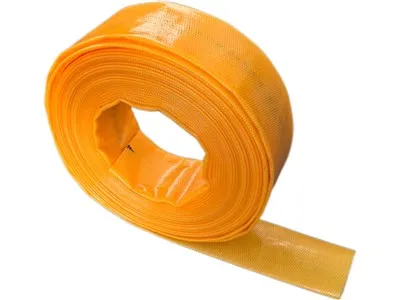
At the end of the day, the right garden hose size is about matching your hose to your needs, not just grabbing the cheapest or longest one on the shelf. Wasting time waiting for water to flow, or wasting water because a small hose can’t cover your garden evenly, is a headache no one needs. If you’re in the market for a new garden hose and want to make sure you get the right size, don’t hesitate to reach out to our team to discuss your requirements. We’re here to help you pick a hose that works for your yard, your tasks, and your budget.
Flexible PVC Hose References:
- American Society of Plumbing Engineers. (2021). Residential Water Supply Design Standards.
- Irrigation Association. (2022). Residential Garden Hose Selection Guide.
- Consumer Reports. (2023). Testing Residential Garden Hoses for Flow and Durability.
- U.S. Environmental Protection Agency. (2022). Water Efficient Landscaping Practices.
Weifang Xinzhiyuan Plastic Co., Ltd.
As one of the most experienced garden hose manufacturers and suppliers in China, we offer a wide range of products with superior quality. Please feel free to wholesale premium garden hose made in China here from our factory. We also accept customized orders.
Address: No. 700, Tongle Street, Economic Development Zone, Changle County, Weifang City, Shandong Province
E-mail: hua@xzypvchose.com
WebSite: https://www.pvchose-xzy.com/
