If you’ve ever spent time looking under the hood of a vehicle, tending to industrial machinery, or even following the wiring in a complex lab instrument, you’ve run into couplings. But outside of mechanical engineering, the term “coupling” carries a completely different meaning that’s central to biology: the process by which two separate events, molecules, or systems become dependent on each other—where the action of one can’t happen without the other, and vice versa. As someone who’s spent years supporting industries that bridge mechanical and biological systems—yes, as a coupling supplier—I’ve seen how this core biological principle isn’t just a concept for textbooks; it’s a foundation that shapes everything from cellular function to the tools that advance life science research. Coupling

At its most basic, biological coupling is about coordination. It’s the glue that keeps disparate parts of a living system working in sync, turning individual, independent processes into a cohesive whole. For example, take the human heart: every time a heart cell contracts, that contraction is triggered by a wave of calcium ions moving into the cell. This process is known as excitation-contraction coupling, and it’s what lets your heart beat steadily, without your brain having to consciously direct each contraction. When the coupling breaks—say, if calcium doesn’t move properly—you can develop arrhythmias, a condition where the heart beats too fast, too slow, or irregularly. That’s how vital this concept is: misalignment of coupled biological processes can directly lead to serious health issues, while properly tuned coupling keeps organisms alive and functioning.
Another clear example comes from DNA replication and transcription. In cells, the two strands of DNA that make up our genetic code must be separated for replication, when a cell divides, and for transcription, when genes are turned into proteins. These two processes are often coupled, meaning the machinery that copies DNA (called DNA polymerase) and the machinery that makes RNA (RNA polymerase) work in tandem. This isn’t just a nice convenience; it’s a way for cells to regulate gene expression efficiently. If these processes were uncoupled, a cell might replicate its DNA when it doesn’t need to, or make unnecessary proteins, wasting energy and leading to disorders like cancer. The same goes for muscle contraction: the coupling between actin and myosin, two proteins that slide past each other to create movement, is so precise that even tiny disruptions to this coupling can lead to muscle weakness or paralysis.
Beyond cells, coupling exists at every level of biological organization. In ecosystems, for instance, there’s a kind of coupling between predators and their prey. A rise in the rabbit population leads to a rise in fox population, which then leads to a drop in rabbit population, and so on. This predator-prey coupling keeps the ecosystem in balance, preventing either species from overpopulating and destroying its habitat. Even on a molecular level, enzyme-substrate coupling is critical. Enzymes are proteins that speed up chemical reactions in cells, and they work by binding to specific molecules (substrates), changing their shape to trigger a reaction, and then releasing the product. This binding is a form of coupling: the enzyme and substrate can’t carry out the reaction independently. The enzyme would never work fast enough on its own, and the substrate would take too long to react without the enzyme’s help. It’s a perfect example of how biological coupling turns slow, inefficient reactions into the fast, precise processes that sustain life.
Now, why does this matter to someone like me, a coupling supplier serving life science and industrial industries? I’ve spent years working with teams that design tools to study biological systems—and many of those tools rely on mimicking or measuring biological coupling. For example, when researchers build lab equipment to study heart cell function, they often use mechanical couplings to connect tiny sensors to individual heart cells. These couplings have to be precise, flexible, and able to transmit movement without damaging the delicate cells, mirroring the precision of biological coupling. If the mechanical coupling is off, the sensor might not pick up the tiny contractions, or it could tear the cell membrane, ruining the experiment. That’s the link between mechanical couplings, which I supply, and biological coupling: both are about connecting two systems so they work in harmony, with no misalignment or disruption.
I’ve seen firsthand how miscommunication in biological coupling drives innovation, too. When scientists discovered that certain diseases are caused by uncoupled processes—like the way cystic fibrosis arises when a protein that moves salt across cell membranes fails to couple properly with other transport proteins—they turned to engineers to develop tools to study that coupling. That often means custom couplings for lab equipment, to attach probes that measure salt movement, or to connect bioreactor components that grow cells for drug testing. A drug company might need a coupling that can hold fragile cell cultures steady while they test a new therapy, ensuring that the cells’ coupling processes aren’t disrupted, so the results are accurate.
What’s often misunderstood is that biological coupling isn’t just “connection”—it’s specific, directional, and context-dependent. Not all connections are couplings, in other words. A nerve ending connected to a muscle cell is a synapse, a type of chemical coupling: the nerve releases a neurotransmitter that binds to receptors on the muscle, triggering contraction. If a random molecule sticks to the nerve ending, that’s not a coupling—it has to be a molecule that actually triggers the intended response. That specificity is what makes biological coupling so powerful, and so hard to replicate. For engineers, that means mechanical couplings need to be just as specific: if you’re building a tool to study a single synapse, your coupling can’t vibrate, can’t interfere with the chemical environment, and has to transmit only the signal you’re trying to measure.
Over the years, I’ve worked with clients across industries—biotech, pharmaceutical manufacturing, medical device design, and even academic research—and every time, the core challenge boils down to this: aligning two separate systems, mechanical or biological, to work as one. A biotech startup developing a new diabetes treatment might need a coupling to connect a pump that delivers insulin to a sensor that measures blood glucose, mimicking the body’s natural coupling between insulin release and blood sugar levels. If that mechanical coupling leaks or misaligns, the device could deliver too much or too little insulin, putting a patient at risk. For us, as a supplier, that means not just delivering a part, but understanding how that part needs to integrate with the biological system it’s working with. We don’t just sell couplings—we provide solutions that respect the precision of biological coupling, because if that coupling fails, the entire system fails.
I also get to see the cutting edge of how coupling is being studied today. Synthetic biologists, for example, are engineering new biological systems by designing artificial couplings. They might create a new protein that couples two unrelated cellular processes, like linking a light signal to a gene that produces a medicine, so that when the protein sees light, it makes the drug. This is a huge area of research, and it relies on the same principle as biological coupling: connecting two separate events to create a functional outcome. To test these synthetic systems, researchers need custom couplings for their lab equipment, to light up the cells without disrupting their delicate synthetic coupling, or to measure the gene expression that results from the coupled process. It’s a cycle: biological coupling teaches us what’s possible, and that drives demand for precise couplings that can support that research.
Of course, it’s not just in life sciences. The same principles of coupling apply in industrial machinery, too—though in mechanics, coupling is usually about connecting shafts, gears, and motors. But even there, the goal is the same as in biology: to connect two parts so they work in sync, with no wasted energy or damage. That’s why many of our clients work across both fields: a factory that makes medical devices might use couplings designed to be gentle on delicate components, similar to the couplings that support biological research. It’s a reminder that the same core concept, coupling, connects living systems and the machines we build to study them.
For me, this work is personal. I’ve always been curious about how living things work, and being able to support teams that are pushing the boundaries of biology—from curing diseases to engineering new materials—feels meaningful. Too often, couplings are seen as just a small, unimportant part of a larger system, but I’ve seen what happens when a coupling is wrong: a lab experiment goes up in smoke, a medical device doesn’t work as intended, a manufacturing line shuts down. That’s why we don’t just sell standard couplings; we work with each client to understand their specific needs, whether they’re studying a cellular coupling process in a lab or building a machine that relies on precise shaft connection.
If you’re working in a field that touches biological systems—if you’re designing a new drug delivery device, building lab equipment to study cellular function, or manufacturing medical tools that need to align with how the body works—chances are, you’re dealing with coupling, in both its biological and mechanical forms. The right coupling can make all the difference, whether you’re keeping a heart cell contracting steadily or keeping a manufacturing line running smoothly.
At the end of the day, coupling is all about harmony. It’s the reason your heart beats, why your cells make the proteins they need, why ecosystems stay balanced, and why the tools we build can advance science and improve lives. As a coupling supplier, I’m proud to play a small part in that harmony, making sure the connections that matter work as they should.
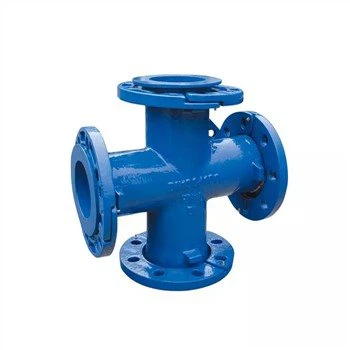
If you’re looking for a coupling solution tailored to your needs, I encourage you to get in touch to discuss your project requirements.
Joint References
- Alberts, B., Johnson, A., Lewis, J., Raff, M., Roberts, K., & Walter, P. (2015). Molecular Biology of the Cell (6th ed.). Garland Science.
- Guyton, A. C., & Hall, J. E. (2000). Textbook of Medical Physiology (10th ed.). W.B. Saunders Company.
- Campbell, N. A., & Reece, J. B. (2005). Biology (7th ed.). Benjamin Cummings.
- Vogel, S. (2003). Comparative Biomechanics: Life’s Physical World. Princeton University Press.
- Pollard, T. D., & Earnshaw, W. C. (2008). Cell Biology (2nd ed.). Saunders.
Tianyi Suns Pipe&Fittings Co., Ltd.
Tianyi Suns Pipe&Fittings Co., Ltd. is well-known as one of the leading coupling manufacturers and suppliers in China. We warmly welcome you to buy high quality coupling at competitive price from our factory. Contact us for specifications.
Address: 2802, Building B, Yangguangcheng,No.8 Changxingnanjie,Jinyuan District, Taiyuan, Shanxi, China
E-mail: info@tianyisunspipeline.com
WebSite: https://www.tianyisunspipeline.com/
