Hey there, ever stared at your home’s breaker box or a portable generator and thought, “Do I actually need an electrician for my emergency power supply?” If you’re knee-deep in prepping for storm season, living out in a spot with sketchy grid reliability, or just tired of your Wi-Fi dying mid-work call when the lights flip, you’re not alone. As someone who’s spent the last 8 years selling emergency power supplies, I’ve heard every version of this question—from DIY bros with a tool belt and a YouTube tutorial, to small business owners who can’t afford a $150 service call. Let’s break this down straight, no fluff, and be real about what works, what blows up, and when you should just bite the bullet. Emergency Power Supply
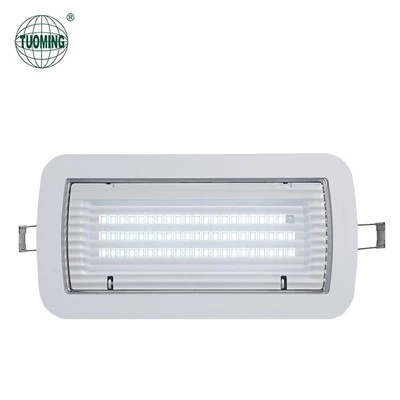
First, let’s clarify what “emergency power supply” even means here. I’m talking about two main types: portable generators (the gas-powered ones you roll out when the power goes out) and standby generators (the permanent ones wired to your breaker box, that kick on automatically when the grid dies). Both have totally different rules for DIY, so let’s not lump ’em together.
Starting with portable generators—this is the one most people test solo. I get it: they look like a big lawnmower, the instructions are 12 pages of dense text, and YouTube has a thousand videos where guys hook ’em up like it’s no big deal. But here’s the thing: almost every city and county has a rule that you can’t just plug a generator into your home’s wall outlet. Wait, why? Because if you do that, that power has to go somewhere—your house’s wiring, right? But if the grid’s still down, utility workers are out fixing lines, and they don’t know your generator is powering your house. That means they could reach up to fix a line that’s actually live from your generator, and boom—they get electrocuted. It’s called backfeeding, and it’s not just a fine; it’s a deadly mistake.
Now, can you avoid that without an electrician? Sure—use a transfer switch, but not the cheap plug-in kind you find at Walmart. Wait, no, even the manual transfer switches that plug into your dryer outlet? Those still need to be installed correctly. A lot of people buy a $20 plug-in transfer switch, jam it into their dryer socket, and call it a day. But if that socket is wired wrong—like, if it’s a 15-amp instead of a 30-amp, or if the ground wire is loose—you’re looking at a fire hazard. I’ve seen a guy in Ohio whose portable generator’s wiring melted his wall because he skipped checking the socket’s rating. He tried to save $80, ended up with $2,000 in drywall damage and a trip to the ER for a smoke inhalation scare. That’s the kind of story that makes us tell people: if you’re going to use a portable generator, the transfer switch needs to be installed by someone who knows their electrical code. There’s no shortcut here.
Now, if you’re just running extension cords to your fridge and a space heater—no big deal, right? Wait, hold on. Don’t daisy-chain 10 extension cords, and don’t run them through water or under rugs. But even then, a lot of people don’t realize that portable generators output DC power, and if you plug in devices that need AC, you have to make sure the wattage matches. Run a 5,000-watt generator on a 1,000-watt fridge? That’s fine, but run it on a 6,000-watt space heater when your AC’s also kicking on, and you’ll trip the generator’s breaker or burn out your fridge’s compressor. But do you need an electrician for that part? Maybe not, but if you’re unsure about wattage, it’s worth a quick 15-minute chat. Our team always tells customers to list what they need to power, and we can tell them the minimum generator size—no charge, no pressure.
Now, let’s get to standby generators—this is the big one. These are the ones that bolt to your side of the house, run on natural gas or propane, and turn on automatically when the grid dies. If you’re thinking about these, stop right there: you absolutely need an electrician. No exceptions. Why? Because standby generators are hardwired to your home’s electrical system, which means they’re handling way more power than a portable. They have to sync with your breaker box, which means you’re dealing with high-voltage lines, code requirements that change every few years, and gas line connections that need to be leak-tested. I’ve had a customer last year who tried to install a 20kW standby generator himself. He wired the generator to his main panel wrong, so when it turned on, it sent a surge that fried his garage door opener, his security system, and his daughter’s gaming PC—cost him $3,500 in replacements. And get this: his home insurance denied the claim, because he installed it without a licensed electrician. Most home insurance policies won’t cover generator damage or fire if it’s not installed by a pro anyway. That’s a huge risk.
“But wait, I watched a video on YouTube!” Yeah, I’ve seen that video too. The guy in the hoodie who lives in a suburb with lax codes, who has a degree in electrical engineering and does it for a side hustle. Most of us aren’t that guy. Electrical code (it’s called NEC, National Electrical Code, in the US, and similar rules elsewhere) is updated every three years for a reason—because mistakes kill. A licensed electrician has to pass tests, do hours of apprenticeship, and stay up on those updates. They’ll make sure your transfer switch is the right type, that the generator is grounded properly, that there’s enough clearance around it for ventilation (generators give off carbon monoxide, which is silent and deadly—can’t stress that enough). They’ll also pull the necessary permits, which is a big one. If you skip a permit, and something goes wrong, you’re on the hook. Your city could fine you, and if a fire starts, your insurance will ghost you.
Wait, but what about small businesses? If you’re a cafe or a shop that needs a power supply for your cash register and fridge, can you skip the electrician? Maybe, but not really. Even small commercial generators have to be wired to comply with commercial electrical codes, which are stricter than residential. I had a small bakery client a couple months back who tried to wire a portable generator herself to power her ovens. She tripped the generator, which cut power to her walk-in fridge, and she lost $1,200 worth of pastries. She ended up calling us, and we connected her with an electrician who installed a proper transfer switch for a fraction of what she lost in food. It’s not just about avoiding mistakes—it’s about protecting your gear.
Now, let’s talk about times when you might be able to do it yourself, but only if you’re really, really comfortable. If you’re a licensed electrician yourself, sure—go for it. If you’re just swapping out a light fixture, that’s different. But if you’re dealing with high voltage, wiring that connects to your main panel, or anything that involves fuel lines (for standby generators), no. Even if you think you know what you’re doing, one loose wire can start a fire, and one misgrounded generator can send that deadly carbon monoxide into your basement or garage.
Wait, also, let’s not forget about maintenance. Even if you do install it right, you need to test your emergency power supply every month. Most people forget to do that, and when the power goes out, the generator won’t start because the gas is old, or the spark plug is dirty. Our team always tells customers: even if you install it yourself, set a monthly reminder to run the generator for 10-15 minutes, check the oil, and make sure the transfer switch works. But if you’re not mechanically inclined, that’s another reason to hire a pro—we offer maintenance plans too, so you don’t have to remember.
Let me also address the cost thing, because that’s the biggest pushback. A licensed electrician might charge $100-$150 an hour, and installing a standby generator can add $2,000-$3,000 to the total cost. But let’s do the math: if you skip the electrician, and your generator fries your appliances, or starts a fire, that’s way more than $3,000. I’ve seen a customer whose DIY generator install caused a house fire that destroyed half his living room—cost him $50,000 in repairs. That’s a no-brainer. And for portable generators, a good transfer switch installed by an electrician is usually $200-$300, which is way less than replacing a fridge or a TV from a surge.
Wait, but what if you live in a super rural area, where electricians are hard to find? I get that. Some rural counties have less strict codes, but even then, I’d recommend hiring a journeyman electrician who works in nearby towns, not a random handyman. A lot of handymen will say they can install a generator, but they don’t know the electrical code, and that’s where the mistakes happen. Our team works with electricians all over, and we can connect you with a reputable one if you’re stuck.
So, let’s wrap this up. Here’s the quick answer:
- Portable generator, just running extension cords? No electrician needed, just follow safety rules (no backfeeding, no running cords through water, don’t overload it).
- Portable generator with a transfer switch? Yes, you need an electrician—no exceptions, because backfeeding is deadly and illegal.
- Standby generator? 100% need an electrician. The wiring, code compliance, permits, and safety can’t be skipped.
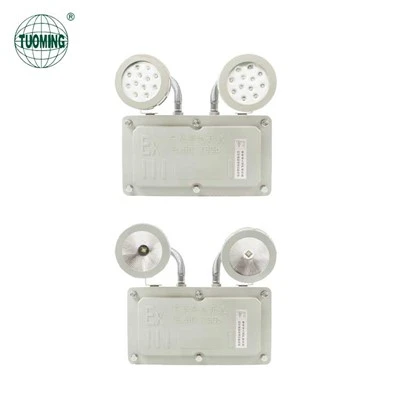
Now, if you’re in the market for an emergency power supply, whether portable or standby, or you’re ready to get yours installed properly, our team is here to help. We can walk you through choosing the right size for your needs, connect you with licensed electricians in your area, and make sure your power supply is set up to keep you safe when the lights go out. No sales pressure, no confusing jargon, just straight answers. If you want to chat about your specific setup, reach out to our team to connect for your emergency power supply procurement and installation guidance.
Emergency Bulkheads References:
National Electrical Code (NEC) Article 700, 2023 Edition
Occupational Safety and Health Administration (OSHA) Generator Safety Guidelines, 2022
Insurance Information Institute (III) Home Generator Installation Requirements, 2023
U.S. Consumer Product Safety Commission (CPSC) Generator Backfeeding Injury Data, 2021-2023
Zhongshan Tuoming Lighting Technology Co., Ltd.
As one of the leading emergency power supply manufacturers and suppliers in China, we warmly welcome you to buy advanced emergency power supply in stock here from our factory. All customized products are with high quality and low price.
Address: No.1, 10th Floor, No.17, Tongfu South Road, Guzhen Town, Zhongshan City, Guangdong Province
E-mail: 1989355847@qq.com
WebSite: https://www.tuominglight.com/
