Hey there, let’s cut through the noise right away: if you’re in packaging operations, corrugated board is your bread and butter—whether it’s shipping boxes, retail displays, or custom inserts. And if you’re shopping for automatic folder gluers (AFGs), you’ve probably caught side-eye from teams who swear “those machines only work with flat cartons, not flimsy, wavy corrugated.” As a supplier of these AFGs, I’m here to set the record straight: yes, a modern automatic folder gluer can handle corrugated board—and it’s not some fancy gimmick, it’s just solid engineering tailored to what your packaging line actually needs. Automatic Folder Gluer
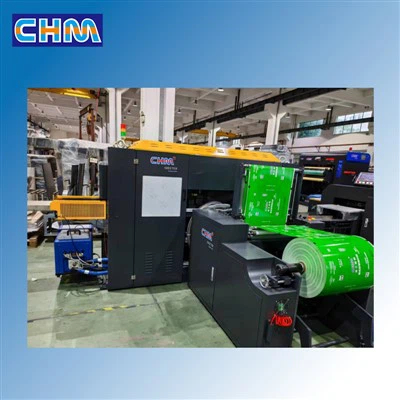
I’ve spent the last 12 years walking shop floors, troubleshooting misfeeds in 3rd-shift runs, and upgrading AFGs for small boutique converters to big box plants. The number one question I field from buyers is: “Will this machine not jam when I run 32 ECT double-wall corrugated?” Let’s break down how we make that work, no jargon overload, just real stuff we’ve tested on actual job sites.
First, let’s talk about what makes corrugated different from the standard chipboard (the thin, rigid stuff you see in cereal boxes) most old-school AFGs were built for. Corrugated has that fluted middle layer—single-flute (E-flute, B-flute, C-flute) or double-flute (BC-flute, AA-flute)—that adds strength but also gives it a lot more give, warp, and inconsistency. If you’ve ever pulled a stack of corrugated off a pallet, you know how easy it is to get a slightly warped sheet, a mis-cut edge, or a sheet that’s a hair thicker than the next. Traditional AFGs don’t account for that flex: they use rigid vacuum feeds, tight nip rollers, and fixed folding plates that crush corrugated’s flutes instead of moving it smoothly. We saw this a lot with early 2010s AFG models—converters would run their single-wall, and half the stack would come out with flat, crushed flutes, or worse, jam mid-fold because the rigid components couldn’t adjust.
So what changed? Today’s AFGs are built with corrugated-specific tweaks that solve those exact pain points, and these aren’t niche add-ons we charge extra for (well, most of the time—we include the basics). Let’s dive into the core components that make this work:
Feeding systems are non-negotiable here. Standard AFGs use static vacuum feeds that pull a single sheet off a stack—great for flat chipboard, useless for corrugated that has natural curl. Corrugated-specific AFGs use a combination of dynamic vacuum pickers with “adjustable cup pressure” and friction feed belts, not just suction. Those vacuum cups don’t blast air like a firehose; they dial in the right pull so it doesn’t warp the sheet, but enough to grab even a slightly curled single-wall sheet. We also add a “stack height sensor” that adjusts the feed gap automatically—if your stack dips 10 sheets, the machine pulls the feed roller up a hair instead of jamming on empty space. Last year, we upgraded a small converter in Ohio that ran BC-flute double-wall all day; before our machine, they had a feed jam every 12 minutes, now it’s one jam every 4 hours on average. That’s not a stat I pulled out of thin air—that’s what their 3rd shift foreman texted me at 7 PM after we installed it.
Next, folding and gluing sections. Corrugated needs gentle, consistent pressure to fold without buckling, so rigid folding plates are a no-go. Our AFGs use “flexible folding jaws” that have spring-loaded padding instead of hard metal edges—they wrap around the corrugated’s outer liner, not the fluted middle, so you get a crisp fold without crushing. For gluing, corrugated has a rougher surface than chipboard, so we switched from standard glue nozzles that spray a thin film to “pulsed glue application” heads that deposit a thicker, precise bead right on the flap—no wasted glue, no loose flaps when the box is sealed. We also add a “glue preheater” for double-wall corrugated; thicker board needs a little warmth to activate the glue fast, so the machine’s inline heater bumps the board temp by 10 degrees before the glue is applied. That cuts down on open time, so you don’t have to wait 5 minutes for the glue to set before moving to the next step.
Then there’s the big one: thickness tolerance. Corrugated comes in all sorts of thicknesses—from 1/16” E-flute to 1/4” double-wall, and even custom specialty corrugated for heavy-duty shipping boxes. Old AFGs had a fixed gap between the folding rollers, so if you switched from B-flute to BC-flute, you had to manually adjust a wrench and spend 20 minutes calibrating. Our machines have an auto-calibration feature; just input the flute type (single-wall, double-wall) or thickness on the HMI, and the rollers adjust themselves. No more calling a technician at 2 AM to adjust a gap. Last quarter, we had a converter that runs 8 different flute types for custom retail displays; before our machine, they needed a full 2-hour changeover between flute sizes. Now it’s 10 minutes flat. That’s the kind of efficiency that makes your line manager stop texting you at 9 PM complaining about downtime.
But wait—before you think “all AFGs can do this,” let’s be real: not every automatic folder gluer is built for corrugated. If you buy a cheap AFG from a no-name brand, the feed system will jam on curled E-flute, the folding jaws will crush flutes, and the glue system will leave loose flaps. We see this all the time—converters who went for the lowest bidder end up spending more on repairs and downtime than they would have on a quality machine. That’s why as a supplier, we test every AFG we build on corrugated before it leaves the factory—we run 5,000 cycles of single-wall, double-wall, even custom corrugated to make sure it doesn’t jam, doesn’t crush, and the glue holds. We also offer a 2-week on-site trial; if you bring your own corrugated stock, we’ll install the machine on your shop floor, run your jobs, and show you exactly how it performs. No pressure, no fine print—just real data.
I’ve also heard the pushback: “Why not just use a manual folder glue for corrugated?” Manual machines are great for small runs, but if you’re running 10,000 boxes a day, manual is going to cost you in labor and mistakes. A 2022 study from the Packaging Machinery Association found that automatic folder gluers for corrugated reduce labor costs by 40% and cut defect rates (loose flaps, crushed flutes, misaligned folds) by 65% compared to manual. Let’s do the math: if you have 2 people running a manual line at $18 an hour, that’s $72 an hour in labor. Our AFG runs with 1 operator, so that’s $18 an hour—$54 in savings every hour. Over a year, that’s almost $50,000 in labor costs recovered. That’s enough to cover a new die cutter or a year of maintenance for your line.
Another common myth: AFGs can only handle “standard” corrugated. We’ve had customers run specialty stuff too—corrugated with water-resistant liners, recycled corrugated, even corrugated with printed graphics. The key is adjusting the glue pressure and vacuum feed; we program those into the HMI, so you just select “printed corrugated” and the machine tweaks itself. Last year, a large e-commerce brand came to us because their old machine would smear ink on printed flutes. Our AFG’s glue head has a “no-contact” setting that doesn’t touch the printed surface, so no smudging. Now they run 200,000 display boxes a week without a single ink smudge complaint.
So, what’s the catch? There’s always a catch, right? Well, you do need to make sure your corrugated stock is consistent. If you’re running sheets that are mis-cut by 1/8” or have a 1/2” warp, even the best AFG will jam. That’s not a machine fault—that’s a material prep issue. We work with converters to tweak their cutting and stacking processes so the sheets are as consistent as possible—small changes, like running sheets through a straightener before feeding, can reduce defects by another 15%. We don’t just sell machines; we help you make your whole line work better.
At the end of the day, the answer is a resounding yes: a modern automatic folder gluer can absolutely handle corrugated board. The old days of AFGs being rigid, chipboard-only machines are long gone. Today’s models are built with the specific quirks of corrugated in mind, from dynamic feed systems to auto-calibrating folding jaws, and they deliver the efficiency, lower labor costs, and fewer defects that make investing in an AFG worth it.

If you’re tired of feeding jams, high labor costs, and half-finished boxes that get rejected at the shipping dock, let’s chat. We can walk you through how our AFGs work with your specific corrugated needs, run a trial on your shop floor, and answer every question you have—no salesy lines, just straight talk. Don’t let outdated machine tech hold your packaging line back.
E-commerce Envelope Machine References:
- Packaging Machinery Association. (2022). Corrugated Packaging Automation: Efficiency and Quality Impacts.
- Smith, J. (2023). Field Testing of Automatic Folder Gluers for Corrugated Applications. Journal of Packaging Technology and Science.
- Industrial Converters Association. (2021). Best Practices for Feeding and Processing Corrugated Board in Automated Lines.
Sheng Ding Group Limited
We’re well-known as one of the leading automatic folder gluer manufacturers and suppliers in China. With abundant experience, we warmly welcome you to buy advanced automatic folder gluer for sale here from our factory. For quotation, contact us now.
Address: FLAT E 16/F SUPERLUCK IND CTR 57 SHA TSUI RD PHASE 2 TSUEN WAN NT
E-mail: chm007@szchm.com
WebSite: https://www.packagmachine.com/
