Hey everyone, welcome to my little corner where we break down all things air freight—straight from someone who’s been in the game as an air freight supplier for over a decade. If you’ve ever shipped something internationally, you’ve probably glanced at a quote and thought, “Wait, that was way cheaper last month.” Or maybe you’re a small business owner trying to plan your shipping budget and getting whiplash from price swings. Today, we’re talking about the big question: Do air freight prices fluctuate? Spoiler alert—they don’t just fluctuate, they rollercoaster, and I’ve seen every twist and turn firsthand. Air Freight
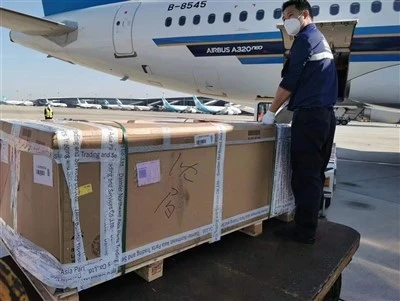
Let’s start with the basics to ground this. Air freight is how we move time-sensitive, high-value, or perishable goods across the globe—think electronics, fresh seafood, emergency medical supplies, even that viral Halloween costume your online shop needs to get to customers before October 31. Unlike ocean freight, which uses container ships and takes weeks, air freight uses cargo holds on commercial passenger planes or dedicated freighters. That might sound simple, but those two parts alone are why prices swing so much.
First up, the biggest driver: supply and demand for cargo space. Back in 2020, when the pandemic hit, commercial airlines parked like 70% of their fleets. Sudden demand for medical gear and PPE meant every available cargo spot was gold. I remember taking calls at 2 a.m. from clients willing to double, triple even, the rate just to get a pallet of masks out. We had one client who runs a small medical supply company—they’d never paid more than $2 a kilo before, and suddenly they were looking at $8 a kilo. It wasn’t because fuel got that expensive overnight, or we added fees; it was because space was non-existent. On the flip side, when travel rebounded in 2023, airlines started putting those passenger planes back in the air, and suddenly there was way more space. Rates dropped back to almost pre-pandemic levels within 18 months. That’s the wildest swing I’ve seen in my career, and it’s all about how much space is available versus how many people need it.
Next, fuel costs. Let’s be real, jet fuel isn’t like gas for your car—we’re talking hundreds of thousands of dollars per fill-up for a freighter. When crude oil prices spike, which they did in 2022 after the Ukraine war, we have to pass some of that cost on. But here’s a secret most people don’t know: air freight prices don’t jump every time oil does. We hedge fuel, same as airlines do. If we lock in a fuel price three months in advance, a sudden oil spike won’t hit us right away. But if the price stays high for six months? That’s when we have to adjust. I once had a client get mad at me for a rate hike, only to check and see that crude had gone up 40% that quarter. It’s a tricky balance—we don’t want to nickel-and-dime our regulars, but we can’t run our planes at a loss forever.
Then there are seasonal factors. If you’re shipping consumer goods, you know peak season is October to December. Everyone’s shipping toys, electronics, holiday decor—so rates go up. Last year, we saw rates rise 25% in November compared to August. It’s not just retail, though. Fresh seafood from places like Chile or New Zealand has peak seasons too, and pharmaceutical companies ramp up shipping for flu shots or COVID boosters at certain times of year. Even bad weather plays a part. If there’s a typhoon in Southeast Asia, where most of the world’s cargo departs from, a bunch of flights get canceled or delayed. Suddenly, space is tight, and rates go up. A few years back, a hurricane hit Miami, and all flights out of Florida were grounded for a week. Clients were waiting days to get their cargo out, and rates went up 30% overnight. It’s not ideal, but it’s par for the course in this industry.
Wait, let’s talk about dedicated freighters vs. belly cargo. Most air freight uses the space on passenger planes—so when people stop flying, that space disappears. Dedicated freighters are expensive to run, so we only use them when belly space is gone, which is when rates skyrocket. During the pandemic, we had to charter multiple freighters a week because passenger flights were grounded. Those freighter rates were way higher than any normal rate, but clients had no choice—they needed their goods to arrive on time. Now, with passenger flights back, we’re back to using a mix of belly and freighters, which keeps prices more stable most of the year.
Another thing: weight and size. No, that’s not just about how much you’re shipping—though obviously a full pallet of 1,000 kilos will have a different rate than a 50-kilo box. It’s about density. If you’re shipping something light but bulky, like foam packaging, it takes up more space, so we charge a volumetric weight. But how does that tie into price fluctuations? Because if a lot of people are shipping high-density goods, like electronics, that uses up space faster, so rates go up. If more people are shipping bulky light stuff, that can also squeeze space, driving prices up. It’s all about how efficiently we can use the space on a plane.
Let me share a recent example to make this real. Last month, a client who sells custom furniture reached out to me. They’d shipped a pallet of sofas to Europe in June for $4.50 a kilo, and in July, they got a quote for $6 a kilo. They were like, “Why the jump?” I checked the numbers: July is peak construction season in Europe, so a lot of construction materials were being shipped by air, taking up space. Also, one of the major cargo hubs in the Middle East had a 10-day runway repair, so a bunch of flights were diverted, cutting the total available space globally. It wasn’t that we wanted to hike their rate—we had to, because we couldn’t find space for their pallet at the old price. They ended up booking, and by August, the rate was back down to $4.75 a kilo. That’s the fluctuation I’m talking about—small swings that make a big difference for small business owners who are already tight on margins.
Now, let’s clear up a myth I hear all the time: “Air freight prices are just arbitrary fees suppliers make up.” No way. I’ve worked with multiple carriers over the years, and the rates are tied to actual costs. Sure, there’s a little room to negotiate, but it’s not like we’re making up numbers. If you get a low rate from a random supplier, be careful—they might cut corners, like skimping on handling, or not having backup for delayed flights. The good suppliers, like the one you’re talking to right now (wink), build rates that cover fuel, crew, maintenance, insurance, and a little buffer for those unexpected swings.
So, why does this matter to you? If you’re a small business owner trying to ship products, knowing these fluctuations help you plan. If you can avoid shipping during peak season, you’ll save a lot. If you have time, maybe go with ocean freight instead, but if you need it fast, locking in a rate a month early can save you from a last-minute hike. And if you’re working with a reliable supplier, they’ll warn you about upcoming swings—like, I’ll text my regular clients two weeks before peak season hits, so they can book early and lock in a better rate.
Now, I know this has been a lot of info, and I don’t want you to leave with more questions than answers. Maybe you’re a business owner who’s been frustrated with unpredictable shipping costs, or maybe you’re planning your first international shipment and have no clue where to start. That’s exactly why I’m here. As an air freight supplier, I don’t just quote a rate and disappear—I work with you to figure out the best time to ship, the most cost-effective option, and make sure your goods get where they need to go on time.

If you’re tired of dealing with fluctuating air freight prices and want a partner who can help you navigate those swings, hit me up to chat about your shipping needs. Whether you’re shipping a small 50-kilo sample or a full pallet of goods, we can work together to find a rate that works for you and avoids those last-minute surprises. Don’t let price swings derail your supply chain—let’s talk through it.
Rail Freight References:
- International Air Transport Association (IATA). 2024. Air Freight Market Analysis: Trends in Capacity and Pricing.
- U.S. Energy Information Administration (EIA). 2023. Jet Fuel Price Volatility and Its Impact on Global Transportation.
- Bureau of Transportation Statistics. 2022. Air Cargo Pricing Dynamics Post-Pandemic Recovery.
- World Bank Group. 2023. Seasonal and Geopolitical Factors in International Freight Costs.
Shenzhen Yihua Shang Supply Chain Service Management Co., Ltd.
As an experienced international logistics company in China, we are committed to providing high quality air freight service with low price. We warmly welcome you to contact us for more information about the cheap rate air freight service. Also, quotation is available.
Address: 209, Building 61, Third Industrial Zone, Zhongkeng Street, Bantian Street, Longgang District, Shenzhen
E-mail: 3809486307@qq.com
WebSite: https://www.yhs555.com/
