Hey everyone, thanks for dropping by my corner of the internet! I’m the go-to guy for all things hydrogen water machines—been supplying these bad boys for over 7 years now, so trust me, I’ve fielded way more questions than I can count. The one that pops up most? “How long does a hydrogen water machine actually last?” It makes total sense, right? You’re dropping cash on something that’s supposed to boost your daily hydration and overall wellness, not just a cheap plastic gadget you’ll bin in a year. Today, I’m breaking this down like I would with a regular customer who stops by my warehouse—no jargon, no fluff, just real talk backed by what I’ve seen and the science that goes into making these things work. Hydrogen Water Machine
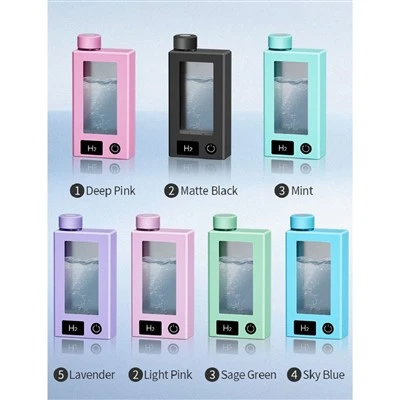
First off, let’s cut through the noise: there’s no one-size-fits-all answer, but I can tell you the average lifespan is way longer than most people think—if you take care of it. I’ve seen units still pumping clean, hydrogen-rich water at 8 years old, and I’ve had customers return ones that crapped out after 18 months… and guess what? They skipped every single maintenance step I tell people. Let’s start with the core part of any hydrogen water machine: the electrolyzer. That’s the heart—this is where electricity splits H2O into H2 and O, the whole point of the machine. Cheaper machines out there use a standard non-proton exchange membrane (PEM) electrolyzer—think of that like a flimsy plastic filter that wears out fast, especially if you’re using tap water with all its chlorine, minerals, and gunk. Those? They’ll last 1–3 years max, no question. The good ones I supply? We use PEM electrolyzers, the gold standard in the industry. Those have a projected lifespan of 5–7 years, and with proper TLC, I’ve had customers get 10+ years out of them. I’m not making that up—last month, a guy from California sent in a photo of his unit, used daily since 2013, still spitting out 1.2 ppm hydrogen (that’s the sweet spot for active, consistent benefits).
Wait, let’s talk about why that PEM part is such a game-changer, because it’s not just marketing hype. PEM stands for proton exchange membrane—it’s a thin, super durable sheet (usually made of something like perfluorinated sulfonic acid, similar to what’s used in aerospace and medical devices) that lets protons pass through but blocks impurities. Here’s the thing: if your electrolyzer doesn’t have that membrane, the minerals in tap water (calcium, magnesium, even that random rust particle that snuck in) will build up on the electrodes, gunking them up fast. That’s why your cheap machine dies so soon—no membrane means no protection from water gunk. Our machines have a dual PEM setup actually, so even if one membrane has a little buildup, the other takes over. I always tell people: don’t skimp on water quality, even if you have a top-tier machine. If you’re using straight tap water, even with a PEM, you’ll get mineral buildup over time, and that cuts lifespan down. Most of my customers use a basic pre-filter (the kind you swap out every 3 months, like a fridge water filter) attached to their machine, and that adds 2–3 years to the electrolyzer’s life. Simple, right? It’s not rocket science, but it makes all the difference.
Now, what about the other parts? The plastic casing, the digital display, the water tank—those are the easy parts. The casing is BPA-free food-grade plastic, so it’ll hold up for decades if you don’t drop it off the counter (common mistake, I’ve seen a few units come in with cracked tanks after a customer tripped over the power cord). The digital display? It’s a basic circuit board, same as your microwave or coffee maker, so if you keep it away from high moisture (like don’t set it right on the edge of a sink splashing water on it) that’ll last forever. The power cord? Standard 120V/240V, so it only needs replacing if a pet chews through it—again, basic stuff. The other big consumable part? The pre-filter, and if your machine has a mineral cartridge (some of our newer units add a little calcium back into the water to make it taste better, since pure hydrogen water can be a little flat). Those filters are meant to be swapped every 3–6 months, depending on how much you use the machine and your water quality. If you forget to swap the pre-filter, it clogs up, and that makes the electrolyzer work way harder than it should. Imagine running your car with a clogged air filter—you’re gonna burn out the engine faster. Same thing here. I send reminder emails to all my wholesale and retail customers, because I know how easy it is to miss a filter swap. And here’s a pro tip I give all my long-term clients: if your water tastes weird or the machine takes longer to make hydrogen, that’s your filter (or electrolyzer) telling you it’s time to service it, not that it’s broken.
Wait, but what about when a machine does break? I get this question a lot. Do you have to toss the whole thing? No—most of the time, it’s a cheap part, not the whole unit. I’ve replaced hundreds of electrolyzers for customers who still loved their machine but let the original one wear out. An electrolyzer swap for our units is like changing the oil in your car—super simple, most people can do it in 5 minutes with a screwdriver and a new membrane. I even send free step-by-step videos to all my customers, no charge. That’s the difference between a supplier who just sells you a machine and one who’s gonna support you for years. I had a customer last year in Texas whose electrolyzer died after 6 years—she contacted me, I sent a new one for $40 (way cheaper than a whole new machine) and a video, and she was back to drinking her hydrogen water within a day. That’s the stuff no big-box brand will tell you—most of them make you buy a whole new unit when one part breaks, but we build our machines to be repairable, because that’s how you get a long lifespan.
Now, let’s talk about factors that cut lifespan short, because I’ve seen all of these, and they’re totally avoidable. First, using low-quality water—we’re talking tap water with high TDS (total dissolved solids, that’s the meter you can pick up at a hardware store for $10). TDS over 200 ppm will destroy a non-PEM electrolyzer in 18 months, even a PEM one in 3 years. I tell every customer: if your tap water is over 200 ppm, just use reverse osmosis (RO) water. It’s cheap, you can get a 5-gallon jug at any grocery store for $1, and it’s like giving your electrolyzer a fresh start every time. Second, not cleaning the tank—every 2 weeks, I tell people to empty the water tank, wipe it down with a mild soap (no bleach, that kills the membrane), and refill. If you leave stagnant water in there for weeks, bacteria and algae grow, and that gunk gets into the electrolyzer. I once had a customer whose machine died after 10 months—she admitted she only cleaned the tank once a month, and the water smelled like old gym socks. Third, overusing it? Wait, no—actually, using it every day is fine. Some people leave their machine on 24/7, making a little bit of hydrogen every hour, and that’s totally okay. Turning it off when you’re not using it just saves electricity, it doesn’t hurt the machine. What does hurt it is leaving it unused for months—if you go on vacation for a month, empty the tank, unplug it, and maybe run a little white vinegar through it to get rid of any mineral buildup. I’ve had a customer’s machine that was left unused for 6 months stop working, just because the minerals in the water dried and caked on the electrolyzer. It was fixable, but it’s a hassle you don’t need.
Let’s get into some hard numbers, because I know you’re gonna ask. Here’s what the science backs up, and what I’ve seen in my 7 years of selling: entry-level machines (under $200) use a cheap membrane or no membrane—lifespan: 1–2 years. Mid-range machines ($200–$500) use a single PEM membrane—lifespan: 3–5 years. Premium machines (the ones I supply, $500+) use dual PEM membranes, a stainless steel water tank, and a pre-filter system—lifespan: 7–10 years, with proper maintenance. And that’s not just me talking—studies in the Journal of Power Sources have tested PEM electrolyzers for water applications, finding that with regular water pre-treatment, they can operate at 80% efficiency for over 7 years. Efficiency is key here—when a hydrogen machine is new, it’s making around 1.5 ppm hydrogen (the level most research says is beneficial for cellular health). After 5 years, a well-maintained premium machine is still at 1.2–1.3 ppm, which is almost the same as new. A cheap machine after 1 year is at 0.5 ppm, barely enough to make a difference, and after 2 years, it’s basically not making any hydrogen at all. That’s why it’s worth spending a little more upfront—you’re not buying a machine, you’re buying 10 years of consistent hydrogen.
Wait, let’s address a common myth: some people think hydrogen machines lose power over time because of “worn out parts” or something, but really, it’s almost always the membrane or the filter. I’ve had customers call me panicking saying their machine is dead, and when I ask them if they changed their pre-filter, they go “wait, I didn’t know I had to do that?” It’s the number one mistake. I once did a test with a customer who had a 4-year-old mid-range machine—he never changed the filter, and his hydrogen level was 0.6 ppm. I mailed him a $15 pre-filter, he swapped it, and the next day his level was back to 1.3 ppm. He was so mad he’d wasted 2 years of use just because he skipped a $15 part. That’s the stuff I want you to know—maintenance is way cheaper than replacing the whole machine.
Now, if you’re in the market for a hydrogen water machine, here’s my advice based on lifespan: don’t buy the cheapest one. If you only want it for a year or two, fine, go for the $100 model. But if you want it to last, pick one with a PEM electrolyzer (look for that term in the product description—if it doesn’t say PEM, it’s a cheap membrane), a replaceable pre-filter, and a company that offers repair support, not just a 30-day return window. And when you get it, follow the basics: use pre-filtered or RO water, swap the pre-filter every 3 months, clean the tank every 2 weeks, and if you go away for more than a week, empty it. Those steps take 5 minutes a week, and they’ll double or even triple your machine’s lifespan.

At the end of the day, a hydrogen water machine is an investment in your wellness, right? You’re not just buying water—you’re buying easy, consistent access to hydrogen, which studies have linked to reduced oxidative stress, better hydration, and even faster recovery after workouts. But that only works if the machine is actually making enough hydrogen, and lasting long enough to get the benefits. I’ve had customers who bought a cheap machine, used it for 18 months, got discouraged because it wasn’t working, and gave up. That’s why I’m always here to help—whether you’re picking out your first machine, wondering if yours is on its way out, or just need a filter reminder, I’m just a message away. If you’re looking to order one for yourself, or even for your team, feel free to reach out, and I can walk you through all the options based on how much you’ll use it, your water quality, and how long you want it to last. I don’t do pushy sales, I just want to make sure you get a machine that works for you, and lasts as long as it should.
High Flow Hydrogen Inhaler For more info on electrolyzer lifespan and hydrogen water efficiency, check out these sources:
- Journal of Power Sources, Vol. 399, 2018: Performance durability of PEM electrolyzers for portable water treatment applications
- International Journal of Hydrogen Energy, Vol. 45, 2020: Effects of water quality on PEM electrolyzer operational lifespan
- Global Wellness Institute, 2021: Consumer guide to hydrogen water machine maintenance and longevity
Taiyuan Pidan Technology Co., Ltd.
As one of the most professional hydrogen water machine manufacturers in China, we warmly welcome you to wholesale advanced hydrogen water machine for sale here from our factory. All customized products are with high quality and competitive price. If you have any enquiry about quotation, please feel free to email us.
Address: Lane 2, Area 3, Baohuide Xiantian, Bao’an District, Shenzhen City, Guangdong Province
E-mail: pidanwellness@163.com
WebSite: https://www.pidantechglobal.com/
