As a stage curtain supplier with over 15 years in the industry, I’ve learned that a manual stage curtain isn’t just a piece of fabric hanging backstage—it’s the backbone of every seamless production, from community theater plays to high school musicals. Too often, I see venues cut corners on curtain operation, leading to delayed cues, torn fabric, or even safety hazards for cast and crew. That’s why I’ve put together this step-by-step guide to operating a manual stage curtain correctly, drawn from on-site training I’ve delivered to hundreds of venue managers and stagehands. Whether you’re a volunteer with a local theater or a professional stage manager, these practices will help you run your curtain smoothly every time. Stage Curtain
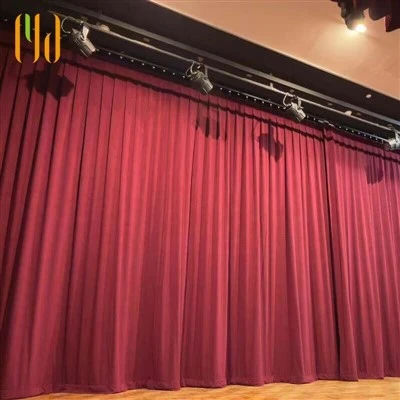
First, let’s talk about the core components of a manual stage curtain—because you can’t operate something if you don’t understand what you’re working with. Most manual stage curtains fall into two main types: a traveler curtain (which opens and closes horizontally along a track, splitting the stage into audience and backstage) and a front curtain (often a grand drape, the main curtain facing the audience). Both rely on two key systems: the operating ropes (called lines) and the counterweight arbor. The arbor is a weighted frame that sits in a vertical shaft behind the stage; it balances the curtain’s weight so you don’t have to lift the heavy fabric manually. Each curtain has dedicated lines: a lift line to raise and lower the curtain, a draw line to pull it open or closed, and a handrail line (if it’s a traveler curtain) to guide the fabric’s movement along the track. Most importantly, there’s a safety locking mechanism—usually a pin or a ratchet—that keeps the curtain in place when it’s not moving, so it doesn’t slip unexpectedly. I always tell new stagehands to do a pre-show check of these components first, because 80% of curtain issues stem from a missed safety step.
Let’s start with the pre-operation safety check, a step I never skip when I’m training a new crew. Before the first rehearsal or show, take 10 minutes to walk through these checks: First, inspect the operating lines. Look for frays, kinks, or worn spots—any damage can snap mid-operation, which is a major safety risk. If you spot a fray, mark that line and replace it before using the curtain. Next, test the counterweight balance. Stand at the operating position (the backstage side of the curtain, usually at stage right or left, where the lines hang down) and pull gently on the lift line. The arbor should move smoothly up and down the shaft—if it sticks, there’s probably debris in the shaft or the weights are uneven. Weights can shift over time from minor bumps backstage, so adjust them until the curtain feels “floating” when you hold the line. Finally, test the safety lock. Make sure the pin or ratchet engages securely when the curtain is in the open or closed position; if it doesn’t, tighten the lock or replace it immediately. I once had a venue that skipped this check before a middle school play, and the curtain slipped mid-scene, hitting a child actor. That’s the last thing any production needs—so this pre-check is non-negotiable.
Now, let’s break down how to operate the curtain for a standard traveler or grand drape, step by step. First, make sure the operating area is clear. No stagehands, props, or equipment should be under the curtain’s path—even a small prop knocked into the track can jam the curtain. Stand at the designated operating position, and keep your feet shoulder-width apart for balance. Start with the curtain in the closed position (most productions start this way). To open it, first disengage the safety lock. Keep one hand on the draw line to control speed, and the other on the lift line (for traveler curtains, you’ll also use the handrail to guide the fabric). Pull the draw line slowly and steadily—don’t yank it, as that can stretch the fabric or pull the arbor off balance. As the curtain opens, make sure the travelers (the wheels or hooks that run along the track) are moving smoothly. If they catch, stop immediately and check for debris in the track. Once the curtain is fully open, engage the safety lock firmly—this is critical, because if you let go of the line, the arbor will pull the curtain shut quickly, which can injure someone or damage the curtain. For closing, reverse the process: disengage the lock, pull the draw line slowly until the curtain is fully closed, then re-engage the lock. For a grand drape, the process is similar, but the curtain is heavier, so you’ll need to use a two-hand pull for stability—never try to operate it with one hand, even if it feels light.
A common mistake I see is operating the curtain too fast, especially during quick scene changes. While a fast curtain might feel dramatic, it’s risky. A traveler curtain that’s pulled too hard can swing off its track, and a heavy grand drape can snap its lines. If you need a quick change, coordinate with the stage manager to plan the speed in advance—most manual curtains can open or close in 8-12 seconds, which is fast enough for most scene transitions but slow enough to stay controlled. Another common issue is misalignment. When the curtain closes, it should line up evenly along the stage’s center line, with no gap on either side. If it’s off, you can adjust the draw line’s tension slightly—just pull the line a bit more on the side that’s lagging. But don’t over-adjust, as that can cause the curtain to pull too hard on one side.
Now, let’s talk about long-term operation and maintenance, because even the best curtain will break down if you don’t care for it. After every use, inspect the lines again for frays—even a small fray can become a full break if it’s pulled repeatedly. Wipe down the track with a dry cloth to remove dust or debris, which can cause the travelers to stick. Every three months, schedule a professional inspection of the counterweight arbor, because weights can shift and wires can wear over time. For fabric care, most stage curtains are fire-resistant (which is required by law in most venues), so avoid using harsh chemicals when cleaning—use a mild detergent and a soft brush to spot-clean stains, and never iron the fabric, as high heat can damage the fire-resistant coating. I also recommend lubricating the track and travelers every six months with a silicone-based lubricant—avoid oil-based products, as they can attract dust and cause buildup.
Safety is the biggest priority when operating a manual stage curtain. I’ve shared a few key safety rules throughout, but here are the non-negotiables: Never stand under the curtain when it’s moving, never use the curtain to hang props or equipment, and always keep the operating area clear. If you’re new to operating the curtain, never do it alone—have an experienced stagehand nearby to help, especially during large productions. Also, make sure all cast and crew know the curtain’s cues; a miscommunication between the stage manager and the operator can lead to a curtain opening mid-scene or closing on an actor, which is a nightmare for any production. I once worked with a community theater where a stage manager forgot to tell the actor they were moving, and the curtain closed as the actor was walking off, knocking them over. A quick line of communication would have prevented that.
Now, if you’re looking to invest in a manual stage curtain for your venue, here’s what I can offer as a supplier. We build our manual curtains with heavy-duty, fire-resistant fabric, durable steel travelers, and a balanced counterweight system that makes operation easy even for small crews. We also provide free on-site training for venue managers and stagehands, so you can be confident operating your curtain without any guesswork. If you’re tired of curtains that jam, fray, or fail to line up correctly, we can work with you to custom-design a curtain that fits your stage size and needs. We also offer replacement parts—from draw lines to safety locks—so you don’t have to worry about sourcing parts when your curtain needs a repair.

If you’re a venue manager, stage director, or stagehand looking to upgrade your manual stage curtain or get training on operation, reach out to our team to discuss your needs. We’ve worked with venues of all sizes, from small community theaters to regional performing arts centers, and we’re here to help you keep your productions running smoothly. Don’t let a faulty or poorly operated curtain hold back your next show—contact us today to learn more.
Flame Retardant Curtain Fabric References
- Stage Managers’ Association. (2021). Manual Stage Curtain Operation & Safety Guidelines.
- International Association of Venue Managers. (2022). Venue Equipment Maintenance Manual: Stage Curtains.
- National Fire Protection Association. (2020). NFPA 70: National Electrical Code (Section 600.32 for Stage Curtains).
- Theatrical Wardrobe & Stage Equipment Association. (2023). Stage Curtain Design and Operation Standards.
Suzhou Chengyuda Textile Co., Ltd.
Suzhou Chengyuda Textile Co., Ltd. is one of the most professional stage curtain manufacturers and suppliers in China, featured by high quality customized service. Please rest assured to buy high-grade stage curtain for sale here from our factory. Contact us for free sample.
Address: Room 308, Block B, Kelaimei Building, No. 819 Shengtan Road, Shengze Town, Wujiang District, Suzhou City, Jiangsu Province
E-mail: asher@cydtextile.com
WebSite: https://www.cyd-curtain.com/
