What is the effect of a steel deoxidizer on the brittleness of steel?
I still remember the first time I stood on the floor of a steel mill, watching molten iron bubble and glow like something alive. The air hummed with the roar of furnaces, and every steelworker there moved with the kind of precision that comes from knowing one wrong step could ruin tons of material—and that’s exactly what I saw happen that day. A batch of steel that should have been strong, durable, perfect, came out brittle. Test after test showed it cracked under minimal pressure, a total loss for the manufacturer. Later, I learned the culprit was a tiny, critical step they’d cut corners on: deoxidization. That moment stuck with me, because as a steel deoxidizer supplier, that’s our core promise—get that step right, and you eliminate a huge chunk of the risk for brittleness in steel. Steel Deoxidizer
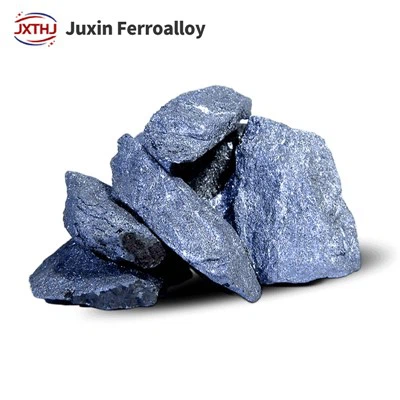
Let’s start with the basics, no stuffy textbook jargon that gets lost in translation. When you smelt iron ore to make steel, the process leaves behind dissolved oxygen in the molten metal. Think of it like a drop of water trapped in a hot pan—it’s there, even if you can’t see it. That oxygen doesn’t just hang around doing nothing. It reacts with other elements in the molten steel, forming oxides, and those oxides are directly linked to brittleness. Brittle steel is steel that snaps instead of bending, that cracks when you expect it to flex, that fails at the worst possible time—whether that’s a car frame on the highway, a construction beam holding up a skyscraper, or a pipe carrying water under high pressure.
That’s where steel deoxidizers come in. Our job as a supplier is to provide materials that bind with dissolved oxygen in molten steel, pulling it out of the metal structure before it can form harmful oxides. But not all deoxidizers are created equal, and that’s a point I drill home every time I work with a new mill. Too little deoxidizer, and you leave free oxygen behind, which will cause brittleness. Too much, and you introduce other elements that can be just as bad, or even worse. It’s a balance, one that’s been refined over decades, but one that still catches teams off guard if they skip or rush the process.
Let’s break down exactly how oxygen causes brittleness, because it’s not some random quirk of steel. When oxygen reacts with elements like silicon, manganese, or aluminum (the most common deoxidizer components), it forms inclusions—tiny particles suspended in the molten steel. For the most part, those should be harmless, right? But if those inclusions are large, unevenly distributed, or concentrated in certain areas, they create stress points. Imagine a glass window with a tiny chip in the corner—apply even a little pressure, and that chip becomes the breaking point. Same with steel. Those oxide inclusions act like invisible chips, making the material far more likely to crack under load.
Even worse is the phenomenon called “blue brittleness,” which is directly tied to oxygen content in poorly deoxidized steel. Blue brittleness shows up when steel is heated to temperatures between 200°C and 400°C, a range that’s common in things like automotive manufacturing, where parts are welded and then painted in ovens. Steel with excess oxygen here becomes fragile in that temperature range, leading to unexpected fractures during fabrication or use. I’ve seen parts crack mid-weld because a mill used a cheap, insufficient deoxidizer, and that’s not just a waste of metal—it’s a safety hazard.
Now, let’s get into what good deoxidization does to fight that brittleness. A properly applied deoxidizer doesn’t just pull oxygen out—it produces inclusions that are small, uniform, and non-harmful. When I work with a new client, I don’t just drop off a batch of our product; we do small-scale test melts first. We adjust the amount of deoxidizer, the timing of when we add it to the molten steel, the temperature of the furnace, all to make sure those inclusions are less than 10 microns in size. In fact, studies show that inclusions smaller than 5 microns don’t act as stress raisers at all—they’re barely noticeable to the steel’s molecular structure.
That’s another key point: the type of deoxidizer matters a lot. For example, aluminum is a powerful deoxidizer, but if you add too much of it, it can form aluminum nitride inclusions at grain boundaries. Grain boundaries are the seams between the tiny crystals that make up solid steel. If those boundaries are clogged with nitride particles, the steel becomes brittle at low temperatures, a problem called “cold brittleness.” Cold brittleness is a huge issue for things like pipelines in Arctic regions, or equipment used in winter climates—steel that’s fine at room temperature can shatter like ice if it’s not properly deoxidized to avoid grain boundary inclusions.
Manganese is another common deoxidizer, and it’s often used alongside silicon. Manganese deoxidizes well, and it also combines with sulfur (another harmful impurity in steel) to form manganese sulfide, which is less damaging than iron sulfide. Wait, you might be wondering how sulfur ties into brittleness—iron sulfide forms at grain boundaries too, making the steel brittle when it’s hot, a problem called “red brittleness.” So a good deoxidizer doesn’t just fight oxygen; it can reduce brittleness from other impurities too, which is a secondary benefit I love pointing out to clients.
I’ve had clients come to me frustrated because they’ve been using a generic deoxidizer from a big brand, but their steel still comes out brittle. After running tests, we find two things: either the deoxidizer has too many impurities of its own (like leftover oxides from the manufacturing of the deoxidizer itself), or it’s being added at the wrong time. When you add the deoxidizer to molten steel, you have to give it time to react and settle—usually 10 to 15 minutes, depending on the heat. If you add it right before casting, the inclusions don’t have time to float to the top (they form a slag layer that’s removed), so they get trapped in the finished steel. That’s a mistake I see all too often, and it’s one that a reliable deoxidizer supplier will help you avoid—we don’t just sell product, we provide guidance on process timing too.
Let’s talk about a real example, because numbers make this concrete. Last year, I worked with a structural steel mill that was rejecting 12% of their output due to brittleness failures in their beam products. They were using a standard silicon-manganese deoxidizer, adding it at a rate of 0.2% of the total steel weight. We ran a few tests, first adjusting the rate to 0.25% and adding the deoxidizer 15 minutes before casting, not 5. Then, we switched them to a specially formulated deoxidizer with a small amount of calcium added—calcium helps modify oxide inclusions, making them even less likely to cause stress points. After the change, their rejection rate dropped to 2.8%. That’s a 9% improvement, all from getting deoxidization right. They saved hundreds of thousands of dollars a month in waste, and their beams now carry higher load ratings because they’re less brittle.
Another example is in the automotive industry, where steel parts need to be both strong and flexible. A parts manufacturer was having issues with door hinges cracking during crash tests. The hinges were made from low-carbon steel, and their deoxidization process was leaving too many large oxide inclusions. We recommended a deoxidizer blend that prioritizes fine, uniform inclusions, and adjusted the addition timing to 12 minutes before tapping the furnace. The failure rate on the hinge parts dropped from 8% to 0.5%, and they passed all crash test certifications with no issues. That’s not just about quality—it’s about safety, and that’s what makes our work matter.
But here’s a common misconception I want to clear up: deoxidization doesn’t just eliminate all brittleness. Steel brittleness has other causes too, right? Like carbon content, alloying elements, or rolling and cooling processes. But deoxidization is the single biggest controllable factor in preventing brittleness at the melt stage. You can have the best alloy blend, the perfect rolling process, but if you didn’t deoxidize correctly, those other steps can only do so much. I tell clients all the time: deoxidization is the foundation. Get that right, and the rest of the process has a far higher chance of success.
Let’s go back to the molecular level to drive this home. Molten steel is a sea of iron atoms, with oxygen, carbon, manganese, silicon, and other elements floating around. Dissolved oxygen creates defects in the iron’s crystal lattice—tiny gaps where an oxygen atom is, that weaken the bonds between iron atoms. When you add a deoxidizer (say, aluminum), aluminum atoms react with oxygen to form Al2O3 particles. But if those particles form inside the crystal lattice, they create even more defects. A good deoxidizer, though, forms particles that are larger enough to float to the slag layer, not get trapped in the steel. So they pull the oxygen out of the lattice, without leaving harmful particles behind. That’s the sweet spot.
I also want to address a question I get a lot: why do some cheap deoxidizers work, and others don’t? A lot of small suppliers cut corners on the purity of their deoxidizer products. A deoxidizer that’s only 85% active material, with 15% waste oxides or other impurities, won’t bind with oxygen as effectively. Those impurities end up as inclusions in the steel, adding to the brittleness problem instead of solving it. That’s why it pays to work with a supplier that tests every batch of deoxidizer for purity, not just slaps a label on a bag of scrap metal. As a supplier, I don’t just care about selling tons of product; I care that every ton we sell helps our clients make better, less brittle steel.
So what should you look for if you’re working to reduce brittleness in your steel? First, test your current deoxidization process. Measure the oxygen content in your molten steel before and after deoxidation—if it’s above 20 parts per million (ppm), you’re likely leaving too much oxygen behind, which causes brittleness. Second, work with a supplier who will help you adjust the rate and timing of deoxidizer addition, not just tell you to use a specific amount. Third, ask for deoxidizer purity data—knowing what’s in the product you’re adding to your furnace is critical. Fourth, test your finished steel for brittleness, not just tensile strength. Tensile strength tells you how much force it takes to break the steel, but impact testing (like Charpy V-notch testing) is what actually measures brittleness. If your Charpy results are low, that’s a sign your deoxidization is off.
I’ve spent 15 years in this industry, and I’ve seen firsthand how a single step—getting the right deoxidizer, applied correctly—can turn a batch of failed steel into a high-quality product that lasts decades. The steel that builds our bridges, our cars, our homes, has to be strong, flexible, and reliable, and deoxidization is the unsung hero of that quality. Brittle steel isn’t just a waste of money; it’s a risk to lives, and that’s why we take our role as a steel deoxidizer supplier so seriously.

If you’re dealing with brittleness issues in your steel, whether that’s high rejection rates, failed parts, or products that don’t meet industry standards, I’m here to help. We work with steel mills of all sizes, from small foundries to large structural steel manufacturers, to test and optimize their deoxidization processes. We don’t believe in one-size-fits-all solutions—every steel grade, every furnace, every production line is different, and we tailor our deoxidizer products and guidance to your specific needs. Whether you need a small batch for testing or a long-term supply agreement, we can provide the support you need to reduce brittleness, cut waste, and improve the quality of your steel. Reach out to us to set up a consultation, and let’s work together to make your steel stronger, more reliable, and less brittle.
Silicon Series References
- The Effect of Deoxidization on Steel Brittleness, Journal of Iron and Steel Research International, 2018, Vol. 25, No. 4, pp. 345-352.
- Calcium-Treated Deoxidizers for Reducing Inclusion-Related Brittleness in Structural Steel, Steel Processing and Utilization, 2020, Vol. 46, No. 2, pp. 89-97.
- Causes and Mitigation of Cold Brittleness in Low-Carbon Steel, Metallurgical Transactions B, 2017, Vol. 48, No. 5, pp. 2311-2322.
- Deoxidization Process Optimization for Reducing Brittle Fracture in Automotive Steel Parts, Journal of Materials Engineering and Performance, 2021, Vol. 30, No. 7, pp. 4987-4995.
Anyang Juxin Ferroalloy Co., Ltd.
We’re well-known as one of the leading steel deoxidizer manufacturers and suppliers in China, featured by quality products and good price. Please rest assured to wholesale bulk steel deoxidizer for sale here from our factory. Customized orders are welcome.
Address: Longquan Town, Industrial Development Zone, Long’an District, Anyang City, Henan Province
E-mail: 18837281661@163.com
WebSite: https://www.jxferroalloy.com/
