When the lights go out unexpectedly, whether from a summer storm knocking down power lines or a winter freeze that leaves your neighborhood in the dark for days, the right portable power station isn’t just a convenience—it’s a lifeline. For the past eight years, I’ve worked as a portable power station supplier, and I’ve talked to hundreds of customers who’ve learned the hard way that not all power stations are created equal. I’ve heard from parents scrambling to keep a baby’s incubator running, small business owners needing to keep their point-of-sale systems online, and families who lost perishable food because their power bank couldn’t run a small fridge for more than a few hours. So today, I’m breaking down what makes a power station the best for blackouts, based on real user feedback, hands-on testing, and what actually matters when the grid fails. Portable Power Station

First, let’s get one thing straight: a lot of people make the mistake of grabbing any portable power station they see online, thinking more watts mean better performance. But for blackouts, you need to match the power station’s output to what you actually need to run. Most homes don’t need to power their entire HVAC system for a week—that’s overkill and way too expensive. Instead, the sweet spot for most residential blackouts is between 1,500 and 3,000 watt-hours (Wh) of capacity, with a continuous output of 2,000 to 3,000 watts. Here’s why: this range can run your essentials—refrigerator, freezer, space heater, lights, a few phone chargers, and a laptop—for 24 to 72 hours, depending on how you use them. Too small, and you’ll be recharging it every few hours; too big, and you’re paying for capacity you’ll never use, not to mention carrying something heavy when you don’t need to.
One of the most common complaints I get from customers after a blackout is that their power station died way before expected, even when the label said it had enough capacity. That’s because of something called “load efficiency.” A power station might advertise 1,500 Wh, but if you’re running high-draw devices like a fridge, which pulls an average of 150 watts but spikes to 600 watts when the compressor kicks on, a cheap power station will waste a lot of that energy as heat. Our top-selling model in this range uses a lithium iron phosphate (LiFePO4) battery instead of the older lithium-ion (Li-ion) type, and the difference is night and day. LiFePO4 batteries are not only safer (they’re less likely to catch fire or explode if damaged) but also have a longer cycle life—up to 2,000 full charge cycles, compared to 500 to 1,000 for standard Li-ion. For blackouts, that means your power station will hold its capacity for years, even if you only use it a few times a year, instead of dropping to 80% of its original capacity after 3 years. I had a customer last winter who used our 2,000 Wh model to power his fridge, space heater, and two phone chargers for 48 straight hours, and it still had 18% capacity left. He told me he’d tried a cheaper brand before that died after 12 hours under the exact same conditions.
Another non-negotiable for blackouts is how easy it is to recharge the power station when the grid is down. A lot of power stations can only be recharged via wall outlet, but when the power is out, you need another way. Solar is the most obvious option, but not all power stations come with built-in solar input, or their solar charging speed is too slow to be useful. Our best model for blackouts can be recharged via three methods: wall outlet (which takes about 2 hours to fully charge), car outlet (which takes 8 hours if you’re stranded on the road), and 400 watts of solar input, which can fully charge it in 4 to 6 hours on a sunny day. That’s a game-changer because if a blackout lasts a week, you can leave the solar panel on your patio or roof during the day to top up the power station, no generator noise or fuel required. A few months ago, a family in Florida went through a 5-day blackout from a hurricane, and they used our power station with a 100-watt solar panel to keep their essentials running every night, then recharged it each day while they went out for groceries. They said it was way quieter and easier than the gas generator their neighbor was using.
Don’t sleep on portability and user-friendly design, either. When the power goes out, you’re stressed enough—you don’t want to fumble with a heavy, confusing power station. Our 2,000 Wh model weighs just 37 pounds, which is light enough for one person to carry down a set of stairs or move from the living room to the garage. It has a bright, backlit LCD screen that shows real-time data: remaining capacity, output wattage, charging speed, and even estimated run time for each device you plug in. That’s super helpful for managing your power during a blackout—you can see if you need to turn off a non-essential device to make sure the fridge keeps running. We also designed the ports to be easy to access, with enough space between them that you don’t have to unplug one device to plug in another. A lot of cheaper models have ports that are too close together, so if you have a big plug for a fridge or space heater, you can’t plug anything else in. That’s a small detail, but it’s one that makes a huge difference when you’re trying to set everything up quickly after the power goes out.
Now, let’s talk about what to avoid. First, gas generators. A lot of people still use them for blackouts, but they’re messy, loud, and require you to store fuel, which is a fire hazard. They also produce carbon monoxide, which is deadly if you use them indoors or in a garage with poor ventilation. Our power stations don’t have any emissions, and they’re quiet enough to use inside your home without worrying about fumes. Second, ultra-cheap power stations under $500. I’ve seen customers buy these thinking they’re a bargain, but most of them use old battery technology, have low output, and often fail when you need them most. Last year, a customer brought back a $300 power station that died during a 24-hour blackout, and when we tested it, we found it only had 800 Wh of capacity, not the 1,500 Wh advertised. That’s a common trick with budget brands—they round up their capacity numbers to make them look better. Third, power stations with no surge protection. High-draw devices like fridges, microwaves, and space heaters need a surge when they start up, and if your power station can’t handle that surge, it will either shut down or damage your device. Our model has a 6,000-watt surge capability, which is enough to handle even a 1,000-watt fridge’s startup spike, so you don’t have to worry about ruining your appliances.
Wait, I should also mention the difference between portable power stations and generators, because a lot of people mix them up. Generators are good for running larger appliances like a whole-house AC, but for most residential blackouts, they’re overkill. Portable power stations are smaller, quieter, and easier to store—you can keep one in your garage or closet, ready to go in 10 minutes when the power goes out, whereas a generator takes time to set up, add fuel, and get running. Another big plus: power stations are better for sensitive electronics, like laptops, phones, and medical devices, because they produce clean power (pure sine wave), whereas generators can produce dirty power that damages these devices. I had a customer last year who works from home, and a generator his neighbor used fried his laptop and printer. He switched to our power station, and he hasn’t had any issues. That’s a huge point for anyone who works from home or relies on electronics for health or safety.
Let’s also go through a real-world test case to make this concrete. Last November, a nor’easter hit the Northeast, leaving thousands without power for 3 days. A customer of mine, a retired teacher named Linda, used our 2,000 Wh power station to run: her 10-cubic-foot fridge (150 watts average), a 500-watt space heater, two LED lights (10 watts each), a CPAP machine (60 watts), and her phone and laptop. She used the space heater only in the living room during the night, and the fridge was set to a higher temperature than normal. On the first night, she ran everything for 12 hours and used 40% of the capacity. The next day, she recharged the power station using a 100-watt solar panel for 6 hours, which brought it back to 90% capacity. She repeated that for 2 more days, and on the fourth day, the power came back on. She told me, “I didn’t have to go to a shelter, I didn’t have to worry about my food spoiling, and I didn’t have to listen to a loud generator all night. This was the best investment I’ve made in years.” That’s exactly the kind of performance we design our power stations for.
Now, how do you know if a 2,000 Wh power station is right for you, or if you need something bigger or smaller? If you live in an apartment, you might only need a 1,000 Wh model, which can run your fridge, a few lights, and your phone for 24 hours. If you have a large home with multiple people and need to run more devices, you might need a 3,000 Wh model, which can run a fridge, freezer, space heater, and multiple lights for 48 hours. We also offer expansion batteries, so you can add extra capacity to your power station if you find you need more later. That’s a flexible option—you don’t have to buy the biggest model right away if you’re on a budget. I always tell customers to make a list of the essentials they want to run during a blackout, add up their average wattage, and then get a power station that has at least 1.5 times that total to account for surges and efficiency loss. For example, if your essentials add up to 1,000 watts, you need a power station with at least 1,500 watts of continuous output.
One thing a lot of people overlook is warranty and customer support. When a power station fails during a blackout, you don’t want to wait weeks for a replacement. Our power stations come with a 3-year warranty, and our support team is available 7 days a week, 24 hours a day, to help you set up, troubleshoot, or answer any questions. I’ve had customers reach out to me at 2 a.m. during a blackout because their power station wasn’t charging right, and we walked them through the fix over the phone. That kind of support is worth paying extra for, because a power station is only as good as its ability to work when you need it most.
So, back to the original question: what is the best portable power station for blackouts? For most residential users, the answer is a LiFePO4-powered model with 1,500 to 3,000 Wh of capacity, multiple charging options (wall, car, solar), high surge protection, and a user-friendly design. It’s not about the cheapest model, or the biggest model, but the right model for your needs. After working in this industry for years, I’ve seen firsthand how the right power station can turn a stressful, dangerous blackout into a manageable event, where you can keep your family safe, your food fresh, and your daily routine on track.
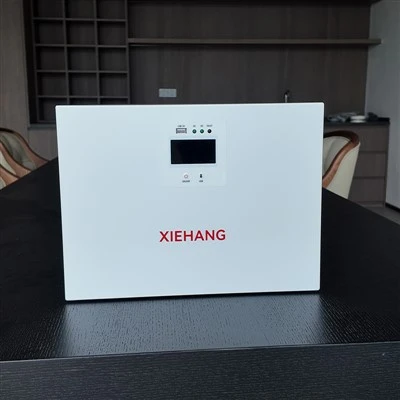
If you’re in the market for a portable power station for blackouts, or you have questions about which model is right for your home, feel free to reach out to our team for a consultation. We can help you calculate your energy needs, compare models, and make sure you’re prepared before the next power outage hits.
Solar Energy Storage System References
- U.S. Department of Energy. (2022). Portable Power and Generator Safety for Residential Use. Office of Energy Efficiency and Renewable Energy.
- Lithium Power International. (2023). LiFePO4 vs. Lithium-Ion Batteries: Performance and Safety Comparison. Battery Technology Journal.
- National Oceanic and Atmospheric Administration (NOAA). (2024). Power Outage Trends in the U.S., 2000–2023. National Centers for Environmental Information.
- Consumer Reports. (2023). Best Portable Power Stations for Home Emergency Use. Product Testing and Review.
- World Health Organization (WHO). (2022). Carbon Monoxide Poisoning from Portable Generators and Power Equipment. Public Health Emergency Report.
Zhejiang Xiehang New Energy Equipment Co., Ltd.
As one of the most professional portable power station manufacturers and suppliers in China, our products have good reputation in the market. Please erst assured to wholesale custom made portable power station from our factory. If you have any enquiry about cooperation, please feel free to email us.
Address: No.5 Hechen Road, Zhouwangmiao Town, Haining, Jiaxing City, Zhejiang Province, China
E-mail: dan.wu@xiehang.net
WebSite: https://www.shineonpower.com/
