When you’re running a quarry, mine, or aggregate processing plant, every component of your screening system matters—especially the polyurethane screen panels. I’ve been in this industry for 12 years, running a polyurethane screen supply business, and I can’t tell you how many times I’ve heard customers say, “I thought I knew my mesh size, but the material isn’t separating right.” More often than not, the problem isn’t the screen itself—it’s how they’re measuring the opening. Polyurethane screens don’t act like the old woven wire ones; their material properties change how measurements work, and guessing here will cost you in lost production, incorrect sizing, and wasted material. Today, I’m walking you through exactly how to measure polyurethane screen openings correctly, straight from the supplier who troubleshoots this for plants every single week. Polyurethane Screen
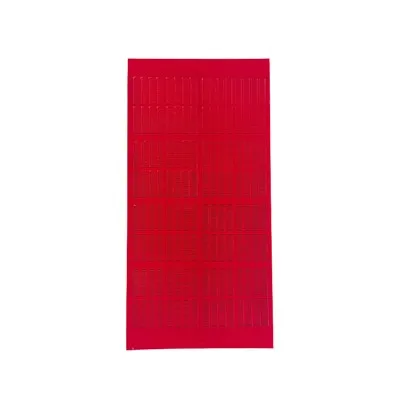
First, let’s get one thing straight: polyurethane isn’t steel. Woven wire mesh is rigid, so you can pull a strand taut and measure the gap, but polyurethane is flexible, has a slight rubbery give, and its openings are often molded, not woven. Most standard polyurethane screens for mining and aggregate use have either rectangular or square openings, but some custom designs have slotted or irregular gaps for specific materials. The biggest mistake I see is people measuring the opening when the panel is off the screen deck, or under tension. Unloaded polyurethane will stretch when you put it under the weight of feed material, and if you measure it slack, you’ll get a number that’s smaller than the actual working opening. That leads to ordering a screen that’s too tight, causing blinding, or too loose, letting oversize material pass through. Let’s start with the basics: what is a polyurethane screen opening, anyway? For our purposes, it’s the distance between two adjacent polyurethane struts (the “wires” of the screen, but solid molded pieces) when the screen is mounted under its recommended working tension on your deck. That tension is critical—usually between 150 and 200 lbs per linear inch, depending on the panel size, and it’s specified by the manufacturer for a reason.
First step: gather your tools. You don’t need fancy lab equipment, but generic tape measures won’t cut it here. I recommend three things: a digital caliper (accurate to 0.01 mm), a set of feeler gauges, and if you’re working with a mounted screen, a small portable tension gauge (we keep a set of these in our service truck for on-site calls). The digital caliper is non-negotiable—manual calipers or tape measures can be off by half a millimeter, which is the difference between a 5mm screen that sorts gravel correctly and one that doesn’t. Feeler gauges help if you’re checking gaps that are too narrow for a caliper to fit easily, and the tension gauge is only for when you’re verifying the screen is installed properly, not measuring the opening itself.
Now, let’s break down the process step by step. First, confirm the screen is installed correctly. If you’re testing a screen that’s already on your deck, make sure it’s been under load for at least 2 hours before measuring. Polyurethane takes time to settle into its working shape—when you first mount a new screen, it stretches a tiny bit as the feed hits it, and the opening will shift during that break-in period. Skipping this step is a top mistake I see: one customer last month measured his screen 10 minutes after installing it, got a 4.8mm opening, and complained that the 5mm screens I supplied were wrong, only to realize the opening settled to 5.2mm after 48 hours of use. Wait for that break-in period. If you’re measuring a new screen panel that’s not installed, clamp it to a flat, rigid surface under the exact tension recommended for your screen type. Most heavy-duty mining screens are tensioned to 180 lbs per linear inch, while lighter aggregate screens are 150 lbs—check your screen’s spec sheet, or give our team a call if you’re not sure what tension your panels need.
Next, identify the correct opening to measure. For standard square or rectangular openings, you have two measurements: the width of the opening (the gap between struts) and the length of the strut itself. When people ask for “mesh size,” they almost always mean the clear opening (the gap), not the total width of one strut plus one gap. Woven wire sometimes gets this mixed up, but not with polyurethane—our spec sheets always list clear opening size first, for that exact reason. Now, how many openings do you need to measure? Don’t just measure one gap and call it good. Polyurethane molding can have small variations, usually within 0.1mm for our production screens, but older screens or custom panels might have more. I always tell customers to measure at least 5 openings across the panel, from the center to the edges, because edges often stretch differently than the middle. On a 6-foot-wide screen, for example, measure openings at 1 foot, 2 feet, 3 feet, 4 feet, and 5 feet from the edge. Take an average of those 5 numbers—that’s your actual working opening. If one opening is way off, that could be a manufacturing defect, which we warranty, but minor variations are normal.
Now, the actual measurement technique. For clear openings that are wide enough for your digital caliper to fit: open the caliper jaws, and gently insert them into the gap between two struts. Don’t push too hard—polyurethane will compress, and you’ll get a measurement that’s smaller than the actual gap. Hold the caliper jaws parallel to the struts, not at an angle, because angled measurements will add a few tenths of a millimeter and make the gap seem larger than it is. Lock the caliper and note the number. For openings that are too narrow for the caliper (like 1mm or 2mm gaps), use the feeler gauge: slide the thinnest feeler gauge (start with 0.5mm) into the gap until it fits snugly, then check the next thicker gauge until you find the one that slides in easily but doesn’t wobble. That’s your opening size. For slotted screens (used for things like sand or fine material), you’ll measure two dimensions: the narrow gap (called the slot width) and the long gap (slot length). Never mix those up—slot width is what determines the top size of material that passes through, not the length.
Wait, what about screen wear? A lot of plants replace polyurethane screens when they see holes, but the opening starts changing long before that. Polyurethane wears from impact and abrasion, so the struts slowly thin, which makes the opening larger over time. We get calls all the time from customers saying their screen is “wearing out fast,” and when we measure the opening, it’s grown 1mm in 3 months, which means they’re now letting oversize material through, leading to bottlenecks downstream. The rule of thumb for polyurethane screens is to measure the opening every 3 months for active screens, or every month if you’re processing hard, abrasive material like granite or iron ore. If the opening has increased by more than 10% from the original spec, it’s time to replace the screen. That’s a big one—if you wait for a hole to form, you’ve already had weeks of bad sizing and lost production.
I also want to address a common myth people tell me: “I can measure the screen opening with the old mesh size I’ve always used.” That doesn’t work for two reasons. First, polyurethane screens can have slightly different molded openings even if they’re labeled the same size, because different manufacturers use different molding processes. Second, over time, your installation tension might slip—loose clamps mean the screen stretches under load, making the opening larger, while over-tensioning can crack the polyurethane and narrow the opening temporarily. We had a client in Colorado last year who used woven wire mesh for years, switched to our polyurethane screens, and thought his 10mm woven mesh would work the same as our 10mm polyurethane. Turns out, the woven mesh’s opening is the gap between wires that are each 2mm thick, so total mesh size is (gap + wire thickness) = 10mm, while our polyurethane screen’s 10mm is the clear gap, so the total between struts is 10mm plus the thickness of our struts (usually 1.5mm to 3mm). He ordered the wrong size screens, and we swapped them at no cost because I walked him through that difference when he called asking for advice.
Let’s also talk about testing for accuracy, because even if you do everything right, you might need to verify your measurements. If you’re processing a material that has a strict top size (like 5mm aggregate for concrete), take a sample of your oversize material and sieve it. If 10% of the material is larger than your screen opening, that means your actual working opening is bigger than what you measured. That could be because your screen was under-tensioned, or because the feed material is stretching the polyurethane slightly—polyurethane has a tensile strength, and when you run very heavy feed, the struts bend a tiny bit, widening the opening. That’s normal, but you should adjust your screen size to account for that. For example, if your measured opening is 5mm and you have 8% oversize, you’ll want to order a 4.75mm screen to compensate for that slight bend under load.
Another thing: how to measure for custom screens, which a lot of our clients order for hard-to-process materials like sticky clay or wet sand. For custom polyurethane screens, the opening is often not uniform—some areas have thinner struts if they’re designed to handle high impact. To measure a custom screen, use the same process: clamp it to a flat surface under the specified tension, measure at 5 points across the screen, average them, and compare to the spec sheet. If you need a custom size, our team will send a pre-production sample for you to measure and confirm before we run the full order—we’ve had too many clients order wrong custom screens, so we stopped shipping full orders without approval.
Now, let’s cut to the part that matters for your operations. Getting the polyurethane screen opening right reduces blinding (when material gets stuck in the gaps, blocking flow), reduces oversize carryover, and cuts down on screen replacement costs. One customer in Arizona went from replacing his screens every 6 months to every 18 months once he started measuring the opening correctly and adjusting tension. That saved him over $20,000 a year in screen costs alone, plus the lost production from downtime when screens fail.
If you’re not sure how to measure your screen, or if you suspect your current screens are the wrong size, don’t guess. We offer free on-site screen testing for all our clients, and even for people who didn’t buy their screens from us. Our service team will come to your plant, measure all your screens, check tension, give you a report on actual opening sizes, and help you adjust your process to get better sizing. No pressure, just real advice from people who’ve been in this industry for decades, fixing problems like yours every day.

When you’re ready to order screens that are sized correctly for your operation, or if you need help troubleshooting sizing issues, reach out to our team. We don’t push generic off-the-shelf screens that don’t fit your specific process—we work with you to confirm the opening size, tension requirements, and panel design that will give you the best results. We’ve supplied screens to quarries, mines, and aggregate plants across the country, and we know getting the opening right is the difference between a screen that works for you and one that’s a waste of money.
Pu Screen Mesh References:
- Polyurethane Screen Panel Design and Performance Standards. International Society of Mine Ventilation and Process Equipment, 2021.
- Tension Effects on Polyurethane Screen Openings. Journal of Industrial Screening Technology, Vol. 12, No. 3, 2019, pp. 45-52.
- Wear Characteristics of Polyurethane Screening Media in Aggregate Processing. Aggregates Association of North America, 2020.
- Calibration Protocols for Screening Equipment. Mine and Quarry Operations Manual, 6th Edition, 2022.
Yangzhou Yaye Wire Mesh Manufacturing Co., Ltd.
As one of the most professional polyurethane screen manufacturers in China, we have world-leading production equipment and strong manufacturing capabilities. Please feel free to wholesale cheap polyurethane screen in stock here from our factory. Also, free sample is available.
Address: No. 1 Jiangjia Road, High-tech Industrial Park, Jiangdu District, Yangzhou City, Jiangsu Province
E-mail: 13952515577@163.com
WebSite: https://www.yayescreen.com/
