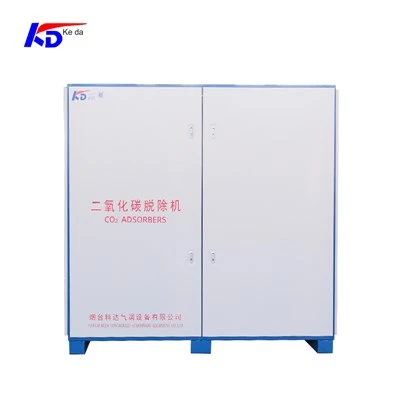
If you’ve ever walked along a tropical or subtropical tidal shore, you’ve likely seen mangroves—twisted, salt-tolerant trees with roots that dip into murky, slow-moving water, standing between land and sea. What many people don’t know is that these unassuming ecosystems are among the most powerful natural tools we have to fight climate change. As a Carbon Dioxide Remover (CDR) supplier, my team and I spend our days helping organizations turn these ecosystems’ carbon-storing superpowers into tangible action, but we often get asked a simple question: how do mangroves actually sequester CO₂? It’s not just about “trees absorbing carbon”—it’s a far more complex, efficient process that makes mangroves stand out from almost any other terrestrial forest on the planet. Carbon Dioxide Remover
Let’s start with the basics of carbon sequestration: when plants pull CO₂ out of the atmosphere, they use photosynthesis to turn that carbon into sugars, building leaves, branches, and roots. Most forests store that carbon in their aboveground biomass—the trunks and leaves we can see. But mangroves don’t stop there; their secret lies in their habitat, which is one of the wettest, most oxygen-poor places on Earth. Here’s the step-by-step breakdown of how it works, and why it matters for CDR.
First, mangroves are masters at pulling CO₂ from the air, and their growth is relentless. A healthy mangrove forest can sequester up to twice as much carbon per acre as a tropical rainforest, according to recent studies. That’s not just a guess—field measurements show that mature mangroves can accumulate between 2 and 5 metric tons of carbon per hectare each year, compared to around 1 to 2 metric tons for upland rainforests. Why the difference? For one, mangroves grow in nutrient-rich, tidal zones where sunlight is abundant and water is rarely scarce, so their photosynthesis rates are consistently high year-round, unlike temperate forests that go dormant in winter.
But the real magic happens when that carbon is stored. Most forest trees shed leaves and branches, which decompose on the forest floor, and bacteria quickly break down the organic matter, releasing CO₂ back into the atmosphere. Mangroves avoid this because their root systems are submerged in waterlogged soil that has almost no oxygen. The decomposition process in anaerobic (oxygen-free) soil is incredibly slow—so slow that much of the dead leaves, roots, and branches from mangroves never fully break down. Instead, they get buried under layers of sediment, and that carbon stays locked away for centuries, even millennia.
This is called “blue carbon”—the carbon stored in coastal marine ecosystems like mangroves, salt marshes, and seagrass beds. Mangroves alone store up to four times more carbon in their soils than tropical rainforests do in their aboveground biomass. That’s a staggering stat. A 2021 study in Nature Geoscience found that mangrove soils can hold up to 1,000 metric tons of carbon per hectare, with some undisturbed forests reaching even higher. Compare that to a typical Amazon rainforest, which stores around 200 tons of carbon per hectare in its trees alone—you can see why blue carbon is a game-changer for climate action.
But it’s not just soil storage. Mangroves also have unique root structures that help them capture and hold sediment. Their prop roots (the thick, aerial roots that stick up from the water) and pneumatophores (the finger-like roots that stick out of the mud) slow down tidal water as it moves in and out of the forest. When water slows, it drops its load of sediment—sand, silt, and dead organic matter—right onto the forest floor. This sediment buildup adds more layers of soil, which bury even more organic carbon deep below the surface. So not only do mangroves produce a lot of carbon-rich matter, they actively protect it from being eroded or disturbed.
Another key point: mangroves don’t just store carbon for themselves. They also export small amounts of dissolved organic carbon to adjacent coastal waters, where it can be stored in marine sediments or used by other marine organisms. This “outwelling” of carbon means that the impact of mangrove sequestration isn’t limited to the forest itself—it ripples through coastal ecosystems, adding to the total carbon locked away. For example, seagrass beds near mangroves often store additional carbon from the organic matter that washes off the mangroves, creating a whole network of blue carbon storage.
Now, you might be wondering: if mangroves are so good at sequestering carbon, why isn’t everyone talking about them more? The problem is that mangroves are one of the most threatened ecosystems on the planet. Over the past 50 years, we’ve lost around 35% of the world’s mangroves, mostly due to coastal development, aquaculture (like shrimp farms), and logging. When a mangrove forest is cleared, the stored carbon in its soil is released back into the atmosphere as CO₂ and methane—sometimes within just a few years. In fact, mangrove deforestation accounts for about 10% of all tropical coastal carbon emissions, even though mangroves make up less than 1% of tropical forest area.
That’s where my team’s work as a CDR supplier comes in. We don’t just talk about mangroves as a climate solution—we work with organizations to protect and restore mangrove ecosystems, turning that sequestered carbon into verified, measurable carbon removal credits. The key here is that mangrove-based CDR is not just about planting new trees; it’s about ensuring that existing forests are protected from destruction. Restoring mangroves is also important, but it takes time—newly planted mangroves take 5 to 10 years to reach full growth, and their carbon sequestration rates peak after 20 to 30 years. Protecting intact mangroves, on the other hand, delivers immediate carbon removal, because the carbon is already stored in the soil and biomass.
But how do we verify that carbon is actually being sequestered? It’s not enough to say “we protected mangroves”—we need to measure how much CO₂ is being removed, and ensure that that carbon stays locked away for decades, if not centuries. That means working with local scientists to conduct soil and biomass surveys, using satellite imagery to track changes in forest cover, and following strict standards for carbon accounting (like the Verra Blue Carbon Standard, which is the leading framework for mangrove CDR). Our team also partners with local communities in mangrove regions—like coastal villages in Southeast Asia and Central America—because the long-term success of mangrove protection depends on giving local people a stake in the ecosystem. When communities rely on mangroves for fishing, storm protection, and livelihoods, they’re far more likely to protect them than if outside organizations just impose conservation rules.
There’s another benefit of mangrove sequestration that often gets overlooked: mangroves are natural climate solutions that provide additional co-benefits, unlike many man-made CDR technologies. For example, mangroves act as a buffer against storm surges, protecting coastal communities from hurricanes and typhoons—something that’s becoming more important as climate change intensifies extreme weather. They also provide habitat for fish, birds, and other marine life, supporting fisheries that millions of people depend on for food and income. So when an organization invests in mangrove-based CDR, they’re not just removing CO₂ from the atmosphere—they’re investing in biodiversity, food security, and climate resilience.
Let’s put this into perspective with a real-world example. A 1-hectare patch of intact mangrove forest sequesters roughly 3 metric tons of CO₂ each year, and its soil already holds around 800 tons of carbon. If that patch was threatened by a planned shrimp farm, our team could help the organization purchase carbon credits to protect that forest. That credit would represent the CO₂ that would have been released if the mangroves were cleared, plus the ongoing sequestration of new carbon each year. For an organization looking to offset its emissions or hit its net-zero goals, that’s a far more impactful investment than many other CDR options, because it delivers both climate and community benefits.
But it’s important to note that mangrove sequestration isn’t a silver bullet. We can’t plant or protect our way out of climate change—we still need to cut global emissions drastically. But mangroves are a critical part of the solution, and as a CDR supplier, we’re focused on scaling up these projects while ensuring they’re equitable, transparent, and effective. Too many carbon removal projects in the past have failed because they didn’t account for local communities or used flawed accounting methods—so our team prioritizes working directly with local organizations, using third-party verified measurements, and ensuring that every credit represents real, additional carbon sequestration that wouldn’t have happened without our intervention.
So when you ask how mangroves sequester CO₂, it’s not just a simple answer. It’s a combination of fast growth, efficient photosynthesis, oxygen-poor soil that slows decomposition, sediment capture that builds up carbon-rich soil, and the ability to store that carbon for centuries. It’s a process shaped by millions of years of evolution, and it’s one of the most nature-aligned CDR options available.
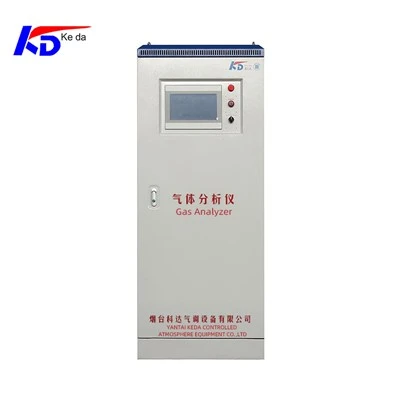
If your organization is looking to invest in high-impact, nature-based carbon removal projects that deliver both climate and community benefits, we’d love to talk. Our team has decades of experience working with mangrove ecosystems across the globe, and we can help you design a CDR strategy that aligns with your goals. Reach out to us to start a conversation about how we can work together to scale mangrove protection and restoration as a key part of the global effort to fight climate change.
Controlled Atmosphere Warehouse Accessories References
- Alongi, D. M. (2014). Carbon sequestration in mangrove forests. Nature Climate Change, 4(4), 281-286.
- Duarte, C. M., et al. (2013). The role of coastal plant communities for climate change mitigation and adaptation. Nature Geoscience, 6(11), 861-866.
- Pendleton, L., et al. (2012). Estimating global “blue carbon” emissions from conversion and degradation of vegetated coastal ecosystems. Proceedings of the National Academy of Sciences, 109(35), 12697-12702.
- Simon, M., et al. (2021). Long-term carbon storage in mangrove soils is dominated by sedimentary organic matter. Nature Geoscience, 14(10), 727-732.
- Verra. (2022). Blue Carbon Standard Version 3.0. Verra Registry.
Yantai Keda Zhixian International Trade Co., Ltd.
As one of the leading manufacturers and suppliers of carbon dioxide remover in China, we have world-leading production equipment and strong manufacturing capabilities. Please feel free to buy high-grade carbon dioxide remover for sale here from our factory.
Address: No.18-2, Wuhan St, Yantai ETDZ, Yantai, Shandong, China
E-mail: ytkeda2026@163.com
WebSite: https://www.kedacastorage.com/
