Hey there, quick question: if you’ve got a high-temp pipe leak, can you just slap a standard flange repair clamp on it and call it a day? As a flange repair clamp supplier who’s talked to plumbers, plant managers, and maintenance techs for years, this is one of the most common head-scratchers I get—and honestly, it’s not a yes/no answer. Let’s break this down like we would over a coffee, no stuffy engineering jargon, just real talk about what works when, what doesn’t, and what you need to know before you reach for that clamp. Flange Repair Clamp
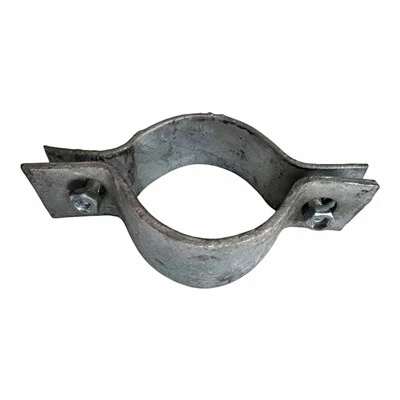
First, let’s set the scene: high-temp pipes aren’t the same as your regular household plumbing. We’re talking about pipes carrying steam, hot water, or industrial fluids that regularly hit 250°F (121°C) and above—sometimes way higher, like 750°F (399°C) for power plant exhaust lines. Standard flange repair clamps, the ones you might grab off a hardware store shelf, are built for room temp or low-heat use, right? So they’ll fail if you toss ‘em on a pipe that’s blasting 400°F fluid. But here’s the thing: that doesn’t mean flange repair clamps as a whole are off-limits for high-temp jobs. It comes down to two big factors: the materials the clamp’s made of, and how you install it.
Let’s start with materials, because that’s the make-or-break. I’ve seen too many people cut corners here. A standard cheap clamp has a rubber (EPDM or nitrile) gasket inside, and a mild steel outer shell. At temps over 200°F, that rubber gasket starts to break down—it swells, hardens, or crumbles, which means the clamp won’t seal anymore. Mild steel, meanwhile, can warp or corrode faster at high temps, especially if the pipe’s carrying acidic or mineral-rich fluids. But our high-temp flange repair clamps? We spec them with viton or silicone gaskets, and 304 or 316 stainless steel outer shells. Viton can handle up to 500°F easily, silicone goes even higher—some of our industrial grades work up to 750°F, perfect for power plants, refineries, or manufacturing lines. 316 stainless is also way more resistant to heat corrosion than mild steel, so it won’t crack or lose its tightness when the pipe’s hot.
Wait, but hold on—even the best clamp won’t work if you match the wrong clamp to the wrong pipe. Let’s say you’ve got a steel pipe carrying 300°F water, but you try to use a clamp rated for 700°F? That’s overkill, but it’s not a problem. If you’ve got a 600°F steam line and you use a 300°F rated clamp, that’s when you get a leak, maybe even a dangerous rupture. I once had a customer who tried a standard clamp on a 500°F steam pipe at a food processing plant—total disaster, the gasket blew out within a week, cost them $10k in downtime before they called us. Lesson learned: always check the clamp’s temp rating against your pipe’s operating temp. Most reputable suppliers (cough, us) will print that rating right on the clamp’s packaging, and our sales team will even help you confirm it before you order.
Next up, installation. Even a high-temp clamp won’t seal if you mess up the install. Flange repair clamps work by wrapping around the pipe, clamping down on the leak area, and squeezing the gasket tight to stop the leak. For high-temp pipes, there are a few extra steps you can’t skip. First, make sure the pipe’s surface is clean and free of rust, scale, or old sealant. At high temps, any debris between the clamp and the pipe will expand and create gaps—leaks. I’ve had a customer who skipped cleaning, and their clamp started leaking after a month because mineral deposits on the pipe had pushed the gasket away. Second, don’t overtighten the bolts. A lot of people think “tighter is better,” but for high-temp pipes, the gasket needs just the right amount of pressure. Overtighten, and you can crack the gasket or warp the clamp’s shell. Under tighten, and you get a loose seal. Our installation guide (we give these out free, no charge) has a torque spec for every high-temp clamp size—just follow that, and you’re good. Also, make sure the clamp is centered directly over the leak, not off to the side. A lot of leaks happen right at a flange, so the clamp needs to cover both sides of the flange’s gap evenly.
Wait, another common myth: flange repair clamps are only for small leaks. No, they work great for large, high-temp leaks too, as long as it’s a flange connection. But what about pipe joints that aren’t flanged? That’s a different story, but today we’re talking flange clamps, so stick to flanged joints. Now, let’s talk about when you shouldn’t use a flange repair clamp for high-temp pipes. If the pipe is corroded all the way through, or has a crack longer than the clamp’s coverage area, a clamp won’t hold. Also, if your pipe is under extreme pressure (over 150 PSI, depending on the temp), you might need a more heavy-duty solution, like a welded flange, but in a lot of cases, a high-temp clamp is a way faster fix, no hot work required. That’s a big one—hot work (welding, cutting) is a huge fire risk in industrial settings, and it takes time to get permits. A flange repair clamp can be installed in a fraction of the time, without any hot work, which is a win for safety and downtime.
I want to be real with you: not all flange repair clamps are built the same. Some suppliers cut corners on materials, so their “high-temp” clamps are just standard ones with a fancy label. How do you tell the good ones apart? Look for certifications. Our high-temp clamps are tested and certified to meet ASME PCC-2 standards, which is the industry standard for repair of pressure equipment. That means they’ve been put through rigorous heat and pressure tests, so you know they’ll perform. Also, check the gasket material—if it’s not labeled viton, silicone, or graphite, it’s probably not high-temp rated. Graphite gaskets are another good option for super high temps (up to 1000°F, if you need it), so ask your supplier if they offer graphite gasket options.
Let me throw in a quick real-world example to make this concrete. Last year, we had a customer at a chemical plant who had a leak on a 4-inch steel pipe carrying 450°F hot oil. They’d tried a standard clamp from a local hardware store, but it leaked within two days. They called us, we recommended our 4-inch high-temp flange clamp with a viton gasket, and installed it during a scheduled shutdown in about 45 minutes. It’s still holding, 18 months later, no issues. Another example: a power plant that had a leak on a 6-inch steam pipe at 650°F. They were going to schedule a shutdown to weld a new flange, but we got them a custom clamp with a graphite gasket, installed it while the plant was running, and saved them 3 days of downtime and $50k in lost production. That’s the value of a properly matched high-temp flange repair clamp.
Wait, what about maintenance? Do you need to check the clamp after installation, especially on high-temp pipes? Yeah, a quick check every 3 to 6 months is a good idea. High temps can cause the bolts to loosen over time, so just a quick tighten with a wrench (not too tight, follow the torque spec) can prevent leaks. Also, check the outer shell for any signs of corrosion, especially if the pipe is carrying corrosive fluids. 316 stainless is more resistant, but it’s not indestructible, so a quick look can catch issues early.
Now, let’s answer the original question directly: Can a flange repair clamp be used on high temperature pipes? The answer is yes, but only if you pick the right clamp for the job, install it correctly, and follow the maintenance guidelines. Standard, low-temp clamps won’t work, but purpose-built high-temp flange repair clamps are a reliable, safe solution for most high-temp flange leaks.
I get it, picking the right clamp can be overwhelming, especially if you’re not super familiar with the specs. That’s where we come in—we’ve been supplying flange repair clamps for over a decade, and our team can help you figure out exactly what you need for your pipe, no pressure. Whether you’re dealing with a small household water pipe at 300°F or a industrial steam line at 700°F, we’ve got the right clamp, gaskets, and installation tips to get the job done right, on the first try.
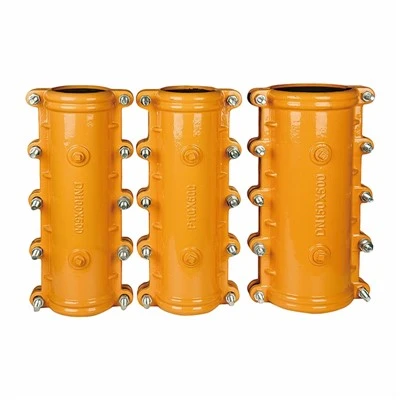
If you’re dealing with a leak and want to stop it fast, or just have questions about what clamp works for your high-temp pipe, reach out to our team to discuss your requirements and get a quote.
Double Socket Connector References
- ASME PCC-2-2020, Repair of Pressure Equipment and Piping, American Society of Mechanical Engineers
- Viton Gasket Temperature Performance Data, DuPont Fluoroproducts
- Silicone Rubber Material Properties for High Temperature Applications, Dow Chemical Company
- Industrial Pipe Repair Best Practices for High Temperature Systems, Pipeline & Gas Journal
Fujian Fufa Valve Manufacturing Co., Ltd.
As one of the most professional flange repair clamp manufacturers and suppliers in China, we’re featured by quality products and good price. Please rest assured to buy durable flange repair clamp made in China here from our factory. Welcome to view our website for more information.
Address: Meilin Xikou Industrial Zone, Nan’an City, Quanzhou City, Fujian Province
E-mail: hongwenjin@fufafamen.cn
WebSite: https://www.fufavalve.com/
