Hey everyone, if you’ve ever worked around an articulated boom lift (you know, the ones that reach over obstacles, fit through tight warehouse doors, and swing around job site hazards like a trusty, extendable superhero), you probably know two things: one, they’re total lifesavers for high-altitude work, and two, skipping regular maintenance will turn that hero into a pricey paperweight real fast. As a supplier of these bad boys, I’ve seen way too many guys cut corners on lubrication—stuff that could’ve been avoided with a 10-minute check and a $5 grease tube. Today, I’m breaking down exactly how to lubricate your boom lift, no fancy tech degree required, because let’s be real, most of us on job sites just want actionable, no-BS tips. Articulated Boom Lift
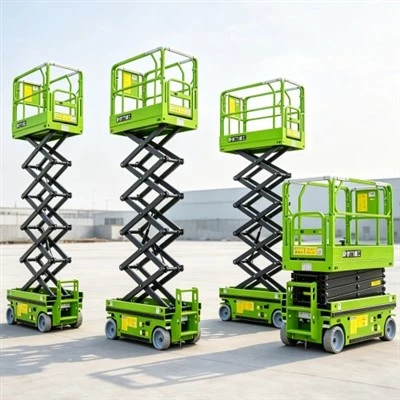
First off, let’s get one thing straight: articulated boom lifts aren’t like your average car. They have those knuckle joints (the articulated parts that make up the boom) that twist, turn, and bear the brunt of every move you make up there. Skip lubricating those, and you’ll start hearing weird squeaks, see uneven movement, or even worse, a joint that seizes mid-job. That’s not just a downtime issue—if you’re 40 feet up, a seized boom is a straight-up safety hazard. I’ve heard too many horror stories of operators ignoring squeaks and ending up stuck, or worse, damaging the boom so bad it needs a $20k repair. Not cool.
Now, before you grab that grease gun, let’s do a quick prep check. You don’t want to be halfway through and realize you’re missing something, or worse, using the wrong grease. First, confirm your lift is on level ground—we’ve had guys try to grease a boom on a sloped driveway and end up with grease seeping into wires because the joint shifted. Then, shut off the engine, set the emergency brake, and lower the boom all the way to the ground. No exceptions here. Safety first, always. Next, dig up your lift’s manual. Yeah, I know, manuals are thick and dusty, but every model has specific grease requirements—some need lithium-based grease, others synthetic for extreme temps. Using the wrong stuff? It’ll gum up in cold weather or break down in heat, which defeats the whole purpose. Pro tip: keep a spare tube of the recommended grease in your toolbox at all times—no running to the auto parts store mid-job because you grabbed the wrong one.
Let’s dive into the key parts you need to lubricate, and how to do each right. First up, the knuckle joints—these are the big, obvious hinged parts that let the boom fold and reach. On most articulated lifts, you’ll find grease zerks (those little metal fittings that look like tiny nipples) on both sides of each knuckle, plus some on the base where the boom connects to the lift’s chassis. Here’s the move: grab your grease gun, make sure it’s locked to the right grease tube, and attach the nozzle to the zerk. Push straight on—don’t angle it, or you’ll bend the zerk and have to drill a new one (ask me how I know, that’s a $15 mistake). Pump the gun slowly, until you see a little bit of old grease oozing out from the joint seal. That’s your sign—you don’t need to over-grease, that just wastes grease and can trap dirt inside, which wears down the joint faster. Wipe any excess grease off with a rag, because dirty grease is worse than no grease.
Next, don’t sleep on the turntable. That’s the big round part under the boom that lets the whole upper section rotate 360 degrees. A lot of guys skip this because it’s not as flashy as the knuckles, but a dry turntable will make your boom swing jerky, and over time, it’ll cause uneven wear on the gear teeth. You’ll find a couple of zerks around the turntable edge—same rule applies here: pump until fresh grease comes out, wipe excess. If your lift has a grease fitting for the swing motor, hit that too—another small part that causes big problems when neglected.
Then there are the smaller moving parts people almost always miss: the lift cylinder pins, the steering linkage (if it’s a driveable model), and the access platform hinge. The platform hinge might seem trivial, but if it seizes up, you can’t safely exit the platform when you’re done. And don’t forget the outrigger pins if you’re using a lift with outriggers—those things take a ton of stress when extended, so they need regular grease too. One quick note on cylinder pins: they’re usually covered by a rubber boot to keep dirt out. Before you grease, pull the boot back a little (don’t yank it off, that’ll tear it) to make sure you’re not pumping grease through a layer of crud into the pin. Grease gets in the pin, not on top of the boot.
Wait, what about how often should you do this? I get it, job sites are chaotic, you’ve got 10 things on your to-do list. But here’s the schedule I swear by: if you’re using your boom lift daily, lubricate the knuckle joints, turntable, and key pins every 50 hours of operation. If it’s a weekend warrior, once a month if you’re using it a couple times a month, but if it’s sitting in the sun all winter, grease it before you start it up in spring. Extreme temps change this too—if you’re working in 100-degree heat, you might want to bump it to every 30 hours, and if it’s below freezing, same deal, because grease thickens and doesn’t lubricate as well in cold.
Now, common mistakes guys make that end up costing them. First, over-greasing. I saw a guy last week pump so much grease into a knuckle that it seeped into the hydraulic lines, causing a leak that shut down his lift for two days. Worse, it trapped dirt between the joint and the seal, so he had to replace the whole knuckle for $8k. Remember: a little fresh grease is way better than a mountain of it. Second, using the wrong grease. Some guys grab whatever’s cheap from the job site, but if your manual says synthetic lithium complex grease, that’s non-negotiable. It’s formulated to handle the pressure and temps these joints go through. Third, skipping the prep steps—working on a sloped lift, not lowering the boom, not locking the brake. That’s how accidents happen, and trust me, no grease tube is worth a safety incident.
Let me tell you, as a supplier, I’ve seen firsthand that regular lubrication adds years to a boom lift’s life. We’ve got customers who’ve had their lifts for 15 years, still running strong, because they stuck to a grease schedule. And the ones who cut corners? They’re back every six months with a seized joint or a broken turntable, needing costly repairs or even a new unit. That’s why I always push this: a 10-minute lubrication check is way cheaper than replacing a part.
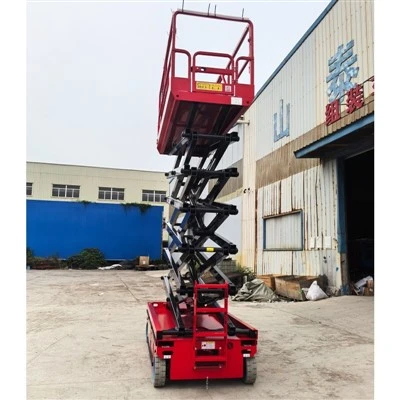
Now, if you’re not sure if you’re doing it right, or you need replacement parts (grease guns, extra tubes, even replacement zerks), don’t overcomplicate it. We’ve got all the supplies you need, and if you’ve got questions about your specific model’s grease specs, just reach out. Whether you’re a small construction crew or a big rental company, we’re here to help keep your lifts running smooth.
Mast Lift References
- "Articulated Boom Lift Maintenance Guide," National Elevator Industry, Inc., 2022
- Heavy Equipment Lubrication Best Practices, Construction Equipment Association, 2021
- Operator Safety Guidelines for Aerial Work Platforms, Occupational Safety and Health Administration (OSHA), 2020
Shandong Zhongke Huali Machinery Co., Ltd.
As one of the most professional articulated boom lift manufacturers and suppliers in China, we also support customized service. We warmly welcome you to wholesale discount articulated boom lift in stock here from our factory. For price consultation, contact us.
Address: No. 2 Qubai Road, Qudi Street, Jiyang District, Jinan City, Shandong Province
E-mail: yonghuiai@hualizgjx.com
WebSite: https://www.hualiheavy.com/
