If you’ve ever assembled a power supply for a desktop PC, wired a home’s smart thermostat to its control panel, or even hooked up a portable speaker to its internal battery pack, odds are you’ve interacted with a 4.20mm pitch connector—even if you didn’t know its exact name. As a supplier that’s focused exclusively on manufacturing and distributing these connectors for over a decade, I’ve lost count of how many times people have come to me asking, “What even is a 4.20mm pitch connector, and why does it matter so much?” 4.20mm Pitch
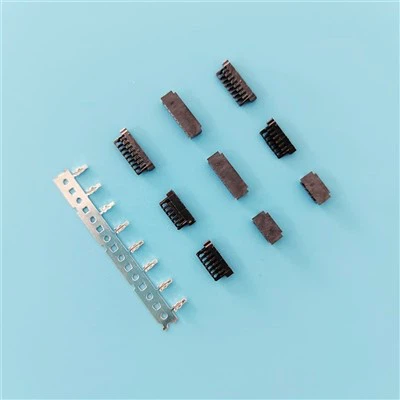
Let’s start with the basics, because that’s where most of the confusion happens. The “pitch” here refers to the distance between the center of one terminal and the next. For a 4.20mm pitch connector, that’s 4.2 millimeters between each contact point—no rounding, no approximation, just a precise measurement engineered for consistent, reliable connections. Unlike smaller pitch connectors, which are built for tiny, high-density electronics like smartwatches or wireless earbuds, 4.20mm pitch connectors are designed for applications that need more room for power and stability, not just miniaturization. That’s why they’ve carved out such a unique niche in industries that balance performance with durability.
Over the years, I’ve seen this connector used in every corner of the industrial and consumer tech spaces, but there are a few common applications that stand out as the backbone of our business. Let’s break them down, because understanding where these connectors live makes it easy to see why they’re a staple for engineers and designers.
First up: industrial power systems. If you walk into a manufacturing facility, the first thing you’ll notice (aside from the hum of machinery) is the network of control panels, motor drives, and sensors that keep everything running. Each of these components needs a consistent, low-failure connection to draw power and send signals, and that’s where 4.20mm pitch connectors shine. Smaller connectors can’t handle the voltage and current needed for heavy-duty industrial gear, while larger connectors are unnecessarily bulky for control panel wiring. I once worked with a automotive parts manufacturer that was having consistent issues with the thin wiring connectors they were using for their assembly line robot control modules. Those old connectors would work fine for a few months, but the vibration from the constant movement would loosen the terminals, causing downtime that cost them thousands of dollars a week. When they switched to our 4.20mm pitch connectors, the problem stopped almost entirely. The wider terminal spacing gives more surface area for crimping, so the connection stays tight even with the constant jostling of industrial machinery. What’s more, these connectors are rated for higher voltages—most of our standard 4.20mm pitch parts handle up to 600V, and some heavy-duty models go even higher—so they’re safe for the higher-power circuits common in industrial setups. That same reliability translates to other industrial gear too: things like factory HVAC controls, conveyor system sensors, and even power distribution units for warehouse lighting all use these connectors because they don’t need constant maintenance to stay functional.
Next, and one of the most visible applications for many people, is automotive electronics. Modern cars are nothing more than rolling collections of electronics, and every new model adds more features: backup cameras, infotainment systems, ADAS (advanced driver-assistance systems) sensors, and even electric vehicle (EV) charging components. Twenty years ago, a car might have had a dozen wiring harnesses; today, a single luxury model has upwards of 100. Each of these harnesses needs connectors that can handle the temperature swings, vibration, and exposure to moisture that come with being under the hood or inside the cabin. 4.20mm pitch connectors are a perfect fit here because they balance compact size with the power and signal integrity needed for car electronics. For example, the wiring that connects an EV’s battery management system (BMS) to individual battery cells uses these connectors. The BMS needs to monitor voltage and temperature for hundreds of cells, and each connection has to be tight enough to prevent voltage drops that could affect performance. I’ve worked with several EV startup teams that came to us frustrated with off-the-shelf connectors that couldn’t handle the thermal cycling of hot battery bays and cold winter drives. Our 4.20mm pitch connectors are engineered with gold-plated terminals (a standard for automotive use) that resist corrosion, and their locking mechanisms prevent them from coming loose—even if a tech pulls a harness the wrong way during service. They’re also used in traditional gas-powered cars too: the wiring for fuel injectors, ignition coils, and instrument clusters all rely on these connectors because they’re easy to assemble and take apart during repairs, which is a huge win for both manufacturers and mechanics.
Third on the list is consumer electronics power distribution. If you’ve ever opened up a desktop computer, a gaming console, or a large home audio system, you’ll see a power supply unit (PSU) connected to the various components: the motherboard, the graphics card, the hard drive. Each of those connections needs to carry a consistent amount of power, and they need to be secure enough not to come loose if you move the device or bump into it. 4.20mm pitch connectors are the standard here for mid-to-high-power consumer electronics because they’re less prone to overheating than smaller, tighter-pitch connectors that have less space for air flow. A few years ago, a small audio equipment brand came to me with a problem: their high-end home subwoofers were randomly cutting out during loud use, and their engineering team couldn’t figure out why. They’d been using a cheap 2.5mm pitch connector for the power input, but at the high current needed for a subwoofer, that small connector would heat up, soften the plastic housing, and create a loose connection. When they switched to our 4.20mm pitch power connectors, the heat was distributed across a larger terminal surface, so overheating became a non-issue, and the cutouts stopped entirely. We’ve also supplied these connectors to manufacturers of portable medical devices—like large home oxygen concentrators and portable X-ray machines—where reliability isn’t just a convenience, it’s a requirement. These devices can’t afford to have a power connection fail mid-use, and 4.20mm pitch connectors’ ability to handle consistent current without overheating makes them ideal for that space.
Another application that’s less talked about but just as important is renewable energy systems. Solar panel arrays, wind turbine control units, and residential battery storage systems all need connectors that can handle outdoor conditions: rain, snow, UV exposure, and extreme temperatures. 4.20mm pitch connectors are commonly used in the power distribution sections of these systems because they’re sealed to resist moisture and dust, and their crimped terminals create a permanent, low-resistance connection that doesn’t degrade over time. A solar installer out in the Southwest US once told me that he used to have to replace connectors on small off-grid solar systems every two years because the intense sun would break down the plastic housing of the old connectors. Since switching to our UV-resistant 4.20mm pitch connectors, he hasn’t had a single replacement in three years. That’s a huge selling point for renewable energy, where maintenance costs can eat into profit margins, and downtime during peak sun or wind hours is costly. Even small-scale residential solar setups, like those on a backyard shed or a tiny home, use these connectors to link the panels to the battery storage system because they’re easy to install without specialized tools.
Now, you might be wondering: why 4.20mm specifically, instead of another pitch? The answer comes down to that perfect balance between power, size, and ease of use. A pitch smaller than 4.20mm might be fine for low-power, high-density applications, but it can’t handle the voltage and current needed for industrial, automotive, or renewable energy use. A pitch larger than 4.20mm would be too bulky, adding unnecessary size and weight to devices where space is at a premium—like inside a car’s dashboard or a desktop computer case. That sweet spot is exactly why this connector has remained a go-to for engineers for decades, even as new connector materials and designs have come on the market.
As a supplier, I’ve learned over the years that the best connectors aren’t just about the pitch number stamped on the side. They’re about durability, ease of assembly, and the ability to perform consistently in real-world conditions, not just in a lab. That’s why we don’t just sell 4.20mm pitch connectors—we customize them, too. A lot of our clients come to us with specific needs: maybe they need a locking mechanism that’s easier for factory workers to connect quickly, or a plastic housing that’s more resistant to extreme cold for use in Northern Canada, or a specific number of terminals for a custom wiring harness. We don’t just send them a generic catalog part; we work with their engineering teams to adjust the design to fit their exact application.
If you’re an engineer working on a new industrial machine, an automotive design team refining a new EV model, a consumer electronics brand troubleshooting a power issue, or a solar installer looking for reliable outdoor connectors, chances are 4.20mm pitch connectors have come up in your design process. Maybe you’ve been using off-the-shelf parts that are causing downtime, or maybe you’re not sure if this connector is the right fit for your specific needs. I’ve been in your shoes—watching clients struggle with connectors that don’t hold up, that are too hard to assemble, or that overheat under load. That’s why we focus on making 4.20mm pitch connectors that solve those exact problems, backed by years of testing and real-world use across dozens of industries.

If you’re looking to source reliable, high-performance 4.20mm pitch connectors, or if you have questions about whether this connector is the right fit for your application, don’t hesitate to reach out to discuss your project needs.
2.00mm Pitch References
- "Connector Pitch Standards and Industrial Application Requirements," International Electrotechnical Commission (IEC) Standard 60352-1, 2021.
- "Automotive Wiring Harness Reliability: Connector Selection and Vibration Resistance," SAE International Journal of Materials and Manufacturing, Vol. 14, No. 2, 2020.
- "Power Distribution for Consumer Electronics: Thermal Management in High-Current Connectors," IEEE Transactions on Components, Packaging, and Manufacturing Technology, Vol. 11, No. 9, 2021.
- "Outdoor Renewable Energy Connector Performance: UV Resistance and Environmental Sealing," Journal of Renewable and Sustainable Energy, Vol. 13, No. 4, 2022.
Dongguan Yinglian Electronics Co., Ltd.
We’re well-known as one of the most professional 4.20mm pitch suppliers in China. With abundant experience, we warmly welcome you to buy bulk advanced 4.20mm pitch made in China here from our factory. If you have any enquiry about cooperation, please feel free to email us.
Address:
E-mail: James@csg-china.com
WebSite: https://www.csgconn.com/
