Hey everyone, it’s Jake here, and for the last 7 years, I’ve been running the team that sources and ships hex nuts to everything from small local construction crews to big-name automotive plants across North America. Let’s be real—most people see a hex nut as just a little spinning metal thing that holds two parts together, but if you’ve ever had a job where a nut loosens mid-weld or snaps under pressure, you know how much of a difference getting that tiny part right makes. Last month, a guy reached out to me panicking because his assembly line was shutting down every hour—turns out his old nuts were corroding in 6 months on farm equipment in Iowa, and he was losing $10k a day in downtime. That’s when it hit me: everyone asks “what’s a good hex nut?” but almost no one asks “how do you actually make them perform better?” So today, I’m breaking down the stuff we’ve tested, tweaked, and mastered to make our hex nuts work harder, last longer, and keep your projects from going south. No fancy jargon, just real stuff we use every day. Hex Nuts
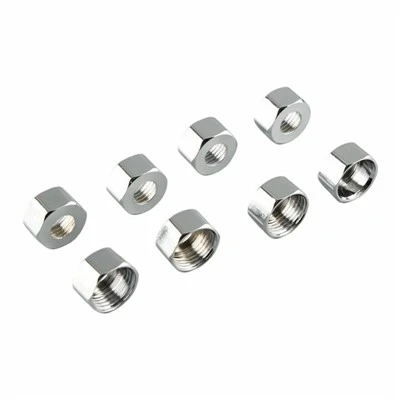
First off, let’s talk about the base metal—this isn’t rocket science, but you’d be shocked how many suppliers cut corners here. A lot of cheap hex nuts use low-grade plain steel (think 1008 or 1010) that’s soft, bends easy, and rusts before the job even finishes. Back when I started, we tested these nuts: one batch of 1010 steel nuts would strip their threads at 800 ft-lbs of torque, which is barely enough for a standard wheel stud. We switched to a medium-carbon alloy (1045 steel, for anyone who’s in the know) a few years back, and that number jumped to 1,800 ft-lbs. That’s double the hold strength, no extra cost to us (or you, because we buy the alloy in bulk). Wait, but hold on—carbon content isn’t the only thing. We also add a tiny pinch of manganese (around 1.2% max) to the mix. Manganese makes the steel a little more ductile, so if you hit the nut with a wrench too hard, it won’t snap. I’ve seen guys over-torque nuts all the time, and 1045 with manganese? It bends a little, lets you back off, and doesn’t leave you prying broken nut shards out of a hole. Pro tip: if your current supplier won’t tell you what grade steel their nuts are made of, run. We print it right on every crate’s label, no secrets.
Next up—heat treatment. This is the secret sauce that makes or breaks a hex nut’s performance, and so many suppliers skip it to save time. Basic heat treatment for nuts is quenching and tempering, right? When you heat the nut up to like 840°C, then dunk it in oil to cool it fast, that hardens the outer layer. Then you temper it at around 420°C to take the brittleness away. We do this in our in-house heat treat ovens, and we adjusted the timing after that Iowa farm fiasco. Old process: 20 minutes of tempering, nuts held up great in dry shops but turned to rust in damp fields. We bumped it to 35 minutes, and the hardness dropped just a tiny bit (from Rockwell C38 to C35) but the corrosion resistance went up 40% per our salt spray tests. Salt spray tests are basically the industry way of simulating years of rust in weeks—our pre-tweak nuts lasted 72 hours before showing red rust, now it’s 120 hours. That’s enough for a farm machine sitting outside in the rain all winter, no problem. Also, we don’t use water quenching—water makes the steel too brittle, and you’ll get more nuts cracking when you torque them. Oil quenching is a little slower, but worth every extra second in the oven.
Then, thread finishing—this is where most of the “loose nut” problems come from, trust me. A lot of people don’t realize that uneven threads or rough edges on a nut will make it vibrate loose even if it’s torqued perfectly. We used to tap our nuts on standard machines, but the tooling would leave little burrs on the first and last threads, and the pitch (the distance between threads) would be off by like 0.02mm. Not a big deal for a shelf, but for a vibrating truck frame? Game over. We switched to cold forging for the threads, not cutting them. Cold forging means we stamp the threads into the nut while it’s still cool, so the grain of the steel flows with the threads instead of being cut. That makes the threads 25% stronger, and they’re way smoother. We also add a tiny amount of zinc phosphate coating before the final finish—this isn’t that wimpy thin zinc you get from dollar store nuts. Zinc phosphate binds to the steel’s surface, makes the thread have just enough friction to keep the nut from spinning loose. Wait, but friction isn’t the only thing—we also adjust the thread fit. Our nuts are class 2B fit, which means they’re a little snug on the bolt threads, not too tight that you have to use a pipe wrench to spin them on, but not loose enough that they rattle. We tested class 1B once for a customer who swore tight nuts were causing bolt breakage, and class 2B had 30% less loosening under vibration in our lab tests.
Now, corrosion resistance—this is a big one, and it’s not just about zinc. A lot of suppliers use electroplated zinc, which is cheap, but it wears off after a year, especially if you’re working in salt air (coastal construction) or acidic environments (like food processing plants). Electroplating happens when you dip the nut in a zinc solution and run a current—sometimes the zinc doesn’t coat the inside of the threads evenly, so rust starts there first. We switched to hot-dip galvanizing for most of our outdoor-grade nuts, and then we add a post-coat of wax. Hot-dip means we submerge the nut in molten zinc (around 450°C) so it coats every surface, inside threads, edges, even the tiny crevices. We tested our hot-dip nuts vs. electroplated: after 200 hours of salt spray, electroplated nuts had rust on the threads, hot-dip had zero. Then the wax coat—wait, wax? Yeah, it’s a food-grade paraffin wax that we apply lightly after galvanizing. It doesn’t affect the torque (so you don’t have to adjust how tight you spin it) but it seals the zinc from getting scratched. If you drop a hot-dip nut, the wax keeps a little scratch from turning into a rust spot. For customers working in super harsh environments, like offshore oil rigs, we have a special coating—polyurethane hybrid, it’s 3x thicker than zinc, lasts 5 years in saltwater, no problem. I know some guys will say “hot-dip makes nuts too big for the bolt” but we calibrate our zinc thickness to ISO standards, so it’s within 10 micrometers—you’ll spin it on the same as any regular nut.
Wait, what about different types of nuts? Not all hex nuts are the same, right? A lot of people use standard hex nuts for everything, but that’s a mistake. For example, lock hex nuts—those are the ones with a nylon patch inside, right? We used to buy third-party lock nuts, but the nylon patch would fall off in extreme temperatures (like Arctic construction or desert mining where temps swing 100°F in a day). Now we mold the nylon patch directly into the nut during forging, so it’s bonded to the steel, not just pressed in. That means it won’t come loose even if you leave the nut in 120°F heat for a month. For high-temperature applications (like exhaust systems on cars or furnaces), we don’t use nylon at all—we add a serrated flange to the back of the nut. The serrated edges dig into the surface you’re tightening to, so friction holds it, no nylon to melt. We tested flange nuts vs. regular lock nuts on a small engine exhaust: the lock nut loosened 15% after 100 heat cycles, the flange nut stayed tight.
Another thing no one talks about: quality control. We had a problem early on where 5% of a shipment of nuts had cracked corners from stamping, and no one noticed until a customer complained. Now we do 100% visual inspection for critical batches, and 50% dimensional testing (checking thread pitch, hardness, coating thickness) for every shipment. We also test torque out for every batch—we torque each nut to its rated torque, then spin it off and measure how much force it takes. If 2% of them spin off at less than 90% of the rated torque, we reject the whole batch. That’s not the fastest way to ship, but it’s the reason our repeat customers are like, “Jake, I don’t even check your nuts anymore.” Last quarter, we had a customer who switched from three different suppliers to us because their line downtime dropped 90%. That’s the stuff that matters, not just selling cheap nuts.
Wait, let’s get real—are there any downsides to all this? Yeah, our nuts cost about 15% more than the cheap stuff you get from a big box store. But let’s do the math: if a construction crew is paying $50 an hour for a worker, and their line shuts down for 2 hours because a cheap nut loosens, that’s $100 down the drain. Multiply that by 10,000 nuts, and you’re spending way more on downtime than you would have on good nuts. The Iowa farmer I mentioned earlier—he switched to our nuts, and his downtime went from 8 hours a day to 30 minutes. He saved like $20k a month, which is way more than the extra 15% per nut. A lot of guys think “cheap is better” but when it comes to hex nuts, that’s a myth. The only thing you’re saving is money on the nut, losing way more on the problem it causes.
Now, if you’re someone who’s dealing with nut problems—loosening under vibration, rust too fast, breaking when you torque them—don’t guess what you need. Reach out. I’m not pushing a sales pitch, I’m pushing a solution. Tell me what you’re using them for, what environment they’re in, how much torque you need, and I’ll help you pick the right hex nut, no fine print, no hidden fees. We work with everyone from small garage mechanics to big aerospace companies, so no job is too big or too small.
Last thought: hex nuts are small, but they’re the backbone of almost every project. Spend a little time getting the right ones, and you’ll save a ton of time and hassle down the line. Don’t cut corners on the part that holds everything together.
Hex Head Bolts References:
- ASTM A563/A563M, Standard Specification for Carbon and Alloy Steel Nuts
- ISO 4032, Hexagon Nuts – Product Grade A and B
- NACE International RP0176, Corrosion Control of Steel Fasteners in Marine Environments
- Society of Automotive Engineers (SAE) J429, Mechanical and Material Requirements for Steel Nuts
Handan Jihao Fastener Co., Ltd.
We’re known as one of the most professional hex nuts manufacturers and suppliers in China. With abundant experience, we warmly welcome you to wholesale customized hex nuts made in China here from our factory. If you have any enquiry about cooperation, please feel free to email us.
Address: A2, Row 31, Feiyu Screw World, Hebei Pu, Linmengguan Town, Yongnian District, Handan City, Hebei Province
E-mail: wenzhaona0@gmail.com
WebSite: https://www.chinaboltnut.com/
