As a fixed prostheses supplier, I’ve spent the last 12 years listening to patients, dentists, and lab technicians when they ask one of the most common questions I hear: Are fixed prostheses suitable for everyone? For years, I’d nod and recite the clinical guidelines we’re trained on in dental school, but lately, I’ve started asking a different question: Why do so many conversations end with a person leaving our lab more confused than when they walked in? Last month, a 52-year-old teacher named Maria called me in tears. She’d had a bad experience with a temporary fixed bridge as a teenager, which fell out twice, and her dentist said a permanent fixed bridge was her only option for the two missing molars. “I just don’t want to end up back here,” she told me. That conversation stuck with me because it’s not just about what works technically—it’s about what works for the whole person. Fixed prostheses, which include crowns, bridges, and implants-supported fixed restorations, are often hailed as the gold standard for replacing missing or damaged teeth, but they’re not a one-size-fits-all solution. Let’s break this down without the jargon: when does a fixed prostheses make sense, and when is it not the right fit? Fixed Prostheses
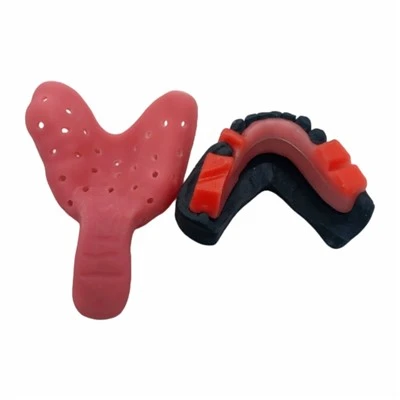
First, let’s get clear on what fixed prostheses actually are, because there’s a lot of misinformation floating around. Unlike removable options, like dentures that you take out each night, fixed prostheses are bonded or anchored directly to your natural teeth or jawbone, and they can’t be removed by you at home. Crowns are caps that cover a severely damaged or decayed tooth to protect it, bridges span the gap between two missing teeth by anchoring to the adjacent natural teeth, and implant-supported fixed restorations are attached to titanium posts surgically placed in the jawbone. For many people, these work wonders: they restore chewing function, improve speech, and look and feel just like natural teeth. I’ve seen 70-year-old grandparents return to our lab after getting a fixed bridge who say they’re finally able to eat an apple without worrying it’ll come apart. I’ve also seen 25-year-old athletes get fixed implant-supported crowns after a hockey accident, and they tell me it doesn’t even feel like they have a prosthetic. But here’s the thing: suitability depends on three big factors that people often overlook: oral health status, general health, and personal lifestyle.
Oral health is the first and most critical piece of the puzzle. To get any fixed prosthesis, you need healthy surrounding teeth or enough bone density to support an implant. Let’s take bridges, for example: traditional fixed bridges require grinding down the two adjacent natural teeth to act as anchors. If those teeth have existing decay, gum disease, or significant wear and tear, grinding them down can cause more harm than good. A few years ago, a dentist referred a patient to us who had severe periodontitis (gum disease) that had spread to the teeth next to his missing incisors. We worked with the dentist to treat the gum disease first, and by the time we were ready to fabricate the bridge, the adjacent teeth were stable. If we’d skipped that step, the bridge would have failed within a year, and the patient would’ve been back needing even more extensive work. For implant-supported prostheses, bone density is non-negotiable. If someone has lost a significant amount of jawbone—often from years of missing teeth or untreated gum disease—they might need a bone graft before an implant can be placed. That adds time and cost, but it’s necessary to make sure the implant stays in place long-term. We’ve had patients who skipped the bone graft, got an implant anyway, and ended up with it failing a few months later. That’s not just a waste of money—it’s a setback that makes future treatment harder.
General health also plays a huge role in whether a fixed prosthesis is right for someone. Chronic conditions like uncontrolled diabetes, autoimmune disorders, or smoking can affect healing and longevity. I’m not saying someone with these conditions can never get a fixed prostheses—far from it—but it requires careful planning. For example, people with uncontrolled diabetes have slower healing, so a surgical procedure like implant placement carries higher risks of infection. We work closely with dentists and medical providers to ensure our patients’ blood sugar is well-managed before moving forward. Smokers, too, have a higher risk of implant failure because tobacco restricts blood flow to the gums. That said, I’ve seen patients who quit smoking and went on to have very successful fixed prostheses. It’s not a hard “no,” but it means we have to adjust our approach and set realistic expectations. Another factor: certain medications, like bisphosphonates for osteoporosis, can increase the risk of a rare but serious condition called osteonecrosis of the jaw (bone death), especially if a surgical procedure is done. That’s why we always ask patients to share their full medication list before we even start designing a prosthesis—transparency here is non-negotiable.
Then there’s lifestyle and personal preference, which are just as important as clinical factors. Let’s go back to Maria, the teacher I mentioned earlier. She’s a busy mom who travels for work, so something that’s high-maintenance isn’t going to work for her. Fixed prostheses require regular oral care: brushing twice a day, flossing around the prostheses, and regular dental check-ups. If someone is someone who struggles with consistent oral hygiene, a fixed bridge might not be the best option—food can get trapped under it, leading to decay in the anchored teeth. For someone like Maria, who wants a low-maintenance option, maybe a fixed implant-supported crown would be better, because it’s easier to clean. Or, in some cases, a removable partial denture might be more manageable for their lifestyle. Personal comfort also matters. Some people feel anxious about having their natural teeth ground down for a bridge, even if it’s the technically recommended option. At our lab, we don’t push a solution just because it’s the “best” on paper. We take time to walk patients through all their options, explain the pros and cons of each, and make sure they feel confident in their choice. That’s why I started holding informal Q&As at local dental clinics last year—so patients can ask questions without feeling rushed, and dentists can get real-world insights from someone who works with these prostheses every day.
I also want to address a common myth: that fixed prostheses are only for people with a certain number of missing teeth. That’s not true. We’ve fabricated single crowns for people with one damaged tooth, small bridges for one or two missing teeth, and full-arch fixed restorations for people who’ve lost all their upper or lower teeth. Full-arch fixed prostheses, sometimes called “all-on-4” or “all-on-6,” have been a game-changer for many of our patients. A 68-year-old patient named Robert came to us after 10 years of using full removable dentures that would slip when he ate or laughed. We worked with his dentist to place four implants in each jaw, and then fabricated a fixed full arch that he can’t remove on his own. A year later, he sent us a photo of him eating a steak with his grandkids—something he’d stopped doing because he was embarrassed about his dentures. That’s the impact fixed prostheses can have, but only when they’re the right fit for the individual.
So when are fixed prostheses not suitable? Let’s be clear: if someone has active, untreated gum disease, they’re not a good candidate until that’s resolved. If they have insufficient bone density and can’t or won’t do a bone graft, implants might not be an option. If someone is unwilling or unable to maintain good oral hygiene, a fixed bridge could lead to more problems than it solves. And of course, there are cases where a patient’s preference doesn’t align with a fixed prosthesis—some people simply prefer the convenience of removable options, or don’t want to undergo a surgical procedure for implants. The key here is collaboration: between the patient, their dentist, and the prostheses supplier (that’s us) to build a treatment plan that’s tailored to the person, not just the tooth gap.
Over the years, I’ve seen too many patients get fixed prostheses that were the wrong fit, and it breaks my heart. Last year, a 30-year-old patient came to us with a fixed bridge that had been placed at another lab, and the adjacent teeth were already showing decay. The dentist there had recommended the bridge without checking her gum health first, and now she needed root canals on two healthy teeth. That’s why we’ve built our process to include a pre-fabrication consultation with the referring dentist, where we review the patient’s oral health records, discuss their goals, and confirm that a fixed prosthesis is the right path. We also follow up with patients three, six, and 12 months after placement to make sure everything is working as it should, and to address any concerns before they become big issues.
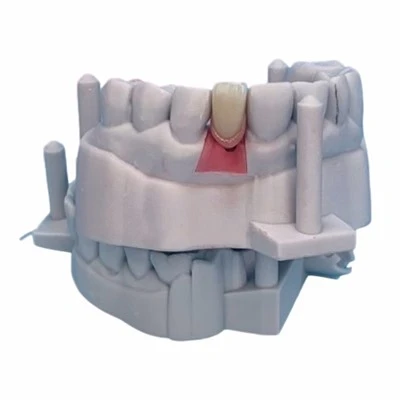
At the end of the day, fixed prostheses are an incredible option for millions of people, but they’re not suitable for everyone. The question isn’t just “Are fixed prostheses right for me?” It’s “Am I the right candidate for a fixed prostheses, based on my oral health, general health, and lifestyle?” If you’re considering fixed prostheses and want to talk through your options, I’d encourage you to reach out to our team for a procurement consultation. We’re here to answer your questions, walk you through the process, and make sure you feel confident in the choice that’s right for you.
Fixed Prostheses References
- The Journal of Prosthetic Dentistry. “Clinical Recommendations for Fixed Dental Prostheses: A Systematic Review of Outcomes and Suitability Criteria.” 2021.
- American Dental Association. “Guide to Evaluating Candidates for Implant-Supported Fixed Restorations.” 2022.
- Periodontology 2000. “The Impact of Systemic Health Factors on Fixed Prosthesis Longevity and Suitability.” 2020.
- International Journal of Oral and Maxillofacial Implants. “Lifestyle Considerations in Fixed Prosthesis Selection: A Patient-Centered Approach.” 2019.
Shenzhen Tuomei Dental Technology Co., Ltd.
We are one of the most professional fixed prostheses manufacturers and suppliers in China, featured by quality products and low price. Please rest assured to buy discount fixed prostheses made in China here from our factory. Welcome to view our website for more information.
Address: Room 301, Building C Fuhe Industrial Park No.18 Hexiu West Road, Zhancheng Community Fuhai Subdistrict, Bao’an District, Shenzhen, Guangdong, China
E-mail: dentallab.works@gmail.com
WebSite: https://www.sztuomeidentallab.com/
