If you’ve ever worked with power transformers, you know the oil tank is more than just a metal box holding insulating oil—it’s the backbone that keeps the entire unit cool, insulated, and protected from environmental damage. As a power transformer oil tank supplier, I’ve spent thousands of hours troubleshooting issues that bring transformers offline, and I’ve learned that most problems start small, hidden in the tank’s seams, seals, or oil levels before escalating into costly failures. Today, I’m breaking down the step-by-step troubleshooting process I use with our clients, whether they’re maintaining a 10MVA distribution transformer or a 500MVA unit for a substation. Power Transformer Oil Tank
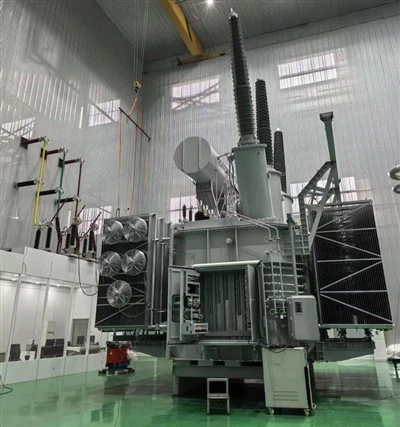
First, before you even touch the tank, you need a solid baseline. I always tell new clients: you can’t troubleshoot what you don’t know. Start with documenting your transformer’s history—when it was installed, its maintenance schedule, any past failures, and recent load changes. For example, a client last year had a transformer that kept overheating; we traced it to a sudden 30% load increase from a new industrial plant nearby, but the tank’s cooling fins weren’t sized for the higher heat output. Next, gather your tools: a digital multimeter for electrical connections, a pressure gauge for tank integrity, oil test kits (for acidity, moisture, and dissolved gases), a flashlight for interior inspections, and a pressure sprayer with soapy water (for leak checks—no fancy fluorescent dye needed for small, accessible issues). Most importantly, lock out/tag out the transformer to eliminate any electrical risk—this is non-negotiable, even if you’re only inspecting the tank’s exterior.
The first visible check for any oil tank is external leaks. Leaks are the most common issue, and they’re easy to spot if you know where to look. Walk the perimeter of the tank, checking every weld seam, bolted flange, valve stem, and gasket. Small seeps around a flange gasket might look like just a damp spot, but over time, that oil loss raises the moisture level in the tank, degrades insulation, and can lead to arcing. I once had a client ignore a 2mm seep around a pressure relief valve; six months later, the oil level dropped 18 inches, causing the transformer’s core to overheat and burn out a winding—costing them $200k in repairs and downtime. To confirm a leak, spray a 50/50 mix of dish soap and water on suspect areas; if bubbles form, you’ve found a leak. Now, not all leaks are the same: pinhole leaks in the tank’s wall usually come from corrosion, while flange leaks are almost always from worn or misaligned gaskets.
If there are no visible leaks, the next step is checking oil level and quality. Low oil level is a red flag, but not always from a leak—sometimes it’s from normal oil absorption by the cellulose insulation inside the transformer, or improper topping off during past maintenance. For outdoor transformers, a good rule is that the oil level should be halfway between the “min” and “max” marks on the sight glass when the transformer is at its average operating temperature (usually 25–35°C). If it’s below “min,” top it off with the same type of insulating oil the transformer uses—never mix different grades, as that can disrupt dielectric strength. Now, oil quality tests are non-negotiable here. I recommend running three key tests: moisture content (should be less than 30 ppm for new oil, 50 ppm max for in-service), acidity (total acid number, TAN, less than 0.1 mg KOH/g for healthy oil), and dissolved gas analysis (DGA). If DGA shows high levels of methane or ethylene, that points to overheating inside the transformer, which often links to a poorly ventilated tank or blockage in cooling fins. A client of mine had a transformer with a high DGA reading; when we inspected the tank, we found a layer of dust and bird nests blocking the cooling fins, so heat couldn’t dissipate—clearing them fixed the gas levels, and no internal repairs were needed.
Next, test the tank’s structural integrity, because even small structural issues can lead to catastrophic failure. For pressurized transformers (common in high-voltage substations), the tank is designed to hold a slight positive pressure to prevent moisture ingress. To test this, close all valves, install a pressure gauge on the sampling port, and pressurize the tank to 0.5 psi (3.5 kPa). Wait 24 hours; if the pressure drops more than 0.1 psi (0.7 kPa), you have a structural leak, even if you didn’t spot it externally. For older tanks, corrosion is a major culprit—run a thickness test on the tank’s walls using an ultrasonic thickness gauge. A 10% reduction in wall thickness (from the original mill spec) means the tank is at risk of rupture, especially under pressure during a fault. I supply most of our clients with corrosion-resistant coated tanks now, but if you’re troubleshooting an older uncoated tank, look for rust spots, especially on the bottom and base—condensation collects there, speeding up corrosion.
Another common issue I see is faulty valve or pressure relief valve (PRV) performance. Valves are the gatekeepers of the tank: the drain valve for oil changes, the sampling valve for oil tests, and the PRV that releases excess pressure during a fault. A stuck PRV is a silent danger—if a fault causes pressure to build up inside the tank and the PRV doesn’t open, the tank can rupture. Test valves by manually operating them (slowly, to avoid breaking seals) and checking for smooth movement. For PRVs, use a pressure gauge to verify they open at the rated pressure (usually 1.5–2.0 psi for most distribution transformers). I once worked on a substation transformer where a PRV had seized closed; during a minor load spike, the tank pressure hit 2.2 psi, causing a small rupture in the side seam. The fix was replacing the PRV and resealing the seam, but the downtime cost the utility $50k in lost power.
Don’t forget the tank’s insulation and ventilation, especially for indoor transformers or transformers in enclosed spaces. The tank’s own insulating coating (the paint or epoxy on the exterior) isn’t just for corrosion protection—it also prevents heat from radiating into nearby equipment. If the coating is peeling or cracked, not only is the tank at risk of corrosion, but heat buildup can make the transformer run 10–15°C hotter than normal, shortening its lifespan. For ventilation, check that the cooling fins (or radiator banks) are free of debris—leaves, dirt, and even small animals can block air flow, reducing cooling efficiency. Indoor transformers often have fans to move air over the tank; test the fans to make sure they’re running at the correct speed and that the air filters are clean. A client in a downtown office building had an indoor transformer that overheated constantly; we found the air filters were clogged with office dust, so we replaced them and added a filter maintenance schedule, cutting operating temperature by 12°C.
Once you’ve identified the issue, the repair depends on its severity. Small pinhole leaks can be patched with a specialized epoxy rated for oil tanks, but for larger leaks or corrosion damage, you’ll need to replace the affected section of the tank or the entire tank. Low oil levels can be fixed with proper topping off, but if the oil quality is degraded (high moisture, acidity, or gasses), you’ll need to filter or replace the oil. Valve or PRV issues almost always require replacement, since repairing a seized valve can lead to future failure.
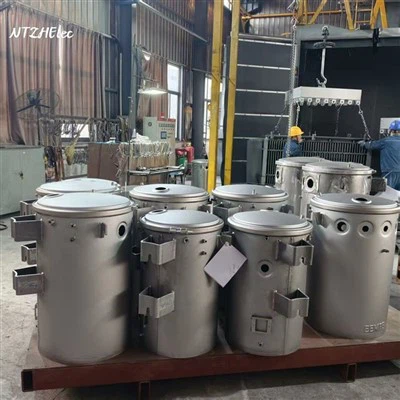
Now, as a power transformer oil tank supplier, I can tell you that most of these issues are preventable with a regular maintenance schedule. The biggest mistake I see clients make is waiting for a failure to troubleshoot—instead, do these checks twice a year, before the peak load seasons (summer for residential, winter for commercial). That’s why I work with clients to provide not just tanks, but also annual tank inspection checklists and emergency repair support. If you’re dealing with a persistent transformer issue that you can’t isolate, or if you’re in the market for a replacement tank that’s built for easy troubleshooting, reach out to discuss your specific needs.
Transformer Radiator References:
- IEEE Std C57.12.00-2020, “Standard for General Requirements for Liquid-Immersed Distribution, Power, and Regulating Transformers”
- NACE International, “Corrosion Control of Underground and Above-Ground Storage Tanks”
- Energy Australia, “Transformer Maintenance and Troubleshooting Guidelines”
- International Electrotechnical Commission (IEC) 60363-1, “Oil-Immersed Power Transformers – Part 1: General”
Nantong Zhihe Electric Co., Ltd.
As one of the most professional power transformer oil tank manufacturers and suppliers in China, we’re featured by quality products and low price. Please rest assured to wholesale cheap power transformer oil tank made in China here from our factory. Customized orders are welcome.
Address: NO.202 Jianghai West Road, Hai’an Town, Hai’an City, Jiangsu Province
E-mail: colt.ntzh@gmail.com
WebSite: https://www.ntzhelectric.com/
