Hey there, folks! I’m a supplier of Hydroxamic Acid Collectors, and today I wanna chat about how these nifty little things can really boost the recovery rate of minerals. It’s a topic that’s super important in the mining industry, and I’m stoked to share some insights with you. Hydroxamic Acid Collectors
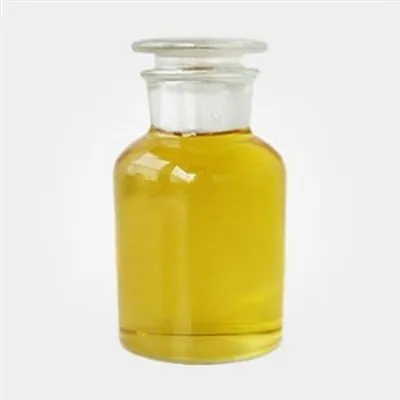
First off, let’s talk about what hydroxamic acid collectors are. In simple terms, they’re chemical reagents used in the flotation process, which is a key method for separating valuable minerals from gangue (the not-so-valuable stuff). Flotation works by making the minerals we want stick to air bubbles, which then rise to the surface and can be skimmed off. Hydroxamic acid collectors play a crucial role in this process by selectively attaching to the surface of the target minerals.
So, how exactly do they improve the recovery rate? Well, one of the main reasons is their high selectivity. Different minerals have different surface properties, and hydroxamic acid collectors are designed to specifically interact with certain types of minerals. For example, they have a strong affinity for metal oxides like hematite, ilmenite, and wolframite. This means that when we add these collectors to the flotation system, they’ll preferentially bind to the valuable minerals, leaving the gangue behind. This high selectivity is a game-changer because it allows us to separate the minerals more efficiently. If we can accurately target the minerals we want, we’re less likely to lose them during the flotation process, which ultimately leads to a higher recovery rate.
Another great thing about hydroxamic acid collectors is their ability to form stable complexes with metal ions on the mineral surface. When a hydroxamic acid molecule attaches to a metal ion on the mineral surface, it forms a chelate complex. This complex is very stable, which means it’s less likely to break apart during the flotation process. As a result, the mineral particles are more likely to remain attached to the air bubbles and be carried to the surface. This stability is really important because it helps to ensure that the valuable minerals are effectively recovered. If the complexes were weak, the minerals might detach from the bubbles and sink back down, reducing the recovery rate.
The chemical structure of hydroxamic acid collectors also plays a role in their effectiveness. They have a unique functional group called the hydroxamic acid group (-CONHOH), which is responsible for their reactivity with metal ions. This group has the ability to donate electrons and form a strong bond with the metal ions on the mineral surface. Additionally, the structure of the molecule can be modified to adjust its properties, such as its solubility and selectivity. For instance, we can change the length of the hydrocarbon chain attached to the hydroxamic acid group. A longer chain might increase the hydrophobicity (water-repelling ability) of the collector, which can enhance its ability to attach to the mineral surface and make the mineral more floatable.
Now, let’s talk about some real-world applications. In the iron ore industry, for example, hematite is a major source of iron. However, it can be difficult to separate hematite from the gangue minerals using traditional collectors. Hydroxamic acid collectors have shown great promise in improving the recovery of hematite. They can selectively bind to the hematite particles, making them more likely to float and be collected. This has led to significant improvements in the iron ore beneficiation process, resulting in higher iron grades and lower production costs.
In the titanium industry, ilmenite is an important titanium-bearing mineral. Hydroxamic acid collectors have been used to enhance the flotation of ilmenite from other minerals. By selectively attaching to the ilmenite surface, they help to improve the separation efficiency and increase the recovery rate of titanium. This is crucial for the production of titanium dioxide, which is widely used in paints, plastics, and other industries.
Wolframite is another mineral where hydroxamic acid collectors have made a big impact. Tungsten, which is extracted from wolframite, is a valuable metal used in high – tech applications such as electronics and aerospace. The flotation of wolframite can be challenging due to its complex surface properties. Hydroxamic acid collectors can overcome these challenges by selectively binding to wolframite and improving its floatability. This has led to better recovery of tungsten from wolframite ores, ensuring a more sustainable supply of this important metal.
One of the advantages of using hydroxamic acid collectors is their environmental friendliness. Compared to some traditional collectors, they are less toxic and have a lower impact on the environment. This is becoming increasingly important as the mining industry faces more stringent environmental regulations. By using hydroxamic acid collectors, mining companies can not only improve their mineral recovery rates but also meet their environmental responsibilities.
Now, I know what you’re thinking. "This all sounds great, but how do I get my hands on these amazing hydroxamic acid collectors?" Well, that’s where I come in. As a supplier, I’ve got a wide range of hydroxamic acid collectors that are tailored to different mining applications. Whether you’re dealing with iron ore, titanium ore, or tungsten ore, I can provide you with the right collector to boost your mineral recovery rate.
If you’re interested in learning more about our hydroxamic acid collectors or want to start a discussion about your specific needs, don’t hesitate to reach out. We can have a chat about your mining process, the minerals you’re targeting, and how our collectors can fit into your operation. I’m always happy to share my knowledge and help you find the best solution for your business. So, let’s have a conversation and see how we can work together to improve your mineral recovery and make your mining operation more profitable.
Dithiophosphate References
- Smith, J. (2018). Advances in Mineral Flotation Using Hydroxamic Acid Collectors. Journal of Mining Sciences, 54(3), 456 – 465.
- Brown, A. (2019). The Role of Hydroxamic Acid Collectors in Iron Ore Beneficiation. International Journal of Mineral Processing, 187, 123 – 132.
- Green, C. (2020). Selective Flotation of Titanium Minerals with Hydroxamic Acid Collectors. Minerals Engineering, 150, 106321.
Bitop Bihope Qingdao Mining Co., Ltd
Bitop Bihope Qingdao Mining Co., Ltd. is one of the most professional hydroxamic acid manufacturers and suppliers in China, featured by quality products and low price. Please rest assured to buy discount hydroxamic acid in stock here and get quotation from our factory. Customized orders are welcome.
Address: Room 410, 4th Floor, Shengquan Business Building, No. 263 Yitong Road, Huangdao District, Qingdao City, Shandong Province, China
E-mail: btbhmining@163.com
WebSite: https://www.btbhmining.com/
