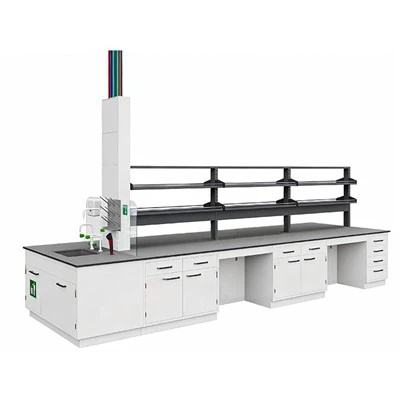
Managing inventory in lab casework is a critical aspect of running a successful business as a lab casework supplier. In this blog, I’ll share insights based on my experiences in the industry, focusing on the key strategies and best practices to effectively manage inventory in lab casework. Lab Casework
Understanding the Importance of Inventory Management in Lab Casework
Lab casework suppliers play a vital role in providing the necessary equipment and furniture for laboratories. These facilities are often involved in various scientific research activities which require precise and high – quality supplies. Having an efficient inventory management system is crucial for several reasons.
First of all, it ensures timely delivery to customers. Labs usually operate on strict schedules, and any delay in the delivery of casework can disrupt experiments and research projects. By maintaining an optimized inventory, we can meet our customers’ urgent needs and provide them with the products they require when they need them.
Secondly, proper inventory management helps in cost – control. Holding too much inventory ties up capital in the form of storage, insurance, and potential obsolescence costs. On the other hand, having too little inventory can lead to lost sales opportunities and higher costs associated with rush orders. By keeping a balanced inventory, we can reduce overall costs and improve profitability.
Key Steps in Inventory Management for Lab Casework
Demand Forecasting
Accurate demand forecasting is the foundation of effective inventory management. To predict the demand for lab casework, we need to consider multiple factors.
Historical sales data is a valuable resource. By analyzing past sales trends, we can identify seasonal patterns, growth rates, and the popularity of different types of casework. For example, if we notice that there is a spike in the sales of chemical storage cabinets every September, it might be related to the start of the academic year when new research projects are initiated in universities and colleges.
Market trends also play a significant role. The field of laboratory research is constantly evolving, with new technologies and research methods emerging. We need to stay updated on these trends to anticipate the demand for new types of casework. For instance, as the demand for cleanroom technology increases, we should expect a higher need for specialized cleanroom casework.
Customer feedback is another important factor. Regularly communicating with our customers, such as lab managers and researchers, can help us understand their future requirements and any upcoming projects. This direct input can be used to fine – tune our demand forecasting.
Categorizing Inventory
Not all lab casework items are created equal. We can categorize our inventory using the ABC analysis method.
A – items are high – value, high – demand items. These could be custom – made casework or high – end equipment. Since these items are expensive and in high demand, we need to closely monitor their inventory levels. We should aim to keep a relatively low but safe stock of A – items to avoid overstocking while ensuring that we can meet customer orders promptly.
B – items are medium – value and medium – demand items. They require a moderate level of attention. We can use a reorder point system for B – items, where we set a specific inventory level at which we place a new order.
C – items are low – value, low – demand items. These might include standard, off – the – shelf components. For C – items, we can use a more relaxed approach, such as ordering in larger quantities less frequently, as the cost of holding inventory is relatively low compared to the cost of placing multiple small orders.
Supplier Management
Developing strong relationships with suppliers is essential for inventory management. We need to select suppliers who can provide high – quality products on time and at a reasonable price. When negotiating contracts with suppliers, we should consider factors such as lead times, minimum order quantities, and price flexibility.
For example, if a supplier has a long lead time for a particular type of casework, we may need to adjust our inventory levels accordingly. We can also explore the possibility of alternative suppliers to reduce the risk of supply disruptions.
Regularly evaluating supplier performance is also important. We can track metrics such as on – time delivery rate, product quality, and customer service. If a supplier fails to meet our expectations consistently, we should consider replacing them.
Implementing an Inventory Management System
A reliable inventory management system is the backbone of efficient inventory control. There are several types of systems available, ranging from simple spreadsheet – based systems to more advanced enterprise resource planning (ERP) systems.
For small to medium – sized lab casework suppliers, a spreadsheet – based system can be a good starting point. It is relatively easy to set up and can provide basic inventory tracking capabilities. We can use spreadsheets to record inventory levels, track sales, and generate reports. However, as the business grows, a more sophisticated system may be required.
An ERP system integrates all aspects of the business, including inventory management, sales, purchasing, and accounting. It provides real – time visibility into inventory levels, allowing us to make informed decisions quickly. With an ERP system, we can automate many inventory management processes, such as reordering, barcode scanning, and inventory valuation.
Monitoring and Adjusting Inventory Levels
Inventory management is not a one – time task but an ongoing process. We need to regularly monitor our inventory levels to ensure that they are in line with our demand forecasts.
We can use key performance indicators (KPIs) to measure the effectiveness of our inventory management. Some important KPIs include inventory turnover ratio, which measures how quickly we sell our inventory, and fill rate, which indicates the percentage of customer orders that we can fulfill from stock.
If the inventory turnover ratio is too low, it may indicate that we have too much inventory on hand. In this case, we can take steps such as offering discounts, promoting slow – moving items, or reducing future orders. On the other hand, a high fill rate is a sign of good inventory management, but if it is too high, it may mean that we are holding excessive safety stock, which can increase costs.
Based on the monitoring results, we should be prepared to adjust our inventory levels and management strategies. For example, if we notice a sudden increase in the demand for a particular type of lab casework, we may need to increase our order quantities or find ways to reduce the lead time from our suppliers.
Conclusion
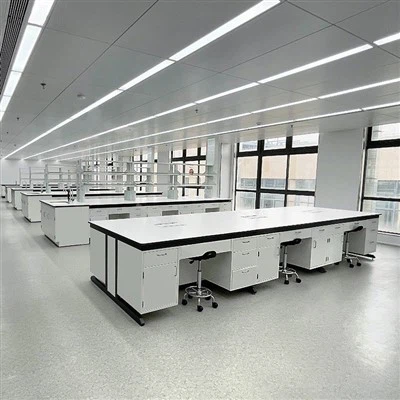
Effective inventory management in lab casework is a complex but essential task for suppliers like us. By accurately forecasting demand, categorizing inventory, managing suppliers, implementing a reliable inventory management system, and continuously monitoring and adjusting inventory levels, we can ensure timely delivery to our customers, control costs, and improve profitability.
Lab Tables If you are in the market for lab casework, I encourage you to reach out to discuss your specific requirements. Our team of experts is ready to assist you in finding the best solutions for your laboratory. Whether you need standard casework or custom – designed products, we have the experience and resources to meet your needs.
References
- "Inventory Management: Principles and Practices" by David Pyke, Richard Cohen, and Eunsoo Koo
- "Supply Chain Management: Strategy, Planning, and Operation" by Sunil Chopra and Peter Meindl
- Industry reports from relevant laboratory equipment associations.
HAMECC(Shanghai) Lab Solutions Co., Ltd.
We’re well-known as one of the leading lab casework manufacturers and suppliers in China, featured by quality products and good price. Please rest assured to buy customized lab casework made in China here from our factory.
Address: Building 1, No. 2222, Huancheng Road, Jiading District, Shanghai
E-mail: info@hamecc.com
WebSite: https://www.hamecc.com/
