Hey there! I’m a supplier of welded connection fittings, and I know how tricky it can be to choose the right ones. There are tons of options out there, and it’s easy to get overwhelmed. But don’t worry, I’ve got your back. In this blog, I’ll share some tips on how to pick the perfect welded connection fittings for your project. Welded Connection Fittings
Understand Your Project Requirements
First things first, you need to have a clear idea of what your project needs. Think about the application of the fittings. Are you working on a plumbing system, a structural construction, or an industrial pipeline? Different applications have different demands. For example, plumbing fittings usually deal with water flow, so they need to be leak – proof and corrosion – resistant. On the other hand, structural fittings need to be strong enough to bear heavy loads.
You also have to consider the environment where the fittings will be used. If it’s an outdoor project, the fittings should be able to withstand harsh weather conditions like rain, snow, and extreme temperatures. In a chemical plant, they need to resist chemical corrosion.
Another important factor is the size and pressure requirements. Measure the diameter of the pipes or components that the fittings will connect. You need to make sure the fittings are the right size to fit snugly. And don’t forget about the pressure. High – pressure systems require fittings that can handle the stress without bursting or leaking.
Know the Different Types of Welded Connection Fittings
There are several types of welded connection fittings, and each has its own features and uses.
Elbows
Elbows are used to change the direction of the pipeline. They come in different angles, like 45 degrees and 90 degrees. When choosing an elbow, think about the space available in your project. If you have limited space, a 45 – degree elbow might be a better choice as it takes up less room compared to a 90 – degree one.
Tees
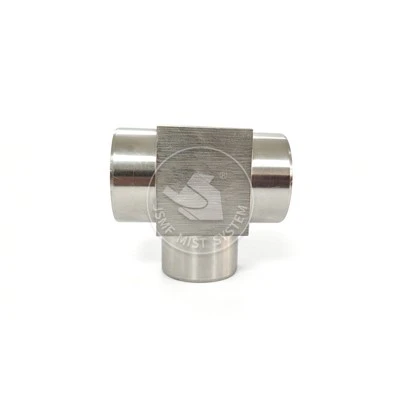
Tees are shaped like the letter "T" and are used to split or combine the flow of fluid or gas in a pipeline. There are equal tees, where all three openings are the same size, and reducing tees, where one of the openings is smaller. If you need to divide the flow evenly, an equal tee is the way to go. But if you want to change the flow rate, a reducing tee can do the job.
Couplings
Couplings are used to connect two pipes together. They can be either full – coupling or half – coupling. Full – couplings connect two pipes end – to – end, while half – couplings are used to connect a pipe to a fitting or a valve. When choosing a coupling, make sure it has the right thread type and size to match your pipes.
Caps
Caps are used to close the end of a pipe. They are simple but important for preventing debris from entering the pipeline and for maintaining the pressure inside. Choose a cap that fits tightly and is made of a material that can resist corrosion.
Consider the Material of the Fittings
The material of the welded connection fittings is crucial. It affects the durability, corrosion resistance, and strength of the fittings.
Stainless Steel
Stainless steel is a popular choice because it’s highly corrosion – resistant. It can withstand exposure to water, chemicals, and harsh environments without rusting. It’s also strong and has a long lifespan. If your project is in a coastal area or a chemical – processing plant, stainless – steel fittings are a great option.
Carbon Steel
Carbon steel is known for its high strength. It’s commonly used in structural applications where the fittings need to bear heavy loads. However, it’s not as corrosion – resistant as stainless steel, so it may need to be coated or painted to protect it from rust.
Alloy Steel
Alloy steel is a combination of different metals, which gives it unique properties. It can be stronger, more heat – resistant, or more corrosion – resistant depending on the alloying elements. Alloy – steel fittings are often used in high – temperature and high – pressure applications, like power plants and refineries.
Check the Quality and Standards
Quality is non – negotiable when it comes to welded connection fittings. You don’t want to end up with fittings that break or leak, which can cause serious problems in your project.
Look for fittings that meet industry standards. For example, in the United States, the American Society of Mechanical Engineers (ASME) sets standards for pressure piping and fittings. In Europe, the European Committee for Standardization (CEN) has its own standards. Make sure the fittings you choose comply with these relevant standards.
You can also check for quality certifications. A reputable supplier should be able to provide certifications like ISO 9001, which indicates that the company has a quality management system in place.
Evaluate the Supplier
As a welded connection fittings supplier myself, I know how important it is to choose the right one. You want a supplier who can provide high – quality products, good customer service, and competitive prices.
Check the supplier’s reputation. You can read online reviews from other customers or ask for references. A supplier with a good track record is more likely to deliver what they promise.
Also, consider the supplier’s inventory. You need a supplier who can keep a sufficient stock of the fittings you need. This way, you won’t have to wait for a long time to get the products, which can delay your project.
And don’t forget about the supplier’s technical support. If you have any questions or need help with choosing the right fittings, a good supplier should be able to offer professional advice.
Cost – Benefit Analysis
Of course, cost is a factor in your decision – making. But don’t just go for the cheapest option. You need to consider the long – term cost – benefit. A high – quality fitting may cost more upfront, but it can save you money in the long run by reducing maintenance and replacement costs.
Compare the prices of different suppliers, but also take into account the quality, durability, and performance of the fittings. Sometimes, paying a little more for a better – quality fitting is a smart investment.
Conclusion
Choosing the right welded connection fittings is not an easy task, but by understanding your project requirements, knowing the different types of fittings, considering the material, checking the quality and standards, evaluating the supplier, and doing a cost – benefit analysis, you can make an informed decision.
Pipe Fittings If you’re still not sure which welded connection fittings are right for your project, don’t hesitate to reach out. As a supplier, I’m here to help you find the perfect solutions. Whether you have questions about the products, need technical advice, or want to discuss a potential purchase, I’m just a message away. Let’s work together to make your project a success!
References
- ASME Boiler and Pressure Vessel Code
- European Standards (EN) related to welded fittings
- Industry publications on piping and fitting technology
Jinsheng Mist Forest-High Pressure Mist System
Jinsheng Mist Forest-High Pressure Mist System is one of the most experienced welded connection fittings manufacturers and suppliers in China, featured by quality products and low price. Please rest assured to wholesale bulk welded connection fittings in stock here and get pricelist from our factory. Customized orders are welcome.
Address: 109 Yonghong Road, Wenjiang District, Chengdu City, Sichuan Province, China
E-mail: 18190767523@163.com
WebSite: https://www.jswsmist.com/
