In the realm of modern manufacturing, the 5 – axis machining center stands as a revolutionary tool, especially when it comes to complex surface machining. As a provider of 5 – axis machining centers, I’ve witnessed firsthand the incredible capabilities of these machines and how they transform the way we approach intricate manufacturing tasks. 5-axis Machining Centers
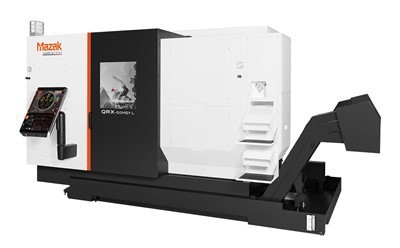
Understanding the Basics of 5 – Axis Machining Centers
A 5 – axis machining center is a sophisticated piece of equipment that can move a cutting tool or the workpiece along five different axes simultaneously. Traditional machining centers typically operate on three axes (X, Y, and Z), which are sufficient for many basic machining tasks. However, when dealing with complex surfaces, the additional two rotational axes (usually A and B or A and C) provide a level of flexibility and precision that is unmatched.
The two rotational axes allow the cutting tool to approach the workpiece from virtually any angle. This means that complex geometries, such as free – form surfaces, turbine blades, and aerospace components, can be machined with a single setup. In contrast, 3 – axis machining often requires multiple setups and repositioning of the workpiece, which can lead to inaccuracies and longer production times.
The Process of Complex Surface Machining with a 5 – Axis Machining Center
1. CAD/CAM Programming
The first step in complex surface machining is the creation of a Computer – Aided Design (CAD) model of the part. This model serves as the blueprint for the machining process. Once the CAD model is complete, Computer – Aided Manufacturing (CAM) software is used to generate the toolpath. The CAM software takes into account the geometry of the part, the capabilities of the 5 – axis machining center, and the properties of the cutting tool.
The toolpath generated by the CAM software is a set of instructions that tell the machining center how to move the cutting tool to create the desired shape. In the case of complex surfaces, the toolpath may be highly intricate, with the cutting tool moving in multiple directions and at different angles to follow the contours of the surface.
2. Workpiece Setup
Proper workpiece setup is crucial for accurate machining. The workpiece must be securely clamped to the machine table to prevent any movement during the machining process. In a 5 – axis machining center, the workpiece can be oriented in various positions using the rotational axes. This allows for optimal access to the complex surface, reducing the need for multiple setups.
The setup also involves setting the zero point, which is the reference point from which all machining operations are measured. Accurate zero – point setting ensures that the machining center knows the exact position of the workpiece and can execute the toolpath correctly.
3. Machining Operations
Once the CAD/CAM programming and workpiece setup are complete, the machining process begins. The 5 – axis machining center uses its five axes to move the cutting tool along the pre – determined toolpath. The cutting tool removes material from the workpiece to create the desired shape.
During the machining process, the machine’s control system continuously monitors and adjusts the movement of the cutting tool. This ensures that the tool maintains the correct cutting speed, feed rate, and depth of cut. The ability to adjust these parameters in real – time is essential for achieving high – quality surface finishes on complex surfaces.
4. Quality Control
After the machining process is complete, the finished part is inspected for quality. This may involve using measuring instruments such as coordinate measuring machines (CMMs) to check the dimensions and surface finish of the part. Any deviations from the design specifications can be identified and corrected, if necessary.
Advantages of Using a 5 – Axis Machining Center for Complex Surface Machining
1. Increased Precision
The ability to approach the workpiece from multiple angles allows for more precise machining of complex surfaces. The cutting tool can reach areas that would be difficult or impossible to access with a 3 – axis machine. This results in parts with higher accuracy and better surface finishes.
2. Reduced Setup Time
As mentioned earlier, 5 – axis machining often requires fewer setups compared to 3 – axis machining. This not only saves time but also reduces the potential for errors that can occur during the setup process. With a single setup, the machining center can complete the entire machining operation, resulting in faster production times.
3. Enhanced Design Flexibility
The flexibility of 5 – axis machining allows for the creation of more complex and innovative designs. Designers are no longer limited by the constraints of 3 – axis machining. They can create parts with free – form surfaces, undercuts, and other complex features that were previously difficult or impossible to manufacture.
4. Improved Productivity
The combination of increased precision, reduced setup time, and enhanced design flexibility leads to improved productivity. Manufacturers can produce high – quality parts in less time, which translates into cost savings and a competitive edge in the market.
Real – World Applications of 5 – Axis Machining Centers in Complex Surface Machining
1. Aerospace Industry
In the aerospace industry, 5 – axis machining centers are used to manufacture critical components such as turbine blades, engine casings, and structural parts. These components often have complex geometries and require high precision. The ability of 5 – axis machining centers to produce these parts with accuracy and efficiency is essential for the aerospace industry.
2. Automotive Industry
The automotive industry also benefits from 5 – axis machining centers. They are used to manufacture engine blocks, transmission components, and other parts with complex surfaces. The high – speed and high – precision capabilities of 5 – axis machining centers help automotive manufacturers meet the demanding requirements of the industry.
3. Medical Industry
In the medical industry, 5 – axis machining centers are used to produce custom – made medical devices such as implants and surgical instruments. These devices often have complex shapes and require a high level of precision. 5 – axis machining allows for the production of these parts with the necessary accuracy and quality.
Conclusion

As a provider of 5 – axis machining centers, I am proud to be part of an industry that is constantly pushing the boundaries of what is possible in manufacturing. The 5 – axis machining center has revolutionized the way we approach complex surface machining, offering increased precision, reduced setup time, enhanced design flexibility, and improved productivity.
Coordinate Measuring Machine Whether you are in the aerospace, automotive, medical, or any other industry that requires the machining of complex surfaces, a 5 – axis machining center can be a valuable addition to your manufacturing operations. If you are interested in learning more about our 5 – axis machining centers or would like to discuss your specific machining needs, I encourage you to contact us for a procurement discussion. Our team of experts is ready to assist you in finding the right solution for your manufacturing challenges.
References
- Groover, M. P. (2010). Fundamentals of Modern Manufacturing: Materials, Processes, and Systems. John Wiley & Sons.
- DeVor, R. E., Kapoor, S. G., & Ziegert, J. C. (2007). Manufacturing Engineering and Technology. Prentice Hall.
- Weck, M., & Brecher, C. (2006). Machine Tools. Springer.
Hermens Industrial Co., Ltd.
As one of the most professional 5-axis machining centers enterprises in China, we’re featured by quality products and low price. Please rest assured to buy cheap 5-axis machining centers in stock here and get quotation from our factory. We also accept customized orders.
Address: 97/242,Soi6/1,Alley Perfect Place Village, Phase 3 Ladkrabang20/3 Rachathewa,Bangphli Samutprakan, Thailand
E-mail: liu_jincheng@hzhemen.com
WebSite: https://www.hermensindustrial.com/
