If you’ve ever worked in electronics manufacturing, you’ve probably heard the terms “carrier tape” and “reel” tossed around, but it’s easy to mix them up—especially if you’re new to sourcing packaging for surface-mount devices (SMDs), connectors, or even tiny electronic components. As a carrier tape supplier who’s been in this industry for over 12 years, I hear the same questions every week: Are they the same thing? Why does it matter which one I use? And do I really need to specify both when placing an order? Let’s break this down clearly, no jargon, just the practical stuff I’ve learned from walking production lines with clients and troubleshooting packaging issues that stop assembly cold. Carrier Tape
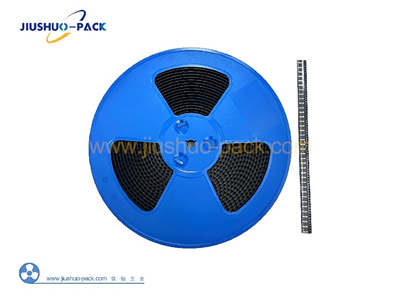
First, let’s start with the basics: carrier tape and reel are not interchangeable—they’re two parts of a single packaging system, like a loaf of bread and the plastic bag you store it in. Wait, maybe a better analogy is a shipping container and the pallet it sits on? No, let’s make it specific. If you’re packing tiny resistors that get dropped onto a circuit board by a pick-and-place machine, the carrier tape is the tray that holds each resistor securely, one after another, along a continuous strip. The reel is the spool you wind that entire strip onto, so it can feed smoothly into the pick-and-place machine. That’s the core difference, but there’s way more nuance here—especially when you’re balancing component protection, production speed, and cost.
Let’s dive into carrier tape first, because that’s the part that directly touches your components. Carrier tape is a thin, flexible strip (usually made of plastic, sometimes paper for low-volume parts) formed with evenly spaced pockets, called “cavities,” that hold individual electronic components. The size of these cavities is non-negotiable: if a cavity is too small, you can’t fit the component; too big, it rattles around, gets damaged, or shifts during transport. I’ve had clients come to me before with a cheap, generic carrier tape from a non-specialized supplier that had cavities off by a fraction of a millimeter—cost them thousands in rework when pick-and-place machines misaligned components. We make our carrier tape from food-grade, static-dissipative plastic because electronics like capacitors and semiconductors are sensitive to static electricity; a single ESD (electrostatic discharge) zap can ruin a high-end chip before it ever hits the assembly line. That’s a detail most new suppliers skip, but it’s the reason carrier tape isn’t just a plastic strip—it’s engineered.
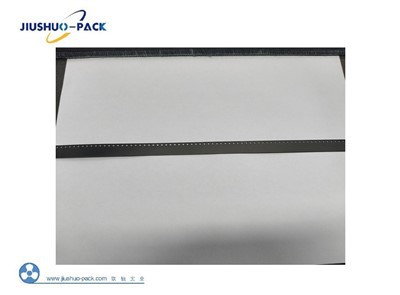
There are different types of carrier tape too, tailored to what you’re packing. For SMDs, you’ll see embossed carrier tape: the plastic is heated and pressed into the cavities, so the whole strip is rigid enough to hold its shape. For larger parts, like connectors or tiny batteries, we offer covers that are heat-sealed on top to lock components in, so they don’t fall out during shipping. We also have perforated carrier tape for older, through-hole parts, though that’s less common now. The key point here: carrier tape is the protective, component-holding medium. It’s not for storage on its own—you have to wind it onto a reel to use it in production.
Now, the reel. This is the spool that the carrier tape wraps around. Reels come in a few standard sizes, too, but they’re measured by the outer diameter (OD) and the core size. Common core sizes are 7-inch, 13-inch, and 15-inch, depending on how much carrier tape you can fit on one reel. The most important thing about a reel is that it’s manufactured to exact specifications: if the core is too wide, the carrier tape won’t feed smoothly into the pick-and-place machine; if the outer rim is misaligned, the tape can shift, get tangled, or jam. I’ve seen clients try to cut costs by reusing old reels, but 9 times out of 10, those reels are warped from storage, or the core is worn down, leading to hours of downtime on the production floor. A good reel doesn’t just hold the carrier tape—it guides it, so every component lands in the right spot on the circuit board.
Here’s where the confusion usually comes in: some suppliers will refer to “carrier tape and reel” as a single product, and for good reason—you can’t have one without the other for automated production. If you were manually placing components (which is rare for high-volume manufacturing now), you might use loose carrier tape, but even then, you’d need a reel to wind it onto. But when you’re ordering, you can’t just say “give me 10,000 carrier tapes and reels”—you have to specify the type of carrier tape (embossed, blank, perforated), the cavity size, component fit, and the reel size (7-inch, 13-inch, etc.). That’s a mistake I see a lot when new procurement people first source packaging—they don’t realize that the reel’s size ties directly to their pick-and-place machine’s requirements. A machine that uses 7-inch reels won’t accept a 13-inch reel, no matter how good the carrier tape is.
Let’s talk about why this difference matters for your bottom line, not just technical specs. I once had a client who switched to a cheaper carrier tape supplier that used thinner plastic and smaller reels to cut costs. Their production line was going at 10,000 components per hour, but the thin carrier tape kept stretching on the reel, causing jams. They lost 2 hours of production, missed a shipment deadline, and had to pay a penalty fee. The fix? We provided them with a slightly thicker carrier tape and standard 13-inch reels sized to fit their machine. It cost them 5% more per reel, but their downtime dropped by 98%, and they avoided that penalty. That’s the real-world impact: getting the carrier tape vs. reel right isn’t just about definitions—it’s about keeping your line running.
Another common question: can you use a generic reel with a custom carrier tape? In some cases, but not recommended. Custom carrier tape is designed to fit a specific reel’s width and core size. If you force a custom tape onto a generic reel, the tape might bunch up, the covers might not seal evenly, or the cavities might line up wrong when feeding. I’ve had a client do this for a small prototype run, and they ended up with 20% of their components damaged because the tape shifted on the reel during air freight. For low-volume prototypes, you can get away with it, but for mass production, it’s a risk that’s not worth taking.
Wait, what about when people say “reel tape”? That’s usually a shorthand for carrier tape wound on a reel—so it’s the full packaging unit. But in the industry, if someone asks for a reel, they might be referring to the spool alone, especially if they already have carrier tape. That’s why clarity is key when you’re talking to a supplier. If you say “I need reels for my existing carrier tape,” the supplier will make sure the core size matches your tape. If you say “I need carrier tape and reels,” they’ll ask you for all the specs to make a complete, compatible unit.
Let me also touch on the environmental side, because that’s a big topic now in electronics manufacturing. Some clients want recyclable packaging, so we offer carrier tape made from recycled PET and reels made from cardboard instead of plastic. But even with recyclable materials, the carrier tape vs. reel distinction stays the same: the tape is the component holder, the reel is the spool. You can recycle the tape and reel together, or separate them if your facility does that. A lot of suppliers will charge extra for eco-friendly materials, but we work with clients to balance that—we’ve had long-term clients switch to our recycled line and still keep their production costs stable because we optimize the thickness of the tape to avoid waste.
So to wrap this up, let’s recap the key differences, in plain terms: Carrier tape is the continuous strip with cavities that holds your individual components, engineered for protection (static, impact, transport damage). Reels are the spools that the carrier tape winds onto, sized for your production machines, designed to guide the tape smoothly. You can’t use carrier tape in high-volume manufacturing without a reel, and you can’t use a reel without matching carrier tape. They’re two parts of one system, but each has a specific role.
Now, if you’re in electronics manufacturing, prototyping, or sourcing packaging for your components, and you’re not sure which carrier tape or reel you need—maybe you’ve had jams, component damage, or you’re looking to optimize your packaging costs—reach out to our team. We’ve worked with everything from tiny resistors to high-power semiconductors, and we can help you get the right combination that fits your line. Don’t waste time guessing or cutting corners on packaging—your production line’s speed and quality depend on it.
Reel and Tape Packaging Machine References:
- Electronic Components Industry Association (ECIA). "Standard for Embossed Carrier Tape and Reel Specifications." ECIA, 2022.
- IPC Association Connecting Electronics Industries. "Packaging Guidelines for Surface Mount Devices." IPC-6013, 2021.
- Static Control Components, Inc. "ESD Protection for Electronic Component Packaging." SCC, 2023.
- Global Packaging Institute. "Sustainability Standards for Electronic Packaging Materials." GPI, 2022.
Dongguan Jiushuo Industrial Co., Ltd.
As one of the most professional carrier tape manufacturers and suppliers in China, we also support customized service. Please feel free to buy high quality carrier tape made in China here from our factory. Contact us for more details.
Address: 11th Floor, Building 2, Chuangfu Center, Chashan Town, Dongguan City, Guangdong Province, China
E-mail: sales06@zaidaiw.com
WebSite: https://www.carriertape-pack.com/
