Hey there, if you’ve ever watched a hydraulic or pneumatic system fire up and noticed it doesn’t leak like a broken faucet (or even seepy old parts do), you can thank step seals. As someone who’s been supplying step seals for over a decade, I get that most folks out there only care that their machines work—until they don’t, and then they’re Googling “why is my excavator leaking hydraulic fluid?” at 2 a.m. That’s why I’m breaking down how these little workhorses actually seal, no stuffy engineering jargon that makes your eyes cross. Let’s keep it real, yeah? Step Seal
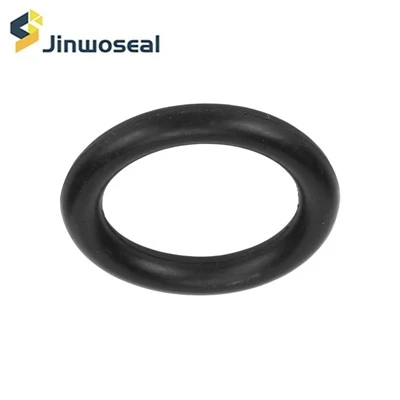
First, let’s skip the “what is a step seal” basics for a sec. You probably have no idea how it got its name, and honestly? That step is the whole reason it works better than your run-of-the-mill O-ring or flat seal. A step seal isn’t just a flat ring—there’s this distinct, little ledge (the “step”) cut into its body, usually on the side that faces the pressure side of your system. I see so many people mix it up with other seals, but that step is the secret sauce. Let’s get to the science, but make it relatable. Think of your hydraulic system like a garden hose: pressure is water pushing through the hose, and seals are the nozzles that keep water from spraying out where you don’t want it. A regular O-ring is like a smooth, round nozzle—fine for low pressure, but push it hard (like 3,000 PSI or more) and it squishes out into the gap between two metal parts, which is called the “clearance gap” in engineering terms. That’s when leaks start, and nobody wants that.
Okay, so the pressure side. This is non-negotiable, and it’s where the step earns its keep. When pressure hits the seal, it’s not just pushing straight down on the seal to squeeze it into the gap (that’s what old seals do) — the pressure gets caught on that step. The side of the step facing the pressure is flat, so fluid can’t slide over it. Instead, it forces the seal’s body to expand sideways into the clearance gap and push the seal’s face tight against the mating surface (the metal walls of the cylinder or piston) at the same time. That double-press is why step seals can handle way more pressure than O-rings—we’re talking up to 6,000 PSI in some cases, and even higher if you pair them with backup rings for really big gaps. I’ve had a customer who runs a rock quarry swear by our step seals for their heavy-duty dump truck hydraulics—they used to go through O-rings every month from high vibration and pressure spikes, and now their seals last a full season. That’s the difference the step makes.
Wait, but what about when pressure reverses? Like, if your system cycles—goes from pushing fluid one way to pulling it back—how does the seal hold? That’s where the step’s other side comes in. If you look at a cross-section of a step seal, it’s shaped like… well, a step: imagine two rectangles stacked, with the top one a little smaller so the bottom sticks out. When pressure is on the other side (the non-original pressure side), the smaller top part catches the reverse pressure, creating the same double-pressure effect. No more flipping seals, no more one-way leaks. I’ve seen cheap knockoff step seals that skimp on that second step—they only have the one ledge for high pressure—but when reverse pressure hits, they twist right out. We test every single one of our step seals for both forward and reverse pressure, so you never have that problem.
Now, let’s talk about wear. Seals don’t just seal—they rub back and forth against metal parts thousands of times a minute, right? Vibration, temperature swings, dirty fluid… all that beats up on seals. The step seal’s design helps there too. Because it only expands into the gap when pressure is applied, when pressure drops, it retracts a little. That means it doesn’t rub constantly against the metal walls, which cuts down on friction and wear. Regular O-rings, on the other hand, are squeezed tight around the whole time they’re installed—so they wear out way faster from just moving back and forth. I had a construction contractor tell me last year that switching to our step seals cut his seal replacements on his bulldozer’s arm cylinders in half. That’s not just theory, that’s on-the-job results.
Let’s get into what materials matter, because that’s half the battle too. Step seals are usually made of a rigid plastic (like PTFE, or polyurethane) paired with an O-ring as an energizer. The O-ring doesn’t do the sealing—wait, hold on, a lot of people mix that up! The step seal body is the actual part that makes the tight, leak-proof seal. The O-ring is just there to push the step seal into place and give it tension when pressure is low. If you get a step seal without a good energizer O-ring, it won’t seal when the system is running at low pressure or starting up. We use high-quality, heat-resistant O-rings that work with temperatures from -40°F to 300°F, which covers almost every industrial, construction, and agricultural machine out there. Cheap step seals use thin, brittle O-rings that crack in cold weather—we had a guy from a Minnesota farm reach out last winter because his old seals failed mid-snowplow run, and our step seals kept going even when it was 20 below zero.
Now, common myths I hear all the time. First: “Step seals are too expensive.” Yeah, upfront, they cost a little more than O-rings. But when you calculate downtime, parts costs, and labor to replace seals? They’re way cheaper in the long run. A construction company I worked with last year did the math: they spent $1,200 a month on O-rings for their 10 excavators, and $800 every 3 months on labor to change them. Switching to our step seals cut that seal part cost to $500 a month, and labor to $200 every 6 months. That’s almost $10k a year in savings—who doesn’t want that? Second myth: “Step seals only work for hydraulics.” No way! We supply them for pneumatic systems too, even for things like high-speed robotics. The step works the same way, whether you’re pushing oil or air. Third myth: “You can just reuse step seals.” Dude, no—seals are sacrificial parts for a reason. If you take a seal out, it’s already been stretched, compressed, and worn, so don’t put it back in. Save yourself the headache.
Wait, let’s talk about installation, because even the best seal is useless if you install it wrong. A lot of people think you just shove it into the groove and go, but no—you have to make sure the step is facing the right pressure side. That’s the #1 mistake we see customers make. If you put the step on the wrong side, when pressure hits, it doesn’t catch it, and the seal blows out in seconds. We send every order with a little cheat sheet that says “Step = Pressure Side” and a tiny diagram, but I tell all our reps to walk new customers through it if they’re unsure. Also, make sure the groove is clean—no dirt, no burrs on the metal—because even a tiny particle can nick a seal and cause a leak. I always tell people: take 2 minutes to prep the groove, save 2 hours of fixing a leak later.
Now, let’s get real about what we do. I’ve been supplying step seals for over 12 years, and my whole thing is making seals that don’t just meet specs—they hold up in the real world. I’ve talked to more mechanics, contractors, farm owners, and factory workers than I can count, and the number one complaint is that seals fail when you need them most: mid-harvest, mid-job, in the middle of nowhere. That’s why we test every batch of seals for pressure, temperature, and wear before they leave our warehouse. No cutting corners, no cheap knockoffs. We’re not here to sell you 100 seals that last a week—we’re here to sell you seals that last months, so you can get your job done.
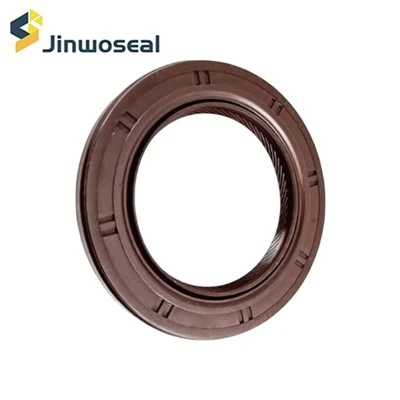
If you’re reading this and dealing with leaky seals, worn-out parts, or just want to upgrade your system to stop wasting money on constant replacements, hit us up to chat about your needs. Whether you need small seals for a 2-inch cylinder or big ones for a 20-ton press, we can help you find the right step seal for your application. No pushy sales pitches, no confusing contracts—just straight talk about seals that work.
Hydraulic Seal References:
- Hydraulic Seals: A Practical Guide, 3rd Edition, Fluid Power Technology Association
- Pneumatic Seal Design and Application, Society of Manufacturing Engineers
- Step Seal Performance Under Dynamic Loading, Journal of Tribology, 2019
Hebei Jinwo Machinery Technology Co., Ltd.
Hebei Jinwo Machinery Technology Co., Ltd. is one of the most professional step seal manufacturers and suppliers in China, featured by quality products and good price. Welcome to buy bulk advanced step seal in stock here and get pricelist from our factory. We also accept customized orders.
Address: Room 2109, Tower A, Meidong International, No.16 Guang’an Avenue, Chang’an District, Shijiazhuang City, Hebei Province, China
E-mail: info@jinwoseal.com
WebSite: https://www.jinwoseal.com/
