Hey everyone, thanks for stopping by. I’m Jake, and I’ve been running a medical faucet filter supply for just over six years now—mostly working with clinics, dental offices, and even some small hospital wings that need reliable water filtration they can actually trust. A lot of folks reach out to me confused, not knowing what separates a random under-sink filter from one that’s actually designed for medical use. Today, I’m breaking down the key features you actually need to look for if you’re shopping around for these, no fluff, no sales pitches that make you go “wait, is this real?” Medical Faucet Filter
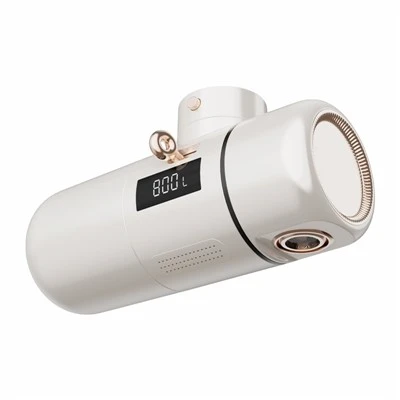
First off, let’s get one thing straight: medical faucet filters aren’t the same as the ones you buy at the grocery store for your kitchen sink. I’ve had dentists come to me before saying they grabbed a “high-performance” filter online for their handpieces, only to find out it’s made for drinking water, not the kind that’s touching tools going inside a patient’s mouth. That’s a mistake that can lead to cross-contamination, and nobody wants to deal with that.
Let’s start with the big one: NSF/ANSI certification. Wait, I know, certifications sound boring, but hear me out. Not all certifications are created equal. For medical-grade filters, you need to be looking at NSF Standard 42, 53, and 58, plus NSF/ANSI Standard 177 specifically for medical devices. A lot of cheap filters will slap a generic NSF label on their packaging, but that doesn’t mean it’s been tested to remove the stuff that matters for medical settings. For example, Standard 53 is for removing contaminants like lead, bacteria, and some viruses—stuff you definitely don’t want in water that’s used for surgical prep or hand hygiene. Standard 177 is the one that covers materials that won’t leach weird chemicals into water when it’s flowing through all day, every day. I always tell my clients to ask for a copy of the test report, not just a sticker on the box. Last year, a clinic of mine had a supplier that didn’t provide test reports, and when we tested their water, we found coliform bacteria that the filter was supposed to remove. That’s not worth the risk, y’all.
Next, flow rate and pressure consistency. Let’s be real, if a filter slows down your faucet so much that it takes 10 seconds to fill a cup, it’s useless for medical use. Dental offices rely on steady water flow for their high-speed handpieces—if the pressure drops, the tool doesn’t work right, and that delays appointments. I designed my line of filters with a media blend that keeps flow rate consistent at 2.2 gallons per minute, which is the sweet spot for most medical faucets. But here’s the thing: a lot of cheap filters use a dense media that clogs after a month, so the flow drops off a cliff. You need to look for a filter that maintains its flow rate over its entire lifespan, not just when it’s brand new. I’ve had a vet clinic that switched to my filters a while back, and they told me their assistant used to have to wait for water during teeth cleanings, but now they’re way more efficient. Small wins like that matter when you’re running a busy medical practice.
Then there’s the media type. This is where a lot of cut corners happen. Some filters use plain activated carbon, which is fine for removing chlorine from drinking water, but it doesn’t do much for bacteria or heavy metals. For medical faucet filters, you need a multi-stage media blend. Think granular activated carbon (GAC) for chlorine and bad tastes, silver-impregnated carbon or a bacterial filter (like a membrane with 0.2 micron pores) to stop bacteria and protozoa, and maybe ion exchange resin to take care of hard water minerals and lead. Wait, why 0.2 microns? Because that’s the size that stops most harmful bacteria like E. coli and Staph, which are huge risks in medical settings. I once had a podiatrist come to me complaining that her old filter wasn’t stopping the bacteria that was growing in the lines. We switched her to a filter with a 0.2 micron membrane and silver-impregnated media, and she hasn’t had a bacteria issue in two years. Also, avoid filters that use cheap plastic media that breaks down over time—you want a media that’s bonded so it doesn’t shed little particles into the water. Those particles can get into tools or on patient skin, and that’s an infection risk.
Durability and compatibility. Medical faucets come in all shapes and sizes. Some are standard male or female connections, but a lot of specialty ones (like in surgical suites) have unique fittings. You need to make sure the filter you’re buying fits your specific faucet, otherwise you’re either drilling holes in the sink or returning it, which wastes time and money. Also, how long does the filter last? A lot of cheap filters claim a 6-month lifespan, but if you’re using them 12 hours a day in a busy clinic, that’s only 3 months. Look for a filter that has a clear, easy-to-read replacement indicator—some use a pressure gauge that tells you when the media is used up, others have a timer that’s synced to water flow. My filters use a flow-based timer, so it’s not just based on time, it’s based on how much water you actually use. That way, a small clinic that uses less water doesn’t replace filters every 3 months for no reason, and a busy ER that uses tons of water doesn’t wait too long and have a clogged filter. Also, make sure the filter can handle temperature fluctuations. Medical facilities often have hot water lines for cleaning tools, so the filter material can’t warp or break down when exposed to hot water (up to 140°F, that’s standard for medical settings). A lot of residential filters can’t handle that, so they leak or stop working when you use hot water.
Oh, and don’t forget about maintenance and cost. Wait, I know I’m a supplier, but I’ll be honest with you—some super cheap filters end up costing you more in the long run because you have to replace them every 2 months, and they cause problems like water leaks. Look for filters that are easy to replace—no special tools, no calling a plumber. My filters twist on and off, like a water bottle cap, so a nurse or assistant can swap one out in 10 seconds. That’s a big deal because you don’t want to have to wait for a maintenance tech every time a filter needs changing. Also, calculate the cost per gallon, not just the upfront cost. A $20 filter that lasts 1000 gallons is way better than a $10 filter that lasts 200 gallons, even though the upfront is cheaper. I had a doctor client who used to buy the cheapest filter he could find, and after 6 months, he’d spent more than he would have on my filters that last twice as long. Plus, he was dealing with more clogs and flow issues, which was costing him more in downtime.
Wait, another thing: safety for hand hygiene. A lot of people overlook that medical faucet filters are used for handwashing too. Hand hygiene is the first line of defense against infection, so if the water running from the faucet has contaminants, that defeats the purpose. You need a filter that removes not just bad tastes, but also things like chlorine byproducts (which are formed when chlorine reacts with organic matter in water) and microplastics. Recent studies have shown that microplastics are in most tap water, and they can be absorbed through the skin when you wash your hands. My filters have a stage that removes microplastics down to 1 micron, which is something most standard filters don’t do. That’s a big one for clinics that care about patient and staff safety.
Now, let’s talk about what to avoid. Don’t buy filters that don’t list their certification numbers on the packaging. If a website says “medical grade” but doesn’t have the NSF tests, that’s just marketing. I’ve seen filters labeled “medical faucet filter” that only have NSF Standard 42, which is for taste and odor, not bacteria or heavy metals. That’s useless for medical use. Also, avoid filters that use only carbon—they don’t stop bacteria. And don’t fall for the “one size fits all” claim, because every medical facility has different needs. A small urgent care has different water usage than a 200-bed hospital, so the filter should be tailored to that.
At the end of the day, when you’re picking a medical faucet filter, you need to balance performance, safety, and practicality. It’s not just about getting clean water—it’s about preventing infections, keeping your clinic running smoothly, and not wasting money on filters that don’t work. I’ve worked with hundreds of clinics, dental offices, vet clinics, and even research labs over the years, and I’ve tested a ton of filters to know what works and what doesn’t.
If you’re shopping around right now, or if you’re tired of dealing with filters that clog, don’t remove contaminants, or cost you way too much in the long run, feel free to reach out to me for a chat. I don’t do high-pressure sales, I just help folks figure out what their specific needs are. Whether you have a 2-op dental office or a surgical center, I can point you in the right direction. No awkward calls, no weird fine print, just honest info about what works for medical settings.

Thanks for reading all this. I hope it helped clear up what to look for. Drop a comment if you have questions—I’m happy to answer.
Water Filter Pitcher Cartridge References
- NSF International. (2022). NSF/ANSI Standard 177: Drinking Water Treatment Units – Health Effects for Medical Devices.
- World Health Organization. (2021). Guidelines for Drinking-Water Quality, 4th ed.
- Centers for Disease Control and Prevention. (2020). Infection Prevention in Dental Settings.
- Journal of Hospital Infection. (2019). Microplastic contamination in drinking water sources and healthcare settings.
- American Dental Association. (2021). Best Practices for Water Quality in Dental Unit Waterlines.
Dongguan Beyclean Environmental Protection Technology Co., Ltd.
Dongguan Beyclean Environmental Protection Technology Co., Ltd. is one of the most reliable medical faucet filter manufacturers and suppliers in China, featured by quality products and good service. Please rest assured to wholesale advanced medical faucet filter from our factory. Also, custom service is available.
Address: Building 2, No.8 Jinxing Road, Jinfenhuang Industrial Zone, Fenggang Town, Dongguan, Guangdong 523696, China
E-mail: Tomsu@beyclean.com
WebSite: https://www.beyclean.com/
