Hey there, let’s cut through the noise if you’re shopping for an aluminum profile drilling machine—whether you’re a small fab shop scaling up, a big fabrication plant expanding your line, or even a carpenter who works tons of aluminum parts for decks or windows. I’ve been selling these machines for almost 12 years now, and I’ve seen so many folks blow cash on the wrong one, or settle for a clunky model that’s a headache to run. Let’s break this down like we’re chatting over a coffee, no jargon, no fancy sales fluff. First off, forget the “one size fits all” garbage. Every fab job is different, so your machine should match your workflow, not some random spec sheet. Let’s start with the basics you’ve probably already thought about, but let’s get real about what actually matters. Aluminum Profile Drilling Machine
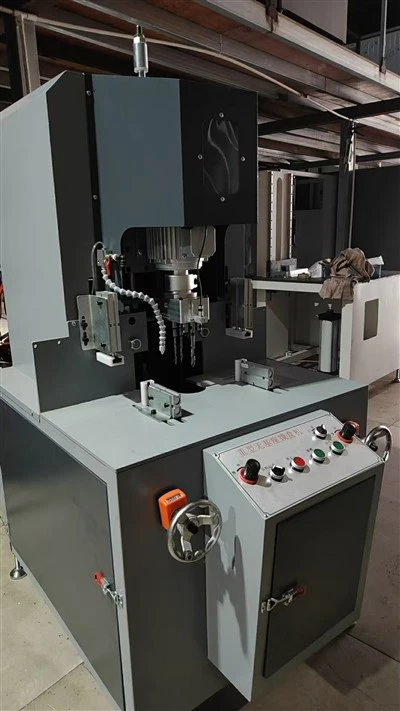
First up, what kinda aluminum are you drilling, and how big are the profiles you work with? Wait, I don’t just mean “they’re aluminum” — I mean, are these thin 1mm aluminum for window frames, or thick 12mm aluminum for trailer frames or heavy-duty industrial enclosures? And how long are those profiles? If you’re only doing 1m long stuff, you don’t need a machine that holds 6m bars. That’s wasted cash. I once had a customer a few years back who bought a huge long-bed machine because a buddy told him it “would handle everything,” but he only works with 2m window profiles. The extra 4m of bed space? He’s never used it. It just takes up floor space and cost him $8k more. Also, profile shape matters a lot. Most aluminum is extruded, so you’ve got angles, T-sections, hollow tubes. If you’re drilling holes on all four sides of a profile, you need a machine with multi-axis capability. If you’re only drilling on one or two sides for simple door hinges, a single-axis one is fine. I see so many guys skip this part because they think “more axes = better,” but again—wasted money if you don’t need it.
Next, hole specs. What size holes are you drilling, and how precise do they need to be? If you’re making custom metal art or just drilling holes for screws that are 5mm, you don’t need a high-tolerance CNC machine that can hit +/- 0.02mm holes—those are overkill and way pricier. But if you’re doing automotive aluminum parts or aerospace components? You absolutely need that precision. Also, how many holes per minute? If you’re making 100 window frames a day, you need a machine that’s fast enough to keep up. A manual drill press will take you forever, and you’ll get tired of the mistakes. But if you’re only doing custom one-off projects or small batches (like 10 profiles a week), a semi-automatic model will work way better, and save you money on upfront costs. Manual is even an option if you’re a tiny shop, but be real—if you’re growing, semi-auto or CNC is the way to go.
Then, consider your setup space. This is such a big one that people overlook until their machine shows up. I’ve had a customer call me panicking once because his huge CNC machine wouldn’t fit through his shop door. Duh. You need to measure not just the machine’s footprint, but also the space around it for loading profiles, unloading finished parts, and moving stuff around. Also, ceiling height if you’re getting a tall multi-axis model. A lot of small shops work in garages or leased spaces with low ceilings—don’t make the mistake I saw a guy make a few years back, ordering a 2m tall machine that wouldn’t fit in his 2.1m garage. He had to pay $1,200 to return it, that’s a ton of cash for a mistake. Also, power supply—most small shops have 110V, but some big CNC machines need 220V or even 3-phase. If your shop doesn’t have that, you’ll need to have an electrician come in to upgrade, which can cost thousands. Factor that into your budget, not just the machine price.
Now, the fun part: features you actually need, vs. fluff that doesn’t matter. Let’s be real—every supplier will tell you their machine has the best touchscreen, or the fastest drill bit change, but what do you actually use? Let’s start with clamping. This is huge because if your profile moves when you’re drilling, you get bad holes, scrap parts, wasted time. Manual clamping is cheap, but it’s slow if you’re running a lot of parts. Automatic clamping? It’s a bit more expensive, but it’s way faster, more consistent, and reduces operator error. I always recommend automatic if you’re running more than 50 parts a day. Another feature: drill bit coolers. Aluminum gets gummy when you drill it, right? If you don’t cool the bits, they dull super fast, and you get rough holes. Some cheap machines don’t have built-in coolers, so you have to add a hose or separate coolant system, which is a hassle. Spend the extra $200-$300 for a built-in cooler—you’ll save a fortune on drill bits and downtime. Also, the control system. If you’re not super tech-savvy, don’t get a super complicated CNC with a 10-inch touchscreen and 50 programming options. Go for something with a simple, intuitive interface. I’ve seen guys get intimidated by fancy controls, and they end up using only 10% of the machine’s capabilities. If you are tech-savvy, then go for more advanced, but again—match it to your skill level.
Wait, also—what’s your budget, and what’s the total cost of ownership, not just the upfront price. I can sell you a super cheap machine for $2k, but how long will it last? Will you need to replace parts every 6 months? How much downtime will it cause? I always tell customers to look at total cost, not just the sticker shock. A $5k machine that lasts 10 years with minimal parts is way better than a $2k machine that breaks down every year and costs you more in repairs and lost production. Also, ask about warranty. Most good suppliers offer 1-year parts and labor, some offer extended warranties for a few hundred bucks. Don’t buy a machine with a 30-day warranty—if something breaks after that, you’re on your own.
Then, do you need custom capabilities? If you do custom work, or you design parts that change a lot, a CNC machine is definitely the way to go. You can program different hole patterns, save them, and just pull them up next time. No need to set jigs every time, which saves so much time. But if you do the same 10 hole patterns every single day, a semi-automatic machine with jigs is cheaper, and just as fast. Jigs are custom holders that hold the profile in place, so you drill the same holes in the same spot every time—great for high-volume, low-variety work.
Now, red flags to watch out for when you’re shopping. First, suppliers that won’t let you test the machine. Any good supplier will let you bring in a sample of your profiles and drill a test run, right? If they say “no, you have to buy first,” that’s a bad sign. I always offer test runs—let them see how the machine works on their actual parts, because specs on paper don’t tell you if it works for their job. Another red flag: super cheap machines from unknown brands. A lot of overseas suppliers sell cheap models that fall apart after a year. I’ve had so many customers come to me after buying one of those, saying the drill head wiggles, the control screen breaks, and parts are impossible to get. Stick to reputable brands, or at least ask what kind of support they offer for parts and service. If a supplier is 10,000 miles away, getting a replacement part is a nightmare—you have to wait weeks, maybe months. I keep all common parts in stock here, so if something breaks, you get it in 2 days.
Also, think about training. If you get a CNC machine, do you know how to program it? I offer free training for all my customers—either on-site, or over video calls. Some suppliers charge extra for training, which is garbage. If they make you pay to learn how to use a $10k machine, that’s a rip-off. Even for semi-automatic machines, basic training is helpful to avoid mistakes.
Wait, let’s circle back to real examples, because that’s what matters. Let’s say you own a small window shop in a suburban area, you do 20 custom windows a week, all 2m long aluminum profiles, drilling 8mm holes for hinges and handles, same hole patterns every time. What do you need? A semi-automatic machine with automatic clamping, built-in coolant, a simple control system, and a jig for your specific profile. You don’t need a huge long-bed CNC with 5 axes—you’d be wasting at least $3k. But if you own a big fabrication plant that does trailer frames, 6m long profiles, drilling multiple sizes of holes on all sides, different hole patterns every run? Then you need a 6m CNC multi-axis machine with precision control, automatic clamping, and maybe even automatic drill bit change. That’s the machine that will keep up with your 24/7 production.
Another example: a one-man custom metal art shop, does mostly small aluminum tubes, one-off projects, a few profiles a week. A manual drill press or a small semi-automatic tabletop machine is perfect. No need for anything fancy, just enough to drill accurate holes without breaking the bank.
And let’s talk about after-sales support, because this is what makes or breaks a machine. I’ve had customers buy machines from other suppliers, and when they have a problem, the supplier takes 3 days to call back, or charges $150 an hour for service, or can’t send a tech for a week. When you’re downtime is $1,000 a day, waiting a week is a disaster. That’s why I make sure every customer has my cell phone number, so if something breaks after hours, they can text me. I get most problems fixed over the phone in 10 minutes. That’s the stuff no spec sheet tells you about.
Wait, I should also mention drill bits. Aluminum can be brutal on drill bits, so make sure the machine uses bits that are designed for aluminum. Some cheap machines come with generic steel bits that dull in 50 holes. Ask what kind of bits the machine takes, and if they’re easy to find. Again, if you can get the bits at your local hardware store, that’s way better than having to order them from overseas.
Oh, and safety! I can’t skip this. Drilling aluminum, especially with high-speed machines, can be dangerous if you don’t have safety features. Look for machines with emergency stop buttons, guards around the drill head so your hands don’t get near the spinning bit, and overload protection so if the bit gets stuck, it stops instead of breaking or damaging the machine. I’ve seen a guy lose a finger because his old machine had no guard—don’t cut corners on safety.
Let’s sum this up quick, so you don’t have to scroll back through all this. First, know your exact needs: profile size (length, thickness, shape), hole specs (size, precision, volume), your shop space and power, and how many parts you run a day. Second, skip the fluff—don’t buy more axes or precision than you actually need. Third, factor in total cost of ownership, not just upfront price, and check warranty and support. Fourth, test the machine if you can, and make sure training is included. Fifth, don’t forget safety features and easy access to parts and bits.
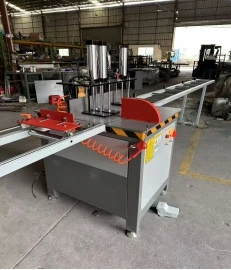
If you’re still not sure, or you have a specific workflow you want to run by someone, just reach out. I can send you a free sample test run of your profiles, walk you through different options that fit your budget, and make sure you get a machine that actually works for your shop, not just a sales pitch. No pressure, no pushy sales calls, just honest advice from someone who’s been in this game for years and knows how frustrating it is to buy the wrong machine. Let’s chat about your needs and find the right fit for you.
Cutting Machine References:
- Aluminum Extrusion Design Handbook, American Architectural Manufacturers Association, 2021
- Industrial Fabrication Machinery Buyer’s Guide, Fabricators & Manufacturers Association, 2022
- Metalworking Safety Standards, Occupational Safety and Health Administration, 2023
- Total Cost of Ownership for Fabrication Equipment, National Tooling and Machining Association, 2022
Kanghong Building Materials Technology Sdn. Bhd.
As one of the most professional aluminum profile drilling machine manufacturers and suppliers in China, we have world-leading production equipment and strong manufacturing capabilities. Please feel free to wholesale advanced aluminum profile drilling machine for sale here from our factory. Customized orders are welcome.
Address: No.601, Block 2, Xinlianchang Industrial Park, No.2 Taixing Second Road, Taiping South Industrial Zone, Dali Town, Nanhai District, Foshan City
E-mail: 631871392@qq.com
WebSite: https://www.kanghong-building.com/
